Watch It First
Every guitarist’s first amp is usually a compromise. You want something loud enough to feel real, quiet enough for the neighbours, and cheap enough that your wallet doesn’t cry.
The Fender Frontman 20G has been the default answer to that problem for years now. It’s the amp that sits in the corner of basically every music shop, waiting for someone’s first guitar lesson.
So is it actually good, or just familiar? I plugged in and found out.
What You Actually Get
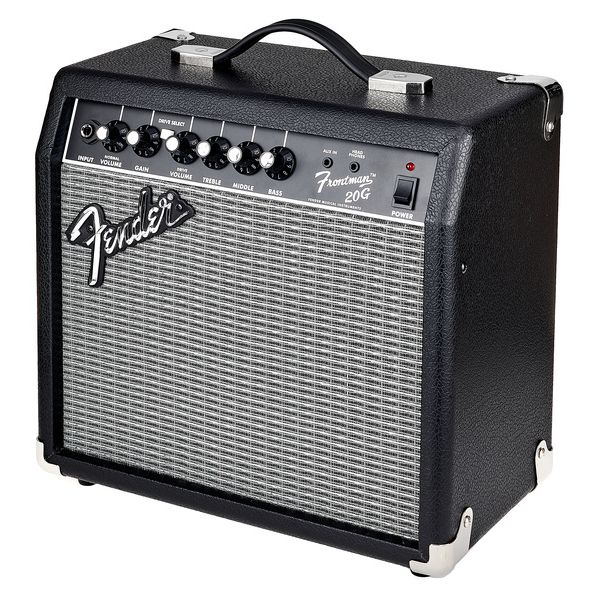
Twenty watts, one 8-inch Fender Special Design speaker, and two channels: Normal and Drive. That’s the whole pitch, and honestly, that’s kind of the point.
The Normal channel is just volume and a 3-band EQ. Nothing fancy, just clean(ish) Fender tone at bedroom levels. The Drive channel adds a Gain knob and an overdrive voicing that’s clearly aimed at rock and blues rather than anything heavier.
There’s an 1/8″ aux input for jamming along to Spotify or YouTube backing tracks, plus a headphone output for silent practice. If you’ve read my Fender Frontman 10G review, this is basically the bigger sibling — same DNA, more headroom, an actual EQ instead of just a tone knob.
Build Quality
It’s not going to win any awards for ruggedness. The cabinet is lightweight particleboard, the control knobs are plastic, and at 4.5kg you could genuinely carry it in a backpack.
But for what it is — a practice amp that lives on a desk or in a bedroom — it feels solid enough. I wouldn’t gig with it, and I wouldn’t expect you to either.
Resale value is decent too, for what it’s worth. Frontman amps hold up fine on the used market since so many students buy one, improve, and sell it on within a year or two. Buying secondhand? Just check the speaker cone for damage — it’s the one part that tends to get abused by bedroom players cranking the drive channel too hard.
Playability and Sound
Plugged a Strat-style guitar in first. The clean channel is genuinely pleasant — a little scooped, slightly compressed, but recognisably Fender-ish. Push the volume past halfway and it starts to break up naturally, which is a nice touch most amps at this price skip entirely.
Switch to the Drive channel and things get more polarizing. It’s a mid-forward, slightly fizzy gain that works well for classic rock rhythm tones but starts falling apart if you’re chasing anything heavier. Roll the gain back and it cleans up into a nice crunch for blues and indie stuff.
One thing several owners mention (and I noticed it too) — there’s a bit of background hiss, especially noticeable at low volumes with the Drive channel engaged. Not a dealbreaker, but worth knowing if you’re recording quiet passages.
Who It’s Actually For
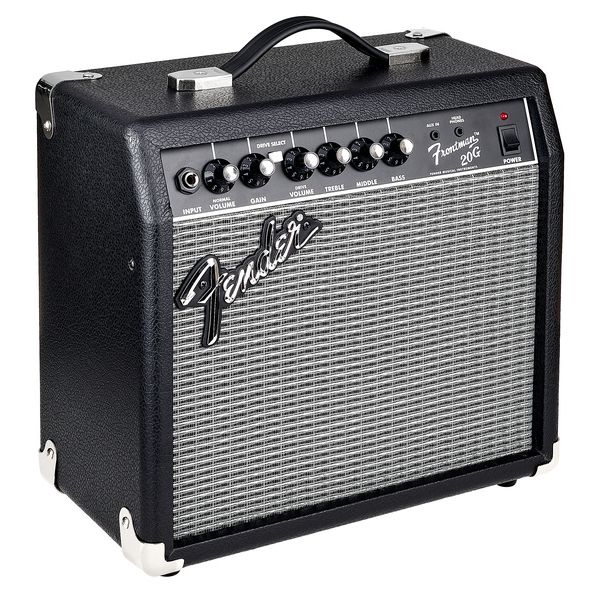
This is a beginner’s amp, full stop. If you’re buying your first electric guitar and need something to plug into that won’t annoy everyone in the house, this ticks the box.
It’s also a solid grab-and-go option for a second amp — one you keep at a parent’s house, in a home office, or wherever you occasionally want to noodle without hauling your main rig around.
Parents buying a first amp for a kid, take note: this is close to the ideal choice. Low volume ceiling that won’t rattle windows, dead simple controls, and a headphone jack for when everyone’s had enough of the same three chords on repeat.
If you’re already past the beginner stage and chasing real tonal flexibility, you’ll outgrow this fast. At that point something like the Marshall Code 50 or a modeling amp with proper effects makes more sense — or just add a multi-fx unit like the Zoom G2 Four in front of the clean channel.
Honest Niggles
- Background hiss on the Drive channel at low volumes
- No reverb — you’ll want a pedal if you like any ambience at all
- Drive tone gets fizzy above moderate gain settings
- Plastic chassis feels budget (because it is)
None of these are surprising for the price bracket. If you want reverb and a bit more amp-like sag, pair it with something like the JHS Angry Charlie V3 on the front end, or step up to a Champion series Fender instead.
Frontman 20G vs the Competition
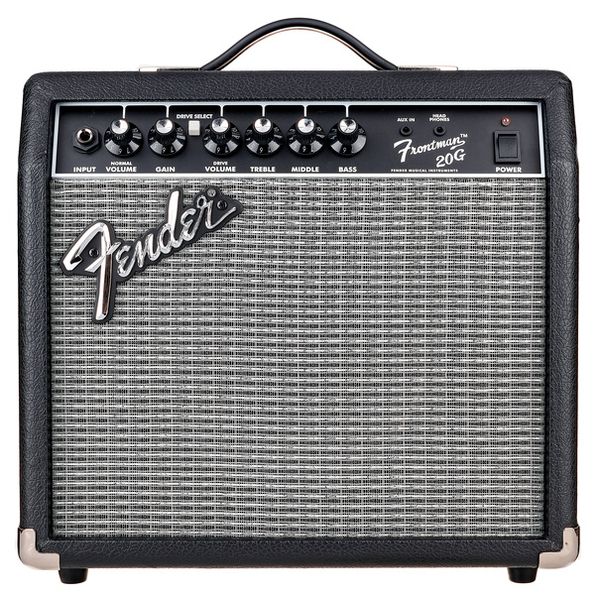
The obvious rival is the Marshall MG15G, which has a similar spec sheet and a similarly budget build. IMO the Fender edges it out on clean tone, while Marshall wins slightly on the crunch/drive side. If you want digital effects baked in, something like the Marshall MG50GFX is worth a look, though you’ll pay more for it.
And if you eventually want a „forever amp” rather than a stepping stone, it’s worth reading about something like the Fender Tone Master Deluxe Reverb — a completely different price tier, but it shows where the Fender clean tone lineage eventually leads.
Recording and Silent Practice
The aux input earns its keep here. Plug your phone in via a cheap cable and you can practice along to full songs without waking the house up — genuinely useful if you’re learning by ear rather than by tab.
The headphone output doubles as a quiet-hours escape route, though don’t expect studio-grade tone through it — it’s serviceable, not great. For actual recording, you’re better off running a cheap interface straight from your guitar rather than miking this thing up. If silent practice with genuinely convincing feel matters more to you than price, it’s worth reading about the Boss Waza-Air instead.
Specs at a Glance
- Channels: 2 (Normal, Drive)
- Power output: 20W
- Speaker: 1x 8″ Fender Special Design
- Controls: 2x Volume, 1x Gain, 3-band EQ, Overdrive switch
- Inputs: 1/8″ line/aux input
- Headphone output: Yes
- Reverb / onboard effects: No
- Dimensions: 31.5 x 33.65 x 18.1 cm
- Weight: 4.5 kg
Final Verdict
The Fender Frontman 20G isn’t exciting. It’s not supposed to be. It’s a cheap, honest, small practice amp that does clean Fender tones better than it has any right to at this price, with a drive channel that’s fine for casual use.
If you need a first amp, or a backup amp, it’s an easy recommendation. Just don’t expect it to be your only amp forever.
FYI — if you’re torn between this and the smaller 10G, the extra EQ knob and headroom on the 20G genuinely make a difference for anything beyond absolute beginner noodling.