Watch It First
Ask ten guitarists for a „transparent overdrive” recommendation and at least six of them will say Morning Glory.
It’s become something of a default answer, the same way Tube Screamer used to be the automatic response a decade ago.
So is it actually that good, or just really well marketed? I dug in.
Where It Comes From
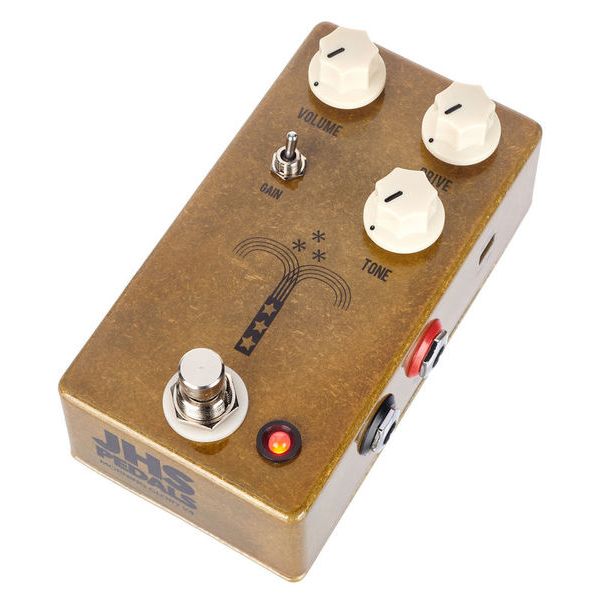
The Morning Glory started life as JHS’s take on the Marshall Bluesbreaker circuit – a low to medium gain overdrive that’s meant to push your amp rather than replace it entirely.
V4 adds a Gain toggle switch that kicks in extra low-end and higher gain when you need to push past „polite” territory, plus an optional footswitch jack so you can control that toggle remotely.
Controls stay simple: Volume, Drive, Tone. No paralysis by analysis here, which is honestly part of the appeal.
Worth a quick history note: JHS founder Josh Scott has talked openly about the original Marshall Bluesbreaker pedal being a flawed but beloved circuit, and the Morning Glory was essentially his attempt to fix its quirks while keeping everything that made it special. That’s a very JHS approach – take a beloved vintage circuit, iron out the reliability issues, and sell it at a price that doesn’t require hunting eBay for a decade.
What „Transparent” Actually Means Here
Transparent overdrive is a slightly overused term, but with the Morning Glory it genuinely applies. It doesn’t stamp its own EQ curve onto your tone – it just adds grit and pushes your amp’s natural character forward.
Through something bright like a Vox AC15 C1X, it keeps that chime intact while adding just enough push to make chords bite. It’s not going to turn a clean amp into a metal machine, and that’s the point.
Single coils sound gorgeous through it – articulate, a bit sparkly, never harsh. Humbuckers work fine too but some players find it a touch less exciting in that combination, which tracks with its Bluesbreaker DNA.
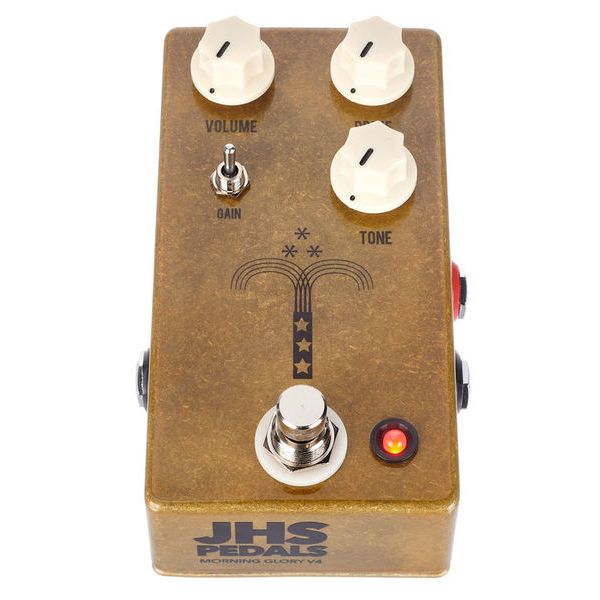
The Tone control deserves a special mention because it’s genuinely musical across its whole range, not just usable in the middle third like a lot of cheaper drives. Roll it dark and you get a rounded, almost vintage-amp-like breakup. Roll it bright and picking articulation stays crisp even at higher gain settings, which matters a lot for anyone playing intricate rhythm parts.
Build and Everyday Use
Solid metal housing, true bypass, silent-ish footswitch. Standard JHS build quality, which is to say very good – these things get gigged hard and survive.
Powered exclusively via DC adapter – no battery option here, worth noting if your board relies on batteries for anything.
It stacks beautifully with other drives too. A lot of players run it first in the chain as a clean boost into a heavier distortion, letting it add texture without piling on more gain.
One more practical point on the Gain toggle: because it’s a footswitch-controllable option rather than a fixed setting, you can genuinely use this as two pedals in one. Set the base voicing as your always-on rhythm crunch, then stomp the toggle for solos without needing a second overdrive on your board at all. That alone saves real estate and cash if your board’s getting crowded.
Who’s This For?
- Blues and classic rock players wanting amp-like push, not a wall of fuzz
- Anyone stacking pedals who needs a transparent front-end drive
- Players with already-good clean tones who just want more edge
- Studio players who need a drive that won’t fight the mix
If you’re specifically running a Vox-voiced rig, our roundup of best overdrives for Vox amps covers a few more options in this same transparent-drive family worth comparing against.
The Honest Niggles
The base V4 only gives you one gain voicing accessible via footswitch, and the second stage (the „Red Channel” mod some players want) is a separate purchase entirely. Feels like it should’ve been built in for the price.
It’s genuinely great, but „overrated” is a word that comes up in reviews more than you’d expect – mostly from players who bought it expecting a bigger tonal transformation than a transparent overdrive is ever going to give you. Manage expectations and you’ll be happy.
With humbuckers specifically, some players prefer a slightly more voiced overdrive. If that’s you, it’s worth comparing directly against something like the MXR Custom Shop Timmy before committing.
How It Stacks Up
The obvious comparison is the Wampler Tumnus Deluxe, which chases Klon territory rather than Bluesbreaker territory – similar transparent philosophy, different flavour of push. Worth trying both if you can, they’re not interchangeable despite both wearing the „transparent overdrive” label.
If you want more aggression from the JHS lineup specifically, their Angry Charlie is basically the opposite end of the gain spectrum – same brand, completely different job.
And if you’re chasing that vintage British breakup tone more broadly, our guide to the best Marshall amps covers where this whole Bluesbreaker lineage actually started.
Specs at a Glance
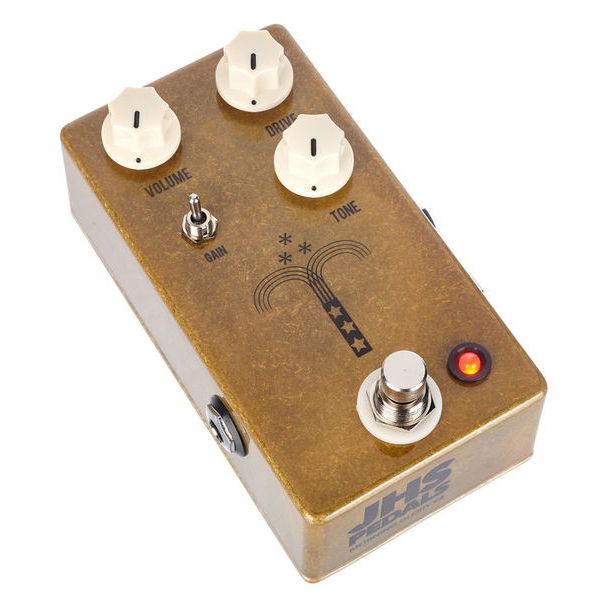
- Type: Transparent overdrive, Bluesbreaker-derived circuit
- Controls: Volume, Drive, Tone, Gain toggle switch
- Extra: Footswitch jack for remote gain switching
- Bypass: True bypass
- Power: 9V DC only (not included), no battery option
- Housing: Metal, hand-built in USA
Final Verdict
The hype is mostly earned. The Morning Glory does exactly what a good transparent overdrive should – it makes your amp sound like a better version of itself, not like a different amp entirely.
It’s not going to blow your mind if you’re expecting drastic tonal reinvention, and the gain-switching setup could be more generous for the price. But as an everyday, always-on-the-board drive pedal, it’s genuinely one of the best around.
If you’ve been curious what all the forum chatter is about, this is one recommendation that’s actually worth listening to.