Watch It First
The small valve combo shelf on this site is already deep. The Blackstar HT Club 40 MkIII, the HT-20R MKIII and the TV-10 A have that territory pretty well mapped.
So what does a Supro do that they do not? Mostly, it refuses to sound British. Where those Blackstars lean into a Marshall-ish crunch, the Delta King 12 sounds like something that grew up in Chicago and never left.
15 watts, a single 12-inch Supro speaker, spring-style reverb and two footswitchable dirt options. That is the pitch, and it is a genuinely different pitch to everything else in this bracket.
What Is Actually In It
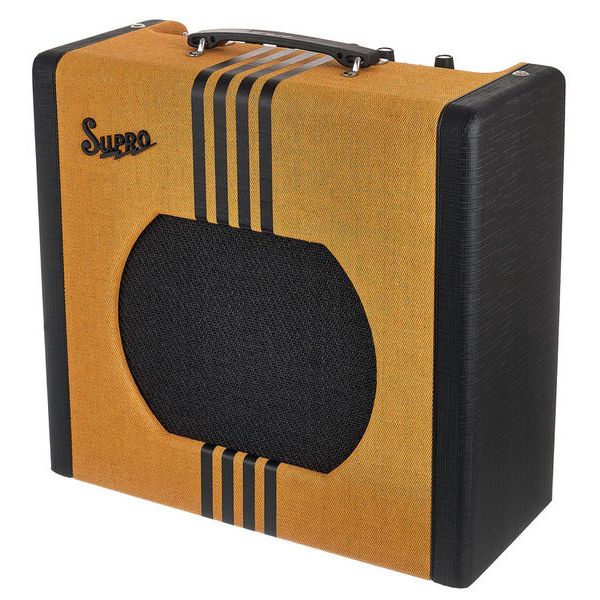
A 12AX7 preamp and a 6L6 power section into a Supro DK-12 speaker. One channel, and a control set of Volume, Treble, Mid, Bass, Reverb and Master.
That Master control matters enormously and I will come back to it. But first, the reason people buy Supro amps in the first place.
The Voicing
Supro built their reputation on amps that break up early, sound slightly loose, and have a midrange bark that no Fender ever quite had.
The Delta King 12 keeps that. Clean, it is warm and a bit dark, with none of the glassy scooped chime you get from a blackface-style circuit. There is a woody thickness in the mids that flatters single coils enormously.
Push it and the breakup arrives early and gracefully. It is not a high-gain amp and does not pretend to be, but the crunch it does have is textured and a little bit ragged in the best way.
Volume, Master and Actually Using It at Home
This is where the Delta King earns its keep. Having both a Volume and a Master means you can cook the preamp and then keep the output at a level that will not get you evicted.
At 15 watts through a 12-inch speaker it is still loud – genuinely gig-loud with a mic in front of it – but the Master gives you a route to real amp distortion in a bedroom.
It is not the same as a valve amp working hard at full tilt. It never is. But it is a lot closer than an attenuator-free 15 watter that only comes alive at neighbour-bothering volume.
Boost and Drive
There are two onboard effects here that are not really effects at all – a Boost and a Drive, both switchable via the rear footswitch jack.
The Boost is the useful one. It is a clean level lift that pushes the front end harder without changing the EQ, and it is genuinely great for solos.
The Drive is more of a mixed bag. It is fine, and it saves you a pedal, but it is a bit generic next to something like a Boss OD-3 or a Timmy out front. IMO most people will end up using the Boost and ignoring the Drive.
The Reverb
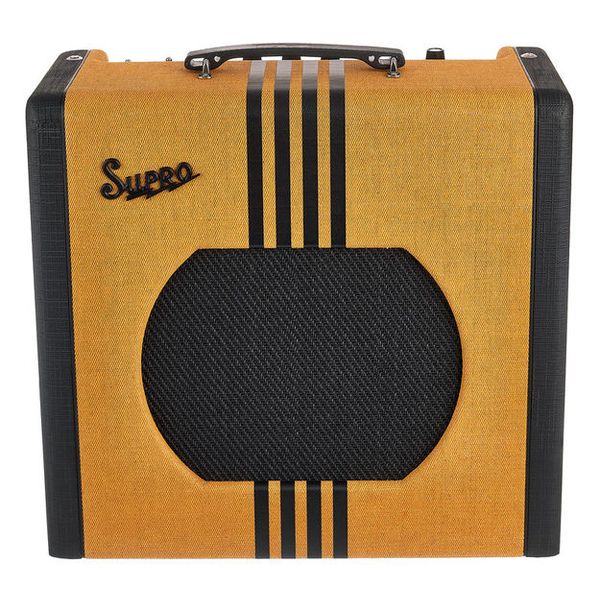
Digital, not a real spring tank, and I want to be honest about that because the tweed cabinet makes it look like it should be a tank.
It is a decent emulation. Warm, slightly diffuse, and it sits behind the note rather than washing over it. For a bit of ambience it is completely fine.
What it will not do is that big splashy surf drip. If that is your thing, factor in a pedal.
The Niggles
No effects loop. At this price and in this bracket that is a real omission, especially since the amp is clearly aimed at people who like to run delays and reverbs. Everything goes in front, which works but is not ideal.
No headphone output and no recording output either, so this is a play-in-the-room amp only. If quiet practice matters, that is a genuine limitation and the Yamaha THR30II exists for a reason.
It is also 13 kilos, which is not heavy for a valve combo but is heavy enough that you will notice it on a second flight of stairs.
And the footswitch is not included. Given that two of the amp panel features are footswitchable, that stings a little.
The Specs
- Valve combo amplifier for electric guitar
- Power: 15 W
- Speaker: 1x Supro DK-12 (12 inch)
- Preamp tube: 12AX7
- Power amp tube: 6L6
- Controls: Volume, Treble, Mid, Bass, Reverb, Master
- Onboard effects: Boost and Drive, both footswitchable
- 1 instrument input, 1 line output, power amp input
- Footswitch jack on the rear (footswitch not included)
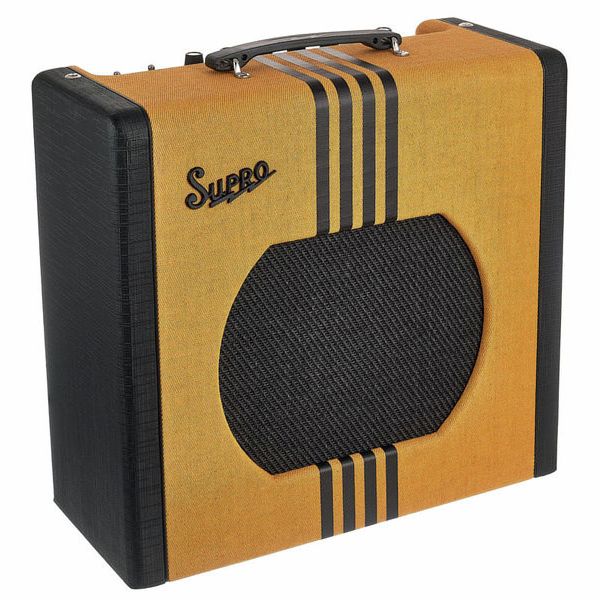
- Tweed covering with black trim
- Dimensions: 43 x 19 x 41 cm, weight 13.0 kg
- Thomann article number: 515161
What Guitars Does It Suit?
Single coils, mostly. That mid-forward, slightly dark voicing does something lovely to a Telecaster in particular – it fills in the gap where a bridge pickup usually gets thin and spiky, without softening the attack.
P90s are arguably even better. All that grind and bark sits perfectly in the amp character, and you can ride the guitar volume to move from thick clean to snarling crunch without touching a pedal.
Humbuckers work fine but need more EQ attention. Roll the Bass back and push the Treble further than feels sensible, otherwise the low end can get flabby once the power section starts working. It is not a problem, just something you dial for.
The Line Output Nobody Mentions
There is a line out round the back, and it gets left out of most write-ups. It is not cab-simulated, so you cannot just plug it into an interface and expect a finished tone, but into a powered speaker or a PA with an IR loader after it, it works well.
There is also a power amp input, which means you can bypass the preamp entirely and use the Delta King as a valve power stage for a modeller or an outboard preamp. For a fifteen watt combo at this price, that is a surprisingly grown-up feature set.
Final Verdict
If you already own a small British-voiced valve combo, the Delta King 12 is not a sideways move – it genuinely sounds like a different instrument.
The trade-offs are real. No effects loop, no quiet-practice option, a footswitch you have to buy separately, and a Drive circuit you will probably ignore.
What you get in return is a warm, barky, slightly loose amp with a proper Master volume and a voicing you cannot get anywhere else on this shelf. It flatters single coils, it takes pedals beautifully, and it sounds expensive.
Worth it? If you want your small valve combo to have some actual character rather than being a competent all-rounder, yes. Absolutely worth it.