Watch It First
There are three Line 6 boxes on this site now and they keep getting confused with each other, so let me draw the map before anything else.
The HX Effects is a big effects-only unit for people who still love their amp. The Pod Go is the friendly all-in-one with a built-in expression pedal. The HX Stomp is the small one that somehow does the most.
Smaller than the HX Effects, and unlike it, this one has the full Helix amp modelling engine inside. That single fact is why it has been on so many boards for so long.
Small Box, Full Helix
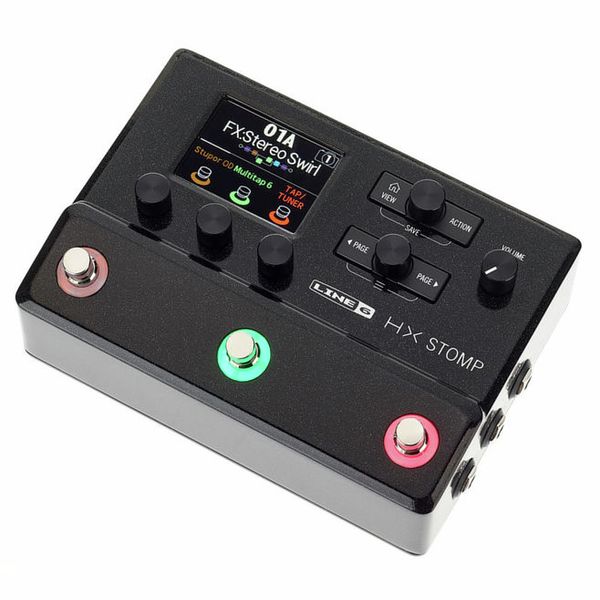
17.8 x 12.6 x 6.6 cm and about 800 g. It genuinely fits on a pedalboard next to your existing pedals rather than replacing the entire board.
Inside it is over 300 effects and models from the Helix, M-series and older Line 6 catalogue. Amps, cabs, IR loading, effects, a looper, all running on the same HX engine as the flagship.
Thomann article number 450218, available since November 2018, which in modelling terms is ancient and yet it has aged remarkably well thanks to firmware updates.
Eight Blocks, And Everyone Still Complains
You get eight simultaneous processing blocks. Amp, cab, effects, looper, IR, all competing for the same pool.
That sounds tight and occasionally it is. In practice an amp plus cab plus drive plus modulation plus delay plus reverb is a complete rig and still leaves room. You just cannot build a twelve-pedal fantasy chain.
The HX Effects has more blocks and no amp modelling. The Stomp has fewer blocks and full amp modelling. Pick your poison.
How It Sounds
Like a Helix, because it is one. Same models, same engine, same results. If you have played a full Helix Floor you already know what the Stomp does.
The amp models are the reason to buy it. Line 6 have had a long time to refine these and the high-gain stuff in particular holds up against anything at any price now.
- Over 300 amps, cabs and effects from the Helix and M-series libraries
- Third-party IR loading, which transforms the cab side of things
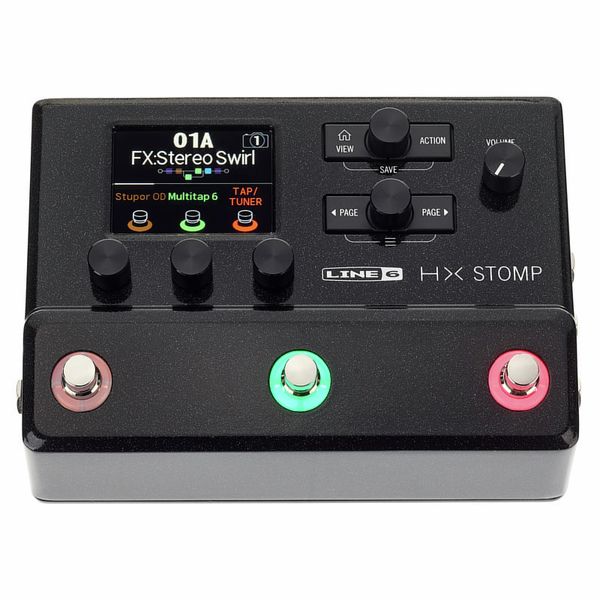
- Colour LCD and three footswitches with LED colour rings
- Built-in tuner and looper
- Integrated USB audio interface for direct recording
The IR loading deserves its own mention. Stock cabs are fine, third-party impulse responses are better, and swapping them is the single biggest tone upgrade you can make in five minutes.
The Four Ways People Actually Use It
As A Whole Rig
Guitar in, straight to front of house or an interface. Amp, cab, effects, done. This is where the Stomp beats the HX Effects outright, because the HX Effects simply cannot do it.
As A Pedalboard Brain
Run it at the end of a board of real pedals and use it for delays, reverbs and modulation. You are wasting the amp models, but the effects alone are worth it.
In Four-Cable Method
Effects loop, pre and post amp routing, the whole traditional setup. Fiddly to configure, brilliant once it is working.
As A Silent Practice Rig
Headphone out, a decent preset, done. It replaces a small modelling amp entirely, though a NUX Amp Academy does that job for a lot less if that is all you want.
The Honest Niggles
Three footswitches is not enough. There, I said it. Two presets and a tap tempo, or three stomp-style toggles, and then you are out. Serious live use means adding an external switch or a MIDI controller.
The block limit will bite you eventually, usually right at the point where you want one more reverb. You learn to work within it, but it is a real constraint and not a marketing quibble.
Editing on the unit itself is slow. The screen is small and the encoders are fiddly. Use HX Edit on a computer and the whole experience improves dramatically, which is a slightly odd thing to say about a floor pedal.
It also needs its own hefty 9V 3A supply. It will not run off a spare output on your pedalboard brick, so plan for that. At least the adapter is in the box.
Versus The Other Two Line 6 Boxes
Against the HX Effects: the Stomp is physically smaller, has full amp and cab modelling, and costs less. The HX Effects gives you more footswitches, more blocks and a proper effects-only workflow for amp players.
Against the Pod Go: the Pod Go is easier, has a built-in expression pedal and more switches, but it is bigger and its DSP is more restricted. The Stomp is the one you buy if you already know what you are doing.
If neither appeals and you want something even smaller for effects only, a Zoom MS-50G does a wildly different version of the same idea for pocket money.
Specs At A Glance
- Compact multi-effects processor with full HX/Helix modelling
- Over 300 effects and models from Helix, M-series and older Line 6 units
- 8 simultaneous amp, cab and effect blocks including looper and IR loading
- Colour LCD, 3 footswitches with LED colour rings
- Stereo inputs (L/Mono and R) and stereo outputs
- MIDI in and out/thru, expression pedal jack, FX loop, aux in
- Headphone output and integrated USB audio interface
- Dimensions 17.8 x 12.6 x 6.6 cm, weight approx. 800 g
- 9V DC 3A supply included
- Thomann article number 450218
What About Keeping A Couple Of Real Pedals?
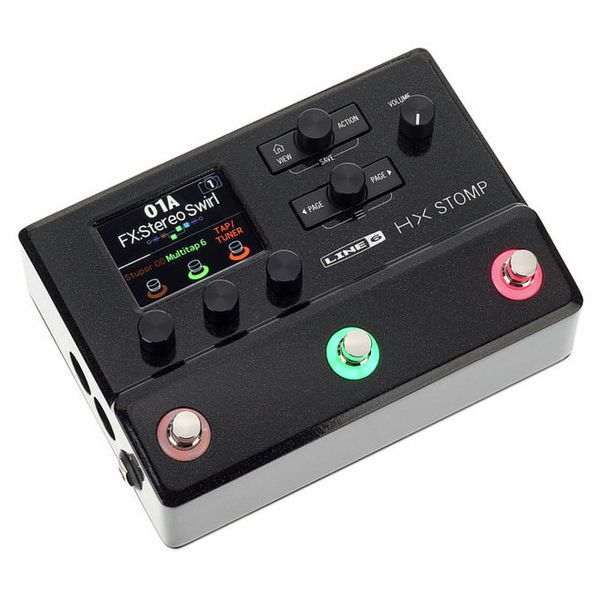
This is where the Stomp gets interesting rather than just impressive. Because it is small and has a proper FX loop, a lot of people run it alongside two or three analogue pedals instead of trying to replace everything.
A favourite fuzz that never quite models right, say a Big Muff, sits in front and the Stomp handles amp, cab and time-based effects behind it. Best of both worlds and no arguments about whether digital fuzz counts.
Same goes for a boost you already trust. Drop an Ibanez TS808 in front of a modelled high-gain amp and it behaves exactly like it does in front of a real one, which still surprises people who assume modelling and real pedals do not mix.
Final Verdict
Years after release the HX Stomp is still the answer to a question a lot of guitarists have: how do I get pro-level modelling onto a board that already has pedals on it?
It is not the cheapest, the block count annoys people, and three footswitches is a genuine limitation. None of that has stopped it being one of the most quietly ubiquitous bits of gear on stages right now.
Buy it if you want the Helix engine in the smallest sensible box. Buy the HX Effects if you love your amp. Buy the Pod Go if you want an easier life. IMO the Stomp remains the smartest of the three.