Watch It First
Yamaha make pianos, motorbikes, outboard motors and, occasionally, a guitar that quietly embarrasses everything else at its price.
The Revstar Element is the cheapest guitar in the Revstar line, and it is the one nobody talks about because everyone is busy looking at the Standards and Professionals above it.
Which is a shame, because it might be the best value in the whole range.
The Shape Is The First Thing
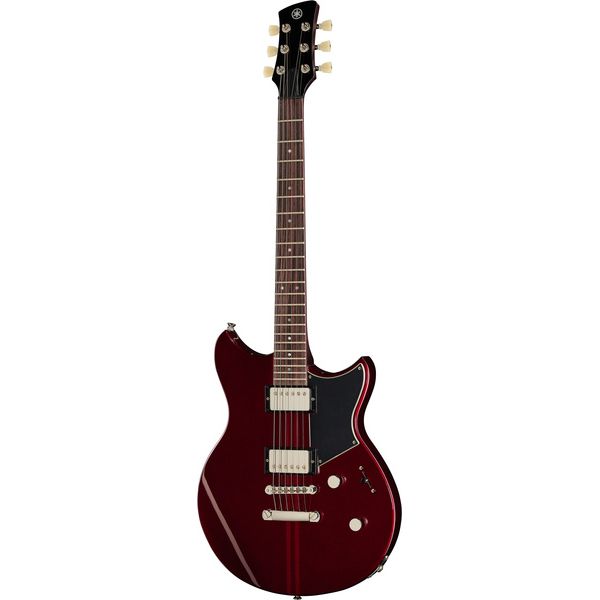
Revstars are based on old cafe racer motorbikes and you can absolutely see it. The body outline, the flat top, the slightly aggressive lower horn.
It is not a Les Paul copy and it is not a Strat copy, which is genuinely rare at this money. Most budget guitars are one or the other with a different headstock.
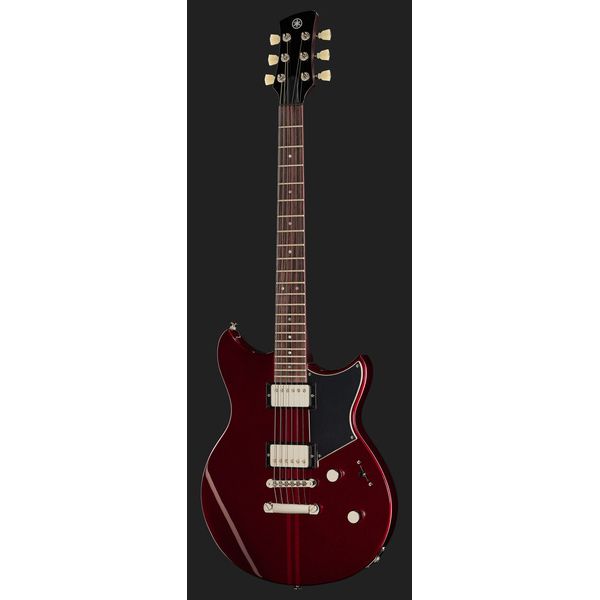
The Red Copper finish is a satin-ish metallic that shifts between orange and brown depending on the light. It looks considerably more expensive than it is.
Chambered body
The mahogany body is chambered, which is the detail that changes everything about how this guitar feels.
It comes in around three kilos. Compared to a Les Paul of similar size, that is dramatic. You can play a three-hour gig without your left shoulder filing a complaint.
Chambering also opens up the sound a bit. There is a resonance to it that a solid slab does not have.
The Neck Is The Best Bit
Three-piece set mahogany neck, rosewood fingerboard, 305 mm radius and 22 jumbo frets.
Yamaha publish the neck thickness, which almost nobody does – 21 mm at the first fret and 24 mm at the twelfth. That is a medium-slim D that suits nearly everyone.
The scale is 629 mm with a 41.9 mm nut. Slinky, easy, and it takes 10s beautifully.
Fretwork is the thing that keeps surprising me. Yamaha factory QC is famously tight and the fret ends on these are consistently better than guitars costing twice as much.
There is no lottery here. Every Revstar Element I have picked up has felt basically identical, which you absolutely cannot say about most brands at this level.
How It Sounds
Two Alnico 5 humbuckers – VH3n in the neck, VH3b at the bridge. Master volume, master tone with a push-pull, three-way switch.
The bridge pickup is medium output with a strong upper midrange push. It cuts. Rhythm parts sit forward in a band mix without needing an EQ pedal.
The neck pickup is warmer than expected and does not go woolly when you add gain. Lead lines stay articulate.
Pull the tone knob and you get a second, brighter voicing. It thins things out and adds top-end sparkle, which is genuinely useful for clean parts rather than being a gimmick.
The chambering shows up most on clean tones. There is an airiness to open chords that a solid-body of this size just does not produce.
High gain works fine, but the chambers mean it is a bit looser than a solid mahogany body. Not a metal guitar. Very much a rock, indie, blues and alt guitar.
The Honest Niggles
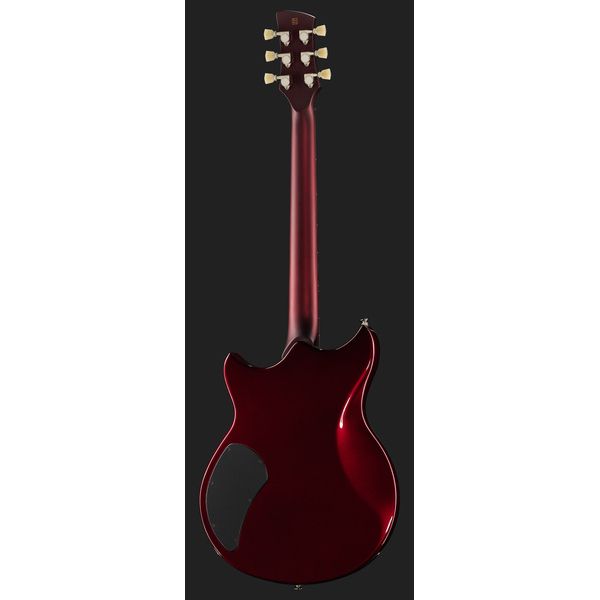
The hardware is functional rather than lovely. The tuners hold pitch but they are not smooth, and the bridge is a fairly plain tune-o-matic style unit.
There is no coil split, only the tone voicing. If you specifically want single-coil sounds, this is not the guitar – go Pacifica 612V II instead.
The Element drops the fancy dry switch and the carbon reinforcement you get on the Revstar Standard RSS20. That is where the money saving comes from.
And the satin finish marks. Belt buckles, jeans rivets, cable ends. It ages, and not everyone likes how.
Also, it is quite a small guitar. If you are used to a big-bodied Les Paul it can feel a bit toy-like for the first hour. That passes.
Who Should Buy One
Anyone who wants a humbucker guitar that is not a Les Paul copy and does not weigh as much as one.
Gigging players who value their spine. Three kilos over a long night is a genuinely different experience.
And people who want something that looks distinctive. There are a lot of black Les Paul copies at rehearsals. There are very few Revstars.
If you want a proper high-gain machine instead, the ESP LTD EC-256 does that job better. If you want cheap and cheerful rock, the Epiphone SG Standard is the value pick.
Pair it with something like a Yamaha THR30II and you have a very tidy, very portable home rig.
Specs at a Glance
- Series: Revstar Element
- Body: chambered mahogany
- Neck: 3-piece mahogany, set-in
- Fingerboard: rosewood with white dot inlays
- Neck thickness: 21 mm at 1st fret, 24 mm at 12th
- Radius: 305 mm
- Nut: PPS, 41.9 mm
- Scale: 629 mm
- Frets: 22 jumbo
- Pickups: VH3n and VH3b Alnico 5 humbuckers
- Controls: master volume, master tone with push/pull voicing, 3-way switch
- Colour: Red Copper
Final Verdict
The Revstar Element is exactly the kind of guitar Yamaha are good at – unglamorous, superbly built, and better than it has any right to be for the money.
The chambered body makes it a joy to play standing up. The neck is one of the best at this price. The pickups are voiced with actual thought behind them.
It is not flashy, the hardware is basic, and it will never be the guitar that makes people go wide-eyed in a shop.
But if you want something you will actually reach for, that never needs an excuse made for it, and that costs a fraction of what it feels like it should – this is a very easy recommendation.
Sleeper hit is exactly the right description.
Why Nobody Talks About It
Yamaha have a marketing problem, and the problem is that they are Yamaha.
Nobody grew up with a poster of a Revstar on their wall. There is no famous player you can point to and say „that guy”. It does not carry any cultural weight.
So the guitar gets judged purely on what it is, which is a very high bar to clear when the alternative brands have sixty years of mythology behind them.
The upside is that used prices are soft. People are not fighting over these the way they fight over Epiphones, which makes the second-hand market interesting.
The build consistency point again
It is worth repeating because it is the strongest argument for buying one.
With a lot of budget brands you are told to try before you buy because the variation between examples is real. Yamaha do not really have that problem.
Order one online, unbox it, and it will be set up reasonably and free of sharp frets. That certainty has genuine value.
Small Things That Add Up
The strap buttons are placed sensibly, so it hangs level rather than nose-diving.
The control layout is simple enough to use in the dark, which sounds trivial until you are on a badly lit stage.
The output jack is on the side rather than the face, so your cable does not flop across the body.
None of these are exciting. All of them are the sort of thing you only notice when a guitar gets them wrong.
What I Would Upgrade
Tuners first, if anything. Locking tuners would take the last bit of vagueness out of it.
Beyond that, honestly nothing. The pickups suit the guitar, the bridge does its job, and the neck is already excellent.
If you find yourself wanting to change more than that, you probably want a different guitar – and something like the Pacifica Standard Plus from the same brand is the obvious place to look.