Watch It First
The Flying V was a commercial disaster when Gibson launched it. Almost nobody bought one. They stopped making them within about two years.
Then Albert King, Jimi Hendrix and roughly every metal band of the 1980s got hold of the idea, and now it is one of the most recognisable shapes in music.
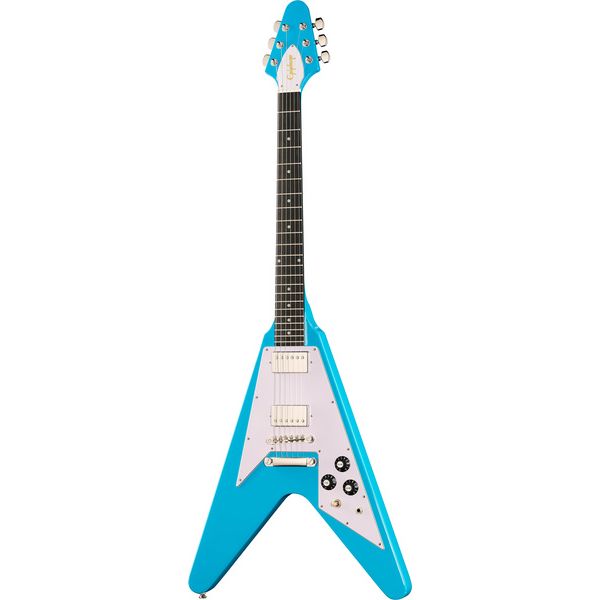
This is the Epiphone 70s version, in Maui Blue, and it is a considerably better guitar than the price would suggest.
What You Get
Mahogany body, set mahogany neck, and – this is the surprise – a genuine ebony fingerboard.
Ebony at this price is not normal. Most Epiphones at this level get Indian laurel. Ebony is harder, tighter and gives a snappier attack, and it looks proper next to the pearl dot inlays.
Scale is 629 mm, nut width 42.9 mm, radius 305 mm, 22 medium jumbo frets. Standard Gibson-family measurements, nothing weird.
The nut is GraphTech, the tuners are Grover Rotomatics, and the bridge is a LockTone Tune-o-matic with a matching stopbar. That is a solid hardware list for the money.
The pickups
Two Epiphone T-Type Pro humbuckers. These are the newer alnico-loaded ones, not the old ceramic Epiphone units, and the difference is significant.
They are moderate output. Not PAF-quiet, not EMG-hot. Right in the middle, which for a rock guitar is exactly where you want to be.
The Ergonomics Conversation
Let us deal with this first because it is the main objection people have.
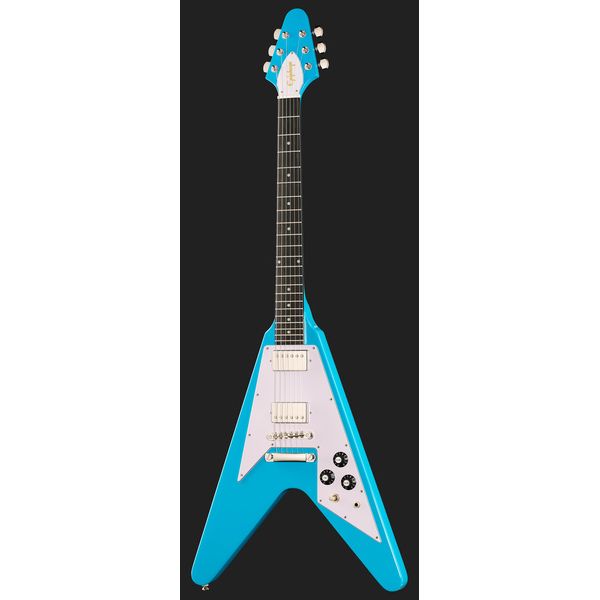
Sitting down, a Flying V is annoying. There is no lower bout to rest on your leg. You either play it classical-style with the bottom wing between your thighs, or you perch it awkwardly and hope.
Standing up, it is completely different. It is light, it balances well, and the upper fret access is the best of any Gibson-family shape by a mile.
There is nothing in the way past the 17th fret. Nothing. You can get to the 22nd without contorting your wrist, which a Les Paul absolutely will not let you do.
Weight and balance
Around three and a half kilos on the ones I have handled. Not heavy, and it hangs level on a strap rather than nose-diving.
The pointy bits are a hazard in small rooms. You will hit a cymbal stand. It is a rite of passage.
How It Plays
The Rounded C neck is medium-full. Comfortable, not chunky, and it feels reassuring under the hand rather than skinny and nervous.
Fretwork on mine was good. Ends were dressed, no sprouting, and the crowns were even enough that bends do not choke anywhere on the board.
The ebony board makes a real difference to feel. It is slick and fast, and it does not have that slightly dry drag you get with a cheap rosewood-substitute board.
Factory setup was a bit high, as usual. Half an hour with a truss rod key and a bridge screwdriver and it was flying.
How It Sounds
Mahogany plus a set neck plus a big flat body equals a lot of sustain. Notes hang around, and they hang around with a bit of a growl to them.
The bridge pickup is punchy and slightly mid-forward. Classic rock territory. It cleans up nicely on the volume knob, which is the test of a decent alnico pickup.
The neck pickup is where it gets interesting. Because of the ebony board and the body shape, it is tighter and more articulate than the equivalent on a Les Paul.
Less woolly, more defined. Great for leads that need to cut rather than sit back.
Middle position with both volumes rolled back slightly is a very underrated sound on this guitar. Hollow and glassy and completely unlike what the shape suggests.
The Honest Niggles
The white pickguard is a marmite thing. On Maui Blue it looks great. Some people will still swap it for black immediately.
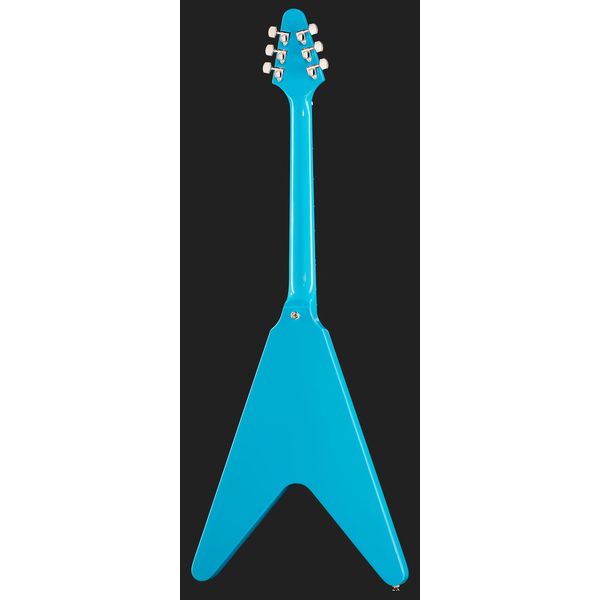
The output jack is on the lower wing, which means your cable dangles across your leg. Every V does this. You get used to it or you use a right-angle plug.
No case, just a gigbag. Given the shape, that is a bit of a shame – Vs are awkward to store and a hard case would be genuinely useful.
And the finish, while thick and glossy and lovely, is thick and glossy. It will show swirl marks with age. Keep a cloth in the bag.
Who It Is Actually For
Anyone playing standing up in a rock or metal band. That is the honest answer.
If you sit down to practise most of the time, get a Epiphone SG Standard instead – it is nearly as light, nearly as easy to reach up the neck, and it stays on your leg.
If you want the same 70s attitude in a shape that is even more ridiculous, the Epiphone Explorer is right there.
And if you want a V-ish level of aggression with modern pickups, look at the Epiphone Prophecy Les Paul as an alternative.
Specs at a Glance
- Body: mahogany
- Neck: mahogany, set-in, Rounded C profile
- Fingerboard: ebony with pearl dot inlays
- Radius: 305 mm
- Nut: GraphTech, 42.9 mm
- Scale: 629 mm
- Frets: 22 medium jumbo
- Pickups: 2x Epiphone T-Type Pro humbuckers
- Controls: 2 volume, 1 tone, 3-way toggle
- Bridge: LockTone Tune-o-matic with stopbar
- Tuners: Grover Rotomatic
- Hardware: nickel
- Colour: Maui Blue, high gloss
- Includes: gigbag
Final Verdict
The Epiphone Flying V 70s is one of those guitars that is much better than it needs to be.
Ebony board, Grover tuners, decent alnico pickups and a properly finished neck at a price where you would normally accept a lot more compromise.
It is impractical sitting down, awkward to store and it will get you the wrong kind of attention in a guitar shop. All true.
It also plays brilliantly, sounds genuinely great and looks like nothing else on a stage. Pair it with something like a Marshall DSL1CR and you have a very complete rock rig for not much money.
Coolest shape in rock? Still arguable. Best value V on the market? Not really arguable at all.
Setting One Up
Flying Vs need a slightly different setup approach and nobody tells you this.
Because the body is symmetrical and the neck joins so far down, the guitar sits at a steeper angle on a strap than a Les Paul does. Your fretting hand ends up higher.
That changes how the action feels. What seems fine on a bench can feel low and buzzy once you strap it on, so set it up standing if you can.
Strap position
Move the rear strap button and everything changes. Stock position hangs it fairly high and pointy. Some people move it to the lower wing for a lower, flatter hang.
It is a fifteen minute job and it transforms the ergonomics. Worth considering before you decide the shape does not suit you.
The 70s Detail
This model is aimed at the mid-70s Gibson V, which had a slightly different pickguard shape and hardware layout than the 1958 original.
The 70s is the era of the V as a hard rock guitar rather than a jazz curiosity, which is why Epiphone leaned into it here.
The Grover Rotomatics are period-appropriate and genuinely good tuners. The LockTone hardware is a modern addition that nobody will complain about.
A Note On Cases
Storing a V is a genuine problem. It will not stand on a normal guitar stand without leaning, and it does not fit most generic gig bags.
The supplied bag is V-shaped, which is the important bit. But it is soft, and this guitar has four sharp points that all want to meet a doorframe.
If you gig it, budget for a proper V-shaped hard case. Consider it part of the purchase price rather than an optional extra.