Watch It First
Most beginner-friendly acoustics look like beginner-friendly acoustics. Yamaha decided the Storia line didn’t have to.
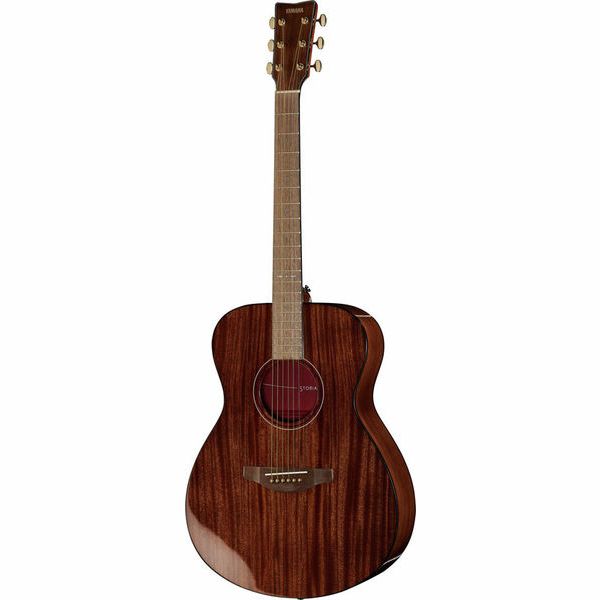
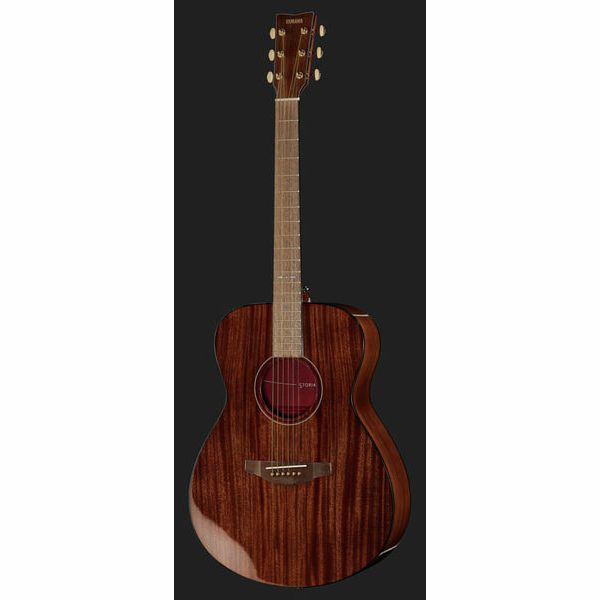
The Storia III is a small-bodied, all-mahogany concert acoustic with a genuinely striking chocolate-brown gloss finish, red-wine interior, and a build quality that punches well past its price.
It’s easy to write off as a „lifestyle” guitar. Spend time with one and that assumption doesn’t survive long.
Small Body, Big Idea
The Storia series uses a Concert body shape – smaller than a dreadnought, with a shorter 634mm scale length. It’s built to be comfortable for players with smaller hands or frames, without feeling like a toy.
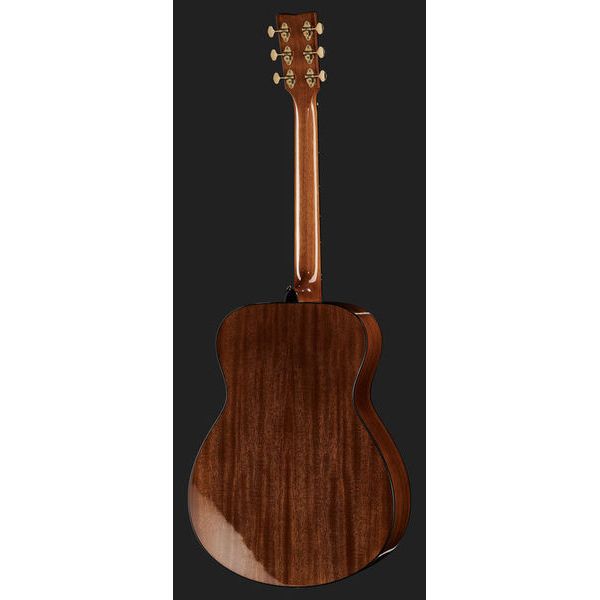
All-mahogany construction (solid top, mahogany back and sides) is the tonal signature here: warm, woody, and a little compressed compared to a bright spruce-top dreadnought.
- Body: Concert shape
- Top: Solid mahogany
- Back & sides: Mahogany
- Neck: Nato with walnut fretboard
- Scale: 634mm (25″)
- Nut width: 43mm
- Electronics: SRT Zero Impact pickup
- Hardware: Open-gear champagne gold tuners
Design Details That Actually Matter
Yamaha put real thought into the ergonomics here. There’s a beveled edge along the top where your forearm rests, which sounds minor until you’ve played a guitar without one for an hour and felt the difference.
Inside the soundhole is a colored finish – wine red on the III – visible if you peek in, plus an inlaid rosette instead of a printed sticker. Small touches, but they add up to a guitar that doesn’t feel mass-produced.
Neck and Playability
The nato neck with a walnut fretboard is slim and quick, easy on the fretting hand for players transitioning from ukulele or a smaller-scale instrument.
Out of the box it does need a light setup for most players – nut and saddle height especially – but that’s true of almost anything in this price bracket.
The SRT Zero Impact Pickup
Yamaha borrowed pickup tech from its higher-end acoustics here, and it shows. It’s a passive under-saddle system, so no battery to worry about, and it stays close to the natural unplugged tone rather than turning quacky.
There’s no onboard EQ – just an output jack – so you’re relying on your amp or PA for tone shaping. Simple, but limiting if you like fine control on the guitar itself.
Who It’s For
Casual players, songwriters, and anyone who wants a guitar that looks as good propped in the corner of a room as it sounds in hand. It’s also a genuinely great pickup guitar for playing along to easy pop songs on the couch.
If you’ve been comparing options in our cheap acoustic guitars for beginners roundup, the Storia III is one of the more distinctive-looking picks in that price range.
Who Should Look Elsewhere
If you want maximum volume and low-end for strumming in a full band, a dreadnought like the Seagull S6 will project more.
How It Compares
Against the Fender CC-60S, another Concert-shaped acoustic, the Yamaha wins on distinctive looks and neck comfort, while the Fender is the safer, more traditional choice.
Compared to the Cort Earth 100, the Storia III costs more but adds genuinely useful electronics and noticeably nicer fit and finish.
The Taylor GS Mini is the closest in spirit – small body, big design intent – though the Taylor leans travel-friendly while the Storia leans lifestyle and looks.
Tone in Practice
Strummed, the all-mahogany build gives a compressed, woody character – less sparkle than spruce, more „vintage parlor guitar” vibe. It suits fingerstyle and gentle strumming better than aggressive flatpicking.
Sustain is longer than you’d expect from a small body, and the mids sit forward enough to cut through in a quiet room without needing to dig in hard.
The Storia Family, Briefly
Yamaha actually makes three Storia models – I, II, and III – which share the same body, scale, and construction but differ mainly in finish and interior color detailing.
The III’s chocolate brown gloss with black binding is the most striking of the three, and it’s currently the version most readily stocked, making it the easiest entry point into the series.
If tone and construction are your priority, all three play near-identically – the choice really does come down to which finish speaks to you.
Everyday Ergonomics
Total length and body depth are both trimmed down slightly compared to a standard concert guitar, which makes a genuine difference for smaller-framed players or anyone who just wants something less bulky to carry around the house.
It’s light enough to comfortably play standing with a strap for a full set, and the slim body doesn’t dig into your ribs the way a deep-bodied dreadnought can during long sessions.
The Niggles
No onboard EQ means you’re at the mercy of your amp or PA’s tone controls when plugged in – a minor inconvenience for gigging players used to shaping tone at the guitar.
Some players find the neck lacquer a little tacky under a sweaty hand during long sessions – not a dealbreaker, but worth knowing.
No case included, and given the eye-catching finish, a padded gigbag is worth the extra spend to protect it from scuffs.
It’s also a genuinely nice guitar to hand to a friend or partner who’s curious about playing – the smaller neck and body make that first „just try a chord” moment a lot less intimidating than a full-size dreadnought would.
Final Verdict
The Yamaha Storia III is proof that a beginner-friendly acoustic doesn’t have to look or feel generic. It’s genuinely well built, plays comfortably, and looks like nothing else at this price.
If you want a guitar that gets noticed for the right reasons and still holds up when you actually play it, this is one of the more interesting options out there right now.