Watch It First
Fender’s budget acoustic lineup can be confusing. A dozen models, half of them look identical from three feet away.
The CC-60SCE is the one worth actually paying attention to: a Concert-body cutaway with a solid spruce top and built-in Fishman electronics, priced like an impulse buy but built like something you’d keep.
Is it actually worth it, though? Let’s get into it.
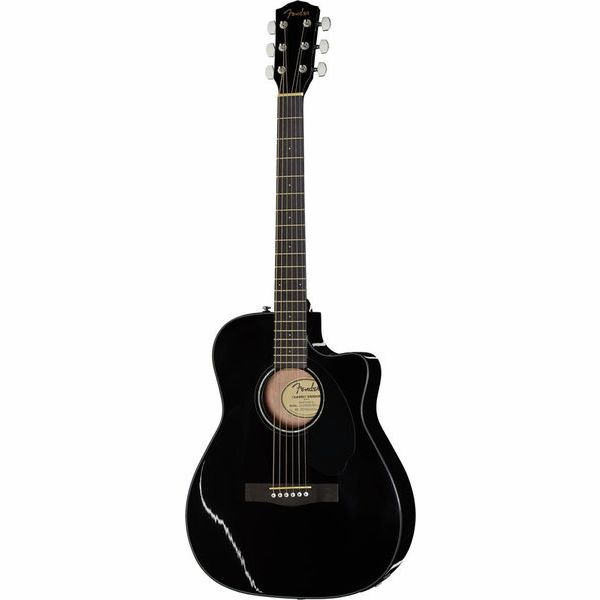
Concert Body, Explained
„Concert” refers to the body shape, not that it’s some fancy performance-grade instrument. It’s smaller and slimmer than a dreadnought, which makes it noticeably comfier on the couch or cross-legged on the floor.
You do lose a bit of low-end boom compared to a full dreadnought. That’s the trade-off, and for most players it’s a trade worth making for the comfort.
- Body: Concert with cutaway
- Top: Solid spruce
- Back & sides: Mahogany
- Bracing: Scalloped X-bracing
- Fretboard: Walnut, 20 frets
- Scale: 643mm
- Electronics: Fishman CD preamp
- Hardware: Chrome
Build Quality Check
The solid spruce top is the headline feature here – a lot of guitars at this price still use laminate tops all the way through. Solid wood opens up and improves with age, laminate mostly doesn’t.
Fit and finish is what you’d expect from Fender’s Indonesian factories: consistent, clean fretwork, no sharp edges catching your hand on the way up the neck.
The scalloped X-bracing is worth mentioning too – it’s a lighter bracing pattern that lets the top vibrate more freely, which is part of why this guitar sounds a size bigger than it looks.
How It Feels To Play
The mahogany neck is slim and fast, closer to what an electric player would expect than the baseball-bat necks you sometimes find on budget acoustics.
Factory action is on the lower side, which is great for comfort but means you’ll want a proper setup if you’re tuning down or throwing on heavier strings.
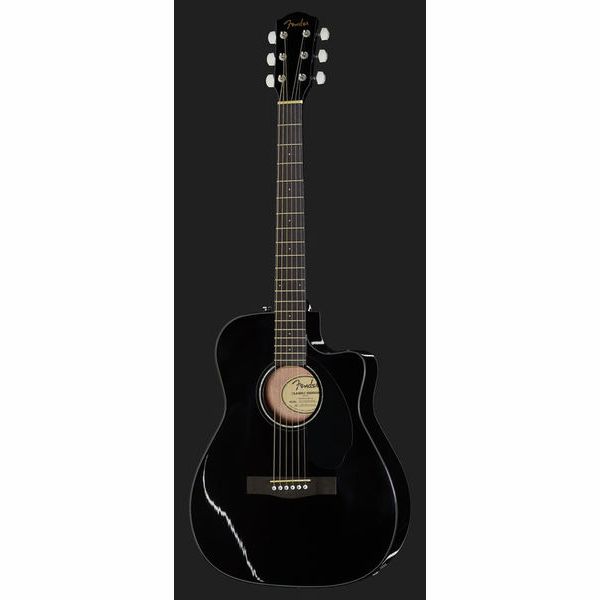
The Fishman Electronics
The Fishman CD preamp is a simple, no-frills unit: volume, bass, treble, and a built-in tuner. Nothing groundbreaking, but it does the job without adding harsh piezo quack.
For open mics, small coffee-shop gigs, or just plugging into a practice amp at home, it’s more than adequate. If you want to soften the amplified tone further, a pedal like the Boss AC-3 Acoustic Simulator pairs nicely, though most people won’t need it.
Who Should Buy This
Anyone who wants one guitar that covers unplugged practice, open mics, and small gigs without owning three different instruments. It’s a genuinely sensible „only acoustic you own” pick.
If you’re stepping up from a starter pack guitar covered in our cheap acoustic guitars for beginners list, this is a natural next rung on the ladder.
Who Should Skip It
Fingerstyle purists chasing maximum resonance might prefer a non-cutaway design, since cutaways sacrifice a small amount of body volume for upper-fret access.
How It Stacks Up
Fender also sells the plain CC-60S, same body and top wood, minus the cutaway and electronics. If you’ll never plug in, save the money and grab that one instead.
Stepping up in price, the Taylor GS Mini is smaller and more travel-oriented, with noticeably nicer electronics, but costs meaningfully more.
Tone in Practice
Strummed unplugged, it’s balanced rather than boomy – the mahogany back and sides keep the mids present without letting the bass take over, which suits singer-songwriter style playing well.
Fingerpicked, individual notes come through cleanly rather than blurring together, and the cutaway genuinely gets used if you like noodling up past the 12th fret.
Setup Tips Before You Play It
Most CC-60SCEs arrive playable but not perfectly dialed in. A quick trip to a local tech for a proper setup – nut slots, saddle height, intonation check – makes a bigger difference than any string upgrade.
It’s a cheap thing to do and it’s the difference between „fine” and „genuinely great to play.” Most shops charge less than a set of strings costs anyway.
Amplified Sound in More Detail
Plugged straight into a PA or acoustic amp, the Fishman CD is honest rather than flattering. It won’t magically make the guitar sound like a $3000 instrument, but it also won’t add ugly artifacts or feedback squeal at reasonable volumes.
The built-in tuner is a genuinely useful touch for anyone playing live – no more fumbling for a clip-on tuner between songs, just a quick glance at the small LED display.
Battery life on the 9V is solid too, easily lasting through several gigs before you need a replacement, as long as you remember to unplug your cable after each session.
A Note on the Cutaway
It’s easy to dismiss the cutaway as a cosmetic feature, but on this guitar it genuinely opens up access past the 14th fret. If you ever solo or noodle up high, you’ll actually use it, unlike on some guitars where the cutaway is more decorative than functional.
The Niggles
Stock strings are nothing special – budget them for a set of D’Addario or Elixir strings and the tone opens up noticeably.
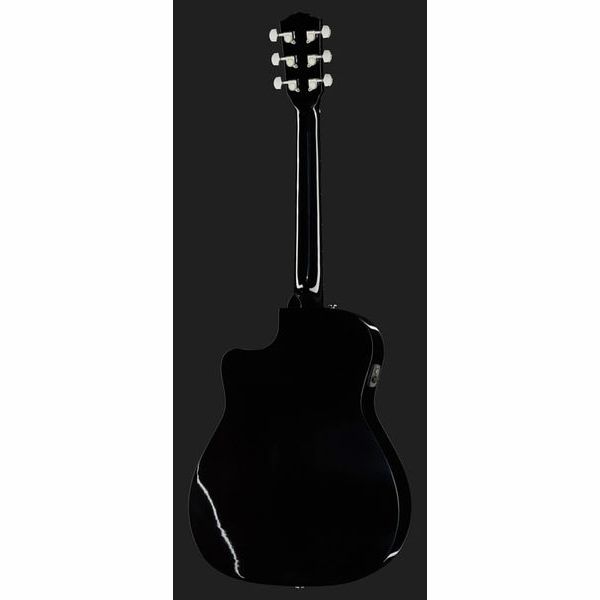
The black finish (if you go that route) shows fingerprints and dust like a mirror. The natural finish hides this better, worth knowing before you pick a color.
No case included, just add one separately if you’re gigging with it regularly – a soft gigbag is the minimum you’ll want.
Final Verdict
The Fender CC-60SCE does exactly what it promises: a comfortable, good-sounding, stage-ready acoustic-electric that doesn’t demand a serious budget.
It’s not going to replace a proper Taylor or Martin, and it doesn’t need to. For the price, it’s one of the smartest all-rounder acoustics Fender makes. Worth it? Yeah, honestly.