Watch It First
Quick heads up before we get into it: Blackstar quietly retired the whole Silverline range a while back. If you came here hunting for the Silverline Standard, it’s gone from the shelves.
The amp doing that exact job now is the Blackstar ID:Core 20 V4 — same idea (compact stereo modeling combo for home use), newer chip, better software, and honestly a nicer amp all round.
I’ve had a couple of students ask me what to grab instead, so I figured it was time to actually sit down with one and give it a proper going-over.
What You’re Actually Getting
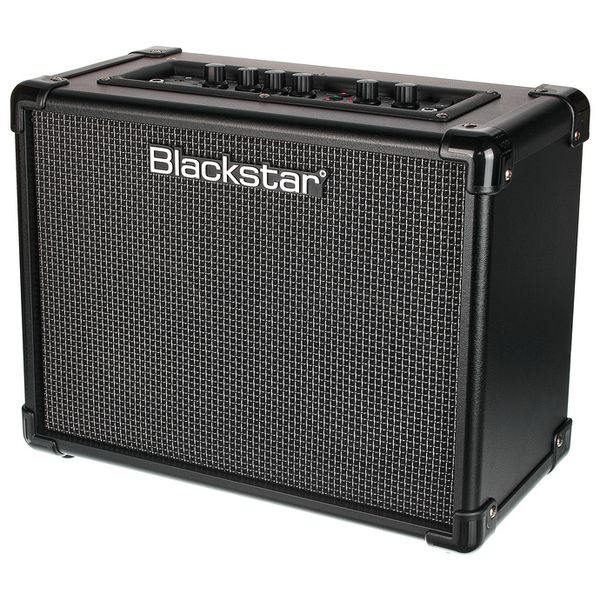
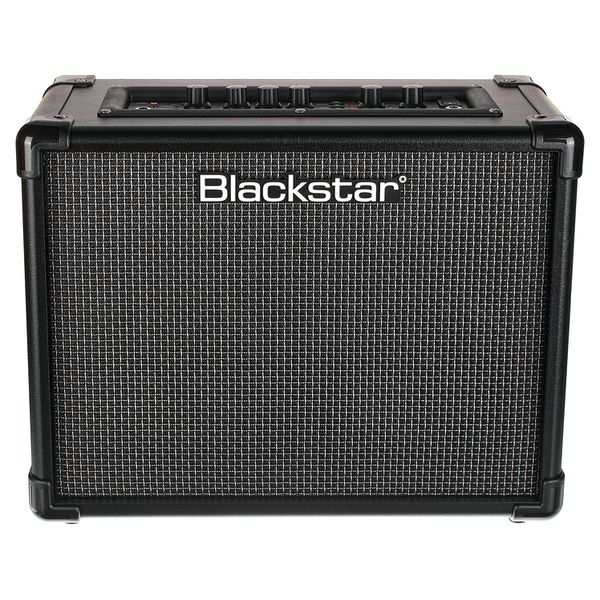
On paper it’s simple: 20 watts, two 5″ speakers running in stereo, and a control panel that looks like a normal amp until you notice the Voice knob does the job of about six amps at once.
No frills box, no flashy screen. Just knobs, and that’s actually a big part of the appeal for a practice amp.
Controls and Build
You get Voice, Gain, Volume, and the famous Blackstar ISF knob, plus dedicated Effects Type and Effects Level dials.
There are footswitch-controllable buttons for Modulation, Delay, Reverb, a Manual mode, and Tap Tempo. It’s built from fairly light plastic-ish material, which keeps the weight down to 5.2kg, but it’s not going to survive being kicked around a stage — it was never meant to.
The ISF Knob Is the Whole Trick
If you’ve never used a Blackstar amp, ISF (Infinite Shape Feature) is basically a blend knob between American-voiced tone and British-voiced tone.
Turn it one way and you get tighter, scooped, Fender-ish clean. Turn it the other and it gets thicker, more mid-forward, more Marshall. It’s a genuinely useful control, not a gimmick knob that does nothing — which, let’s be honest, is rare on amps in this price range.
Tone and the Six Amp Voices
The Voice knob switches between Clean Warm, Clean Bright, Crunch, Super Crunch, OD1 and OD2. That’s a smaller menu than some rivals like the Peavey Vypyr X2, which throws dozens of amp models at you.
But honestly? Six well-voiced amps beat forty mediocre ones. Every single voice here sounds usable straight out of the box, no digging through menus required.
Cleans are genuinely sparkly, the crunch settings have real amp-like touch sensitivity, and the OD channels get surprisingly close to a hot tube amp breaking up — not perfect, but way past „digital fizz” territory that gave modeling amps a bad name a decade ago.
Effects and Cab Rig
There are 12 onboard effects covering the usual suspects: chorus, flanger, phaser, tremolo, a couple of delays, reverb types. Nothing boutique, but everything usable.
The neat trick is Blackstar’s Cab Rig speaker/mic simulation, which kicks in the moment you plug into the USB-C port or headphone out. It makes recorded or headphone tone sound like a mic’d cab instead of a raw speaker blast in your ears — a small thing that makes a genuinely big difference during late-night practice.
Playability at Bedroom Volume
This is where the ID:Core 20 V4 earns its keep. There’s a power reduction switch that drops it down to 1 watt, which sounds tiny but is plenty loud enough to annoy a flatmate while still letting you dig into the amp’s dynamics.
Stereo speakers actually matter here too — modulation and delay effects genuinely spread left to right instead of feeling squashed into a single cone like on cheaper mono practice amps.
If you’ve been eyeing something like the Positive Grid Spark 2 for the app-driven experience, know that Blackstar’s approach here is more traditional — knobs first, software second — and some players will genuinely prefer that.
The Free Software Side
Plug in via USB-C and Blackstar’s free Architect software opens up way more control than the physical knobs allow — full parametric EQ, effect ordering, deeper gain staging, the works.
It also doubles as an audio interface, so you can record direct into your DAW with the cab simulation baked in. For a bedroom producer on a budget, that’s a genuinely useful bonus feature, not just a box-ticking exercise.
Who Should Actually Buy This
Beginners will love it because every voice sounds decent with zero tweaking. Apartment dwellers will love the 1W mode.
If you want something more analog-feeling with actual valves, have a look at the Blackstar HT-20R MKIII instead — completely different price bracket and completely different amp, but worth knowing it exists in the same family tree.
If desk space is your real constraint rather than budget, the Boss Dual Cube LX is worth cross-shopping too, though it’s a different flavour of practice amp entirely.
Grungier players who just want one great crunch tone and nothing else might actually prefer something dead simple like the Marshall MS-2. And if you want an even smaller modeling box that pairs with headphones or a phone, the NUX Amp Academy is worth a glance too.
Specs at a Glance
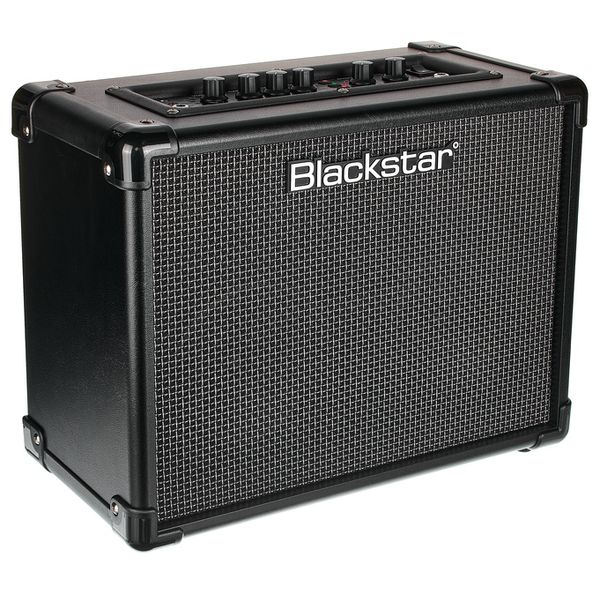
- Power: 20W (2 x 10W stereo)
- Speakers: 2x 5″
- Amp voices: 6 (Clean Warm, Clean Bright, Crunch, Super Crunch, OD1, OD2)
- Effects: 12 onboard, footswitch controllable
- Connectivity: USB-C, headphone/Cab Rig out, line input, footswitch jack
- Power reduction: down to 1W
- Weight: 5.2kg
The Niggles
No Bluetooth streaming, which feels like an odd omission in 2026 when you just want to jam along to a playlist. You can do it via cable through the aux/line-in, but it’s not as slick.
The physical knobs also only get you part of the way to the amp’s full potential — for the deeper tweaks you’re stuck tethering to a laptop and running Architect, which is a minor hassle if you just want to twiddle knobs and go.
And two 5″ speakers, however cleverly stereo-linked, are never going to give you real low-end weight. Fine for practice, not a substitute for a proper gigging rig.
Final Verdict
The Blackstar ID:Core 20 V4 is exactly what the Silverline Standard’s fans needed, even if the name changed. It’s a genuinely well-thought-out practice amp that punches well above its price bracket.
Six good amp voices beat twenty mediocre ones, the ISF knob is a real tone-shaping tool rather than a gimmick, and the 1W mode means you can actually use it at 2am without a domestic incident.
If you’re after a no-nonsense modeling combo for home practice, recording, or just learning the ropes, this one’s a safe bet. IMO it’s one of the better budget modeling amps going right now.