Watch It First
So you’re eyeing a 5-string bass but every “affordable” 5-string you’ve tried feels like a plank of wood with strings glued on.
Fair worry. The Sterling SUB Ray5 is Music Man’s budget answer to that exact problem, and it’s quietly been one of the best value 5-strings around for years.
I’ve spent real time with one. It punches way above its price tag – let’s get into why.
What You’re Actually Getting
This is Sterling’s budget line, built to bring the real StingRay formula down to earth. Same body shape, same attitude, same basic DNA as the bass Flea and Louis Johnson made famous – just built in Indonesia instead of California.
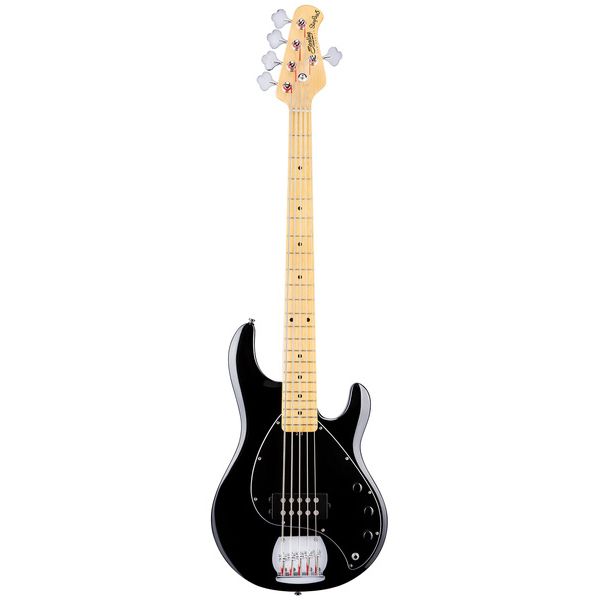
The SUB Ray5 BK comes with a linden body, maple neck, and maple fretboard with black dot inlays. Nothing fancy on paper. But StingRay basses were never about fancy tonewoods – they’re about that one ceramic humbucker doing all the heavy lifting.
You get 21 medium frets, a 34-inch scale, and a 2-band active preamp. Volume, treble, bass – simple controls that actually make sense once you’re plugged in.
How It Plays
Here’s where the 5-string thing gets interesting. A lot of budget 5-strings feel like someone bolted an extra string onto a 4-string neck as an afterthought. Not this one.
The nut width sits at 45mm, which is wide but manageable – not the hand-cramp-after-ten-minutes wide you get on some cheaper 5-strings. IMO, if you’ve never played a 5-string before, this is a genuinely good place to start.
The low B string actually feels tight and defined, not floppy. That’s not something I expected at this price point.
- Fretwork is clean – no sharp edges catching on bends
- Neck profile stays comfortable through long practice sessions
- Balance on a strap is decent, doesn’t neck-dive like a lot of 5-strings do
Setup Out of the Box
Factory setup on these varies a bit unit to unit – true of basically every budget instrument, not just Sterling.
Mine arrived with slightly higher action than I’d like, but a truss rod tweak and a few minutes on the bridge saddles had it playing exactly how I wanted.
FYI – if you’re not comfortable doing basic setup work yourself, budget for a professional setup when you buy one of these. Small cost, big difference.
The Tone
Plug this into literally anything and you’ll hear that unmistakable StingRay growl. That aggressive midrange bite is baked into the design, and Sterling nailed replicating it.
The 2-band EQ won’t give you the surgical precision of a 3-band setup, but for most players that’s a feature, not a bug. Less to fuss with, more time actually playing.
Slap tone is where this bass shows off – punchy, cuts through a mix, and doesn’t get muddy on the low B like a lot of cheap 5-strings tend to.
For fingerstyle, roll the treble back a touch and you get a warm, rounded tone that still has authority. Versatile little beast.
But Is It Really Like a Real StingRay?
Short answer: closer than you’d expect, not identical.
The real Ernie Ball Music Man StingRay 5 has a slightly different preamp voicing and noticeably higher-end components throughout – you’re paying for USA craftsmanship and tonal refinement.
But the core DNA, that ceramic humbucker growl, translates surprisingly well to this budget version. Most listeners in a blind test would struggle to tell them apart through an amp.
Who Should Buy This
If you’re a gigging bassist who needs 5 strings but can’t justify a proper StingRay5’s price tag, this is your bass. Full stop.
It’s also a great option if you’re stepping up from a 4-string and want to try the extra range without committing serious money to the experiment.
Compare it against something like the Sterling SUB Ray4 HH if you’re not sold on needing that low B – the 4-string sibling is just as capable for players who don’t need the extended range.
If you want the StingRay tone in a more traditional package, the Sterling StingRay RAY34 is worth a look too, though that’s a 4-string.
And if you’re just starting out on bass entirely, our reviews of the Squier Sonic Bronco Bass and the Squier Classic Vibe 60s Precision Bass cover a completely different flavor, but both are solid beginner picks.
Fancy something weirder? Our take on the Sterling Bongo is one of the strangest basses we’ve covered, in a good way.
And if J-style tone interests you more than P/StingRay bite, the Harley Benton JB-75MN punches well above its price too.
The Niggles
Nothing’s perfect, and I’d be lying if I said this bass has zero flaws.
The stock strings are… fine. Not great. Budget-tier factory strings that most players will want to swap within the first few months.
The finish, while decent, isn’t going to win beauty contests up close – there’s a slight orange-peel texture if you look hard under bright light.
And the tuners, while functional, aren’t the smoothest out of the box. A drop of lubricant helps a lot.
None of these are dealbreakers. They’re the compromises you expect at this price, and every single one is fixable with a $20 upgrade or two.
Specs at a Glance
- 5-string electric bass guitar
- Body: Linden
- Neck: Bolt-on maple
- Fingerboard: Maple, black dot inlays
- Scale: 864mm (34 inch)
- Frets: 21, medium
- Nut width: 45mm
- Pickup: 1 ceramic humbucker (bridge)
- Electronics: Active 2-band preamp
- Bridge: Fixed
- Hardware: Chrome
- Strings: .045-.125
Final Verdict
The Sterling SUB Ray5 does exactly what it sets out to do: real StingRay tone and playability in a 5-string package that won’t wreck your budget.
Is it going to replace an actual Music Man StingRay5 for a touring pro? No, obviously not. But for practically everyone else – beginners stepping up, gigging players on a budget, home studio owners who need that growl on tap – this thing delivers way more than it should for the money.
If you’ve been putting off getting a 5-string because the good ones cost a fortune and the cheap ones feel like garbage, this is your answer. Genuinely one of the best value 5-strings out there right now 😉