Watch It First
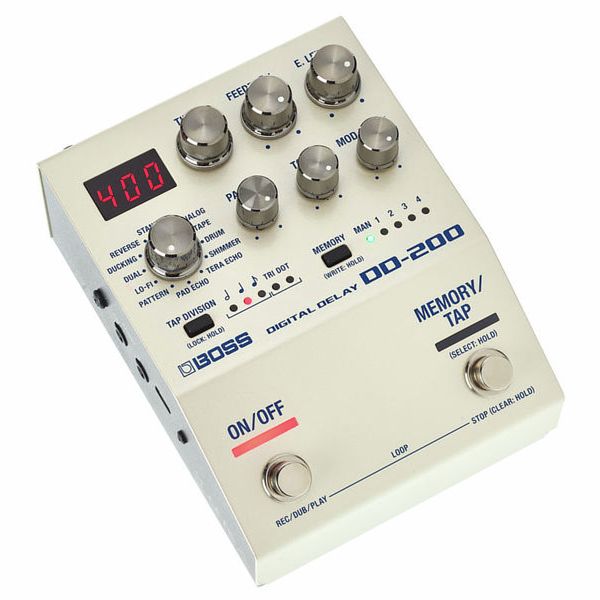
Boss’s 200 Series pedals are basically what happens when a company decides its compact classics need a proper, no-compromise upgrade. The DD-200 is the delay entry in that line, and it’s a genuinely serious piece of kit.
It takes the DNA of decades of Boss delay pedals — the DD-3, the DD-8, even bits of the old rack units — and crams it into one box with proper stereo I/O, MIDI, and a built-in looper.
Is this overkill for most players, or exactly the delay workstation your board has been missing? Let’s dig in.
Twelve delay types is a lot
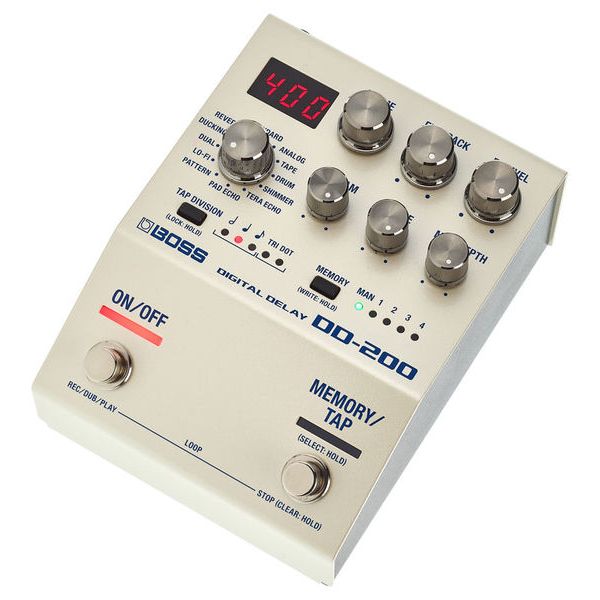
You get everything from standard digital and analog-modelled delays to tape, reverse, dual, pattern, warp, and dynamic modes. Basically every delay flavour you’ve ever heard on a record is in here somewhere.
The Pattern mode alone is worth the price of entry for anyone into ambient or math-rock style rhythmic delays — you can build genuinely complex, evolving repeat patterns without needing a separate sequencer pedal.
And because it’s 32-bit/96kHz internally, the digital modes are pristine. No harshness, no digital grain creeping in even at long delay times.
The looper nobody talks about
Tucked away in this thing is a genuinely usable 60-second phrase looper. It’s not the headline feature, but it’s a nice bonus if you’re practising alone or building layered ambient parts on the fly.
It won’t replace a dedicated looper pedal for serious live looping work, but as a practice tool or a way to sketch out song ideas, it’s more than capable.
Who’s this actually for
Gigging players who need serious flexibility — different delay types per song, stored in memory, recalled instantly — will get the most out of this. Worship and function bands especially, where the setlist demands a totally different ambience song to song, similar to how you’d use something like the Boss VE-8 Acoustic Singer for vocal/guitar flexibility.
Ambient and post-rock players will also have a field day with the Pattern and Dynamic modes, especially paired with something reverb-heavy like the TC Electronic Skysurfer Reverb for full wash-of-sound territory.
If you just want a simple slapback for rockabilly or blues, honestly this is overkill — grab something simpler and save your cash. This pedal is for people who actually want to dig into the menus.
Playability and everyday use
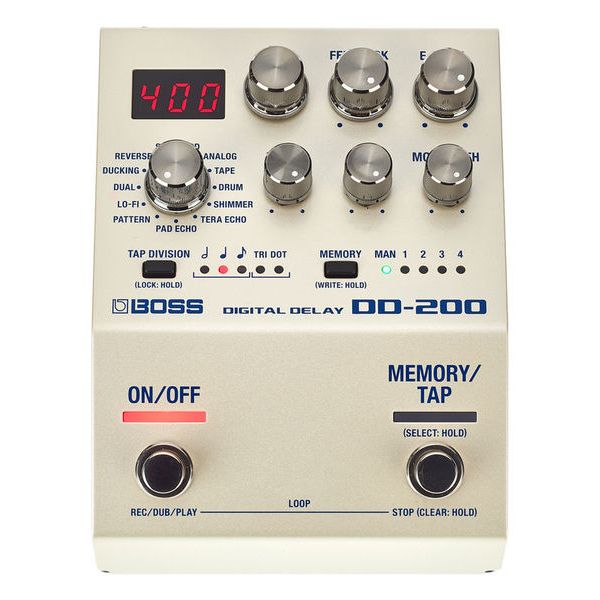
The little LED display genuinely helps here — you can see exactly what parameter you’re editing rather than guessing based on a knob position, which matters a lot once you’re four delay types deep into experimenting.
Stereo A/B ins and outs mean proper wide, spacious delay trails when you run it into two amps, and there’s a dedicated Memory footswitch for instantly jumping between two saved patches mid-song.
MIDI and USB connectivity mean it plays nicely with a pedalboard controller too, which is a big deal if you’re the kind of player running a Boss ES-8 or similar switching system.
Honest niggles
It’s a bigger, heavier box than your average compact pedal — 610g is no joke on a crowded board. Make sure you’ve got the room before you buy.
The menu depth is a double-edged sword. Casual users might find it a bit much at first, and you’ll want to spend a proper practice session just getting familiar with the Param knob and what it controls per delay type.
No power supply in the box either, same story as most pedals at this level. Budget for a proper supply, especially given the 225mA draw — a cheap daisy chain won’t cut it here.
Quick specs
- 12 delay types, 4 onboard memories (128 via MIDI)
- 32-bit/96kHz stereo digital processing
- Built-in 60-second phrase looper
- Stereo A/B ins and outs, MIDI, USB, expression pedal input
- Controls: Time, Feedback, E.Level, Delay Type, Param, Tone, Mod Depth
- Powered via 3x AA battery or 9V DC adapter (not included)
- Dimensions: 101 x 138 x 63 mm, weight 610g
Living with it long-term
The real test of a pedal like this isn’t the first week, it’s month three, when the novelty of twelve delay types has worn off and you’re just trying to get through a gig without fumbling settings.
Here’s where the DD-200 quietly proves itself. Once you’ve dialled in your two or three go-to patches and saved them to memory, day-to-day use is actually dead simple — hit the footswitch, get your sound, done.
It also plays well in a chain with drive and EQ pedals ahead of it — I’ve had good results running it after something like the MXR Six Band EQ to tighten up the signal before it hits the delay’s feedback loop, which keeps long repeats from getting muddy.
Firmware and preset management via USB also means this pedal isn’t static — Boss has updated the 200 Series before, so there’s a reasonable chance of new delay types showing up down the line.
Verdict
The DD-200 is a serious, do-it-all delay for players who actually need that much flexibility. Stereo processing, deep editing, a solid looper, and pristine digital sound quality all in one box.
It’s not cheap, and it’s definitely not for someone who just wants a basic slapback — check out something simpler like the EHX Freeze or a compact analog delay if that’s you. But for players who live and die by their delay sound, this is one of the smartest, most future-proof options on the market right now.
If you want one delay pedal to genuinely cover a whole career’s worth of sounds, this is it. Big recommend for the right player.