Watch It First
Modulation is the one pedal category where everyone ends up owning way more boxes than they actually need. A chorus here, a phaser there, maybe a vibrato you bought on a whim and never really used properly.
Boss looked at that mess and built the MD-200 specifically to end it, cramming twelve modulation algorithms into one stereo box with actual studio-quality processing behind it. Not a watered-down multi-effects afterthought, a genuinely serious modulation station.
I moved my whole modulation section over to this thing a while back, mostly out of curiosity about whether one box could really replace four or five separate pedals. Here’s what I found out.
What’s Actually Packed In Here
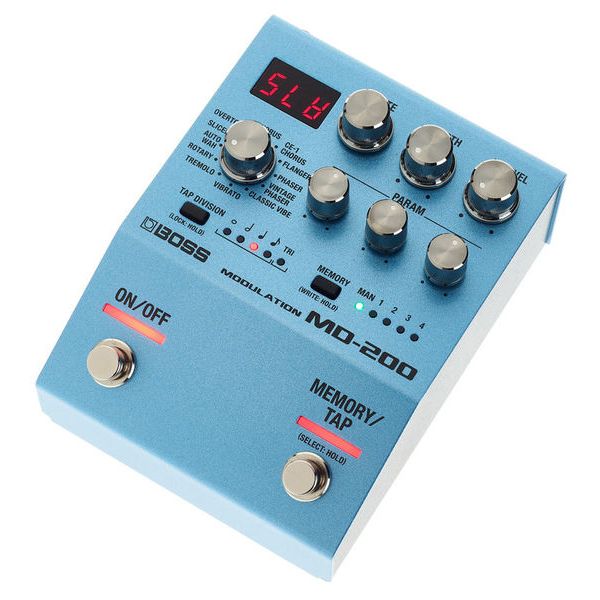
Twelve modulation types live inside the MD-200, covering the full spread: chorus, flanger, phaser, tremolo, vibrato, rotary, and several digital variations most players have never even tried because they’ve never owned a pedal that offered them.
Everything runs in true stereo at 32-bit, 96kHz processing, which is a genuinely different tier of audio quality compared to most compact modulation pedals. You can actually hear the difference on a stereo rig, similar to the improvement I noted running the Boss RE-2 Space Echo in stereo.
Four Memory Slots Change How You Use It
Rather than re-dialing knobs between songs, you can save four full presets and step between them with the two onboard footswitches. That’s a genuinely practical feature for gigging players running a setlist with different modulation needs per song.
Controls include Rate, Depth, E.Level, Mod Type, and three assignable parameter knobs whose function changes depending on which algorithm you’ve selected. It sounds complicated written out, but it clicks fast once you’re actually turning knobs.
Sound
The Chorus And Phaser Modes Hold Their Own
I went in expecting the individual algorithms to feel like compromises, the usual multi-effects trade-off. That’s not really the case here. The chorus mode is lush and three-dimensional in stereo, genuinely comparable to dedicated chorus pedals like the Ibanez CS Mini that I’ve spent real time with.
The phaser modes cover both classic vintage sweep and more modern, aggressive settings, giving you a wider range than most single-purpose phaser pedals bother offering.
Tremolo Mode Is Legitimately Excellent
Given that Boss also sells a dedicated TR-2 tremolo pedal, I wasn’t sure the built-in tremolo mode here would measure up. It genuinely does, covering a similar range of wave shapes and depth, though naturally without quite the same tactile, dedicated-knob immediacy of turning three physical dials.
The rotary speaker simulation deserves a specific mention too, it’s a surprisingly convincing Leslie-style effect that most guitarists never get to properly experiment with because dedicated rotary pedals are usually expensive and niche.
Build Quality And Playability
This is a bigger footprint than a standard Boss compact pedal, closer in size to the multi-function boxes in Boss’s 200 series lineup. It needs the extra real estate for the display, the two footswitches, and the expanded I/O, so budget accordingly on a crowded board.
Connectivity here is genuinely comprehensive: stereo inputs and outputs, an expression pedal or external switch jack, MIDI in and out, and USB. That’s enough to integrate this into a properly automated, MIDI-controlled rig if that’s the direction your setup is heading, unlike simpler switching solutions such as the Boss LS-2 which sticks to manual footswitch control.
Two Footswitches Change The Workflow
Having two footswitches instead of one means you can bypass the effect and step through memory slots independently, without needing an external MIDI controller. For a gigging musician moving through several distinct modulation sounds in a single set, that’s a genuinely significant workflow improvement.
Power comes via three AA batteries or the standard 9V DC adapter, sold separately, keeping it consistent with the rest of the Boss compact ecosystem even though the pedal itself is considerably larger.
Who It’s Actually For
Players who currently own three or four separate modulation pedals and are tired of the board space they eat up are the obvious audience. Consolidating a chorus, phaser, flanger, and tremolo into one unit frees up a meaningful amount of real estate.
Studio-minded players who care about stereo imaging will appreciate the true stereo processing here more than most live players will notice night to night, though it’s genuinely audible through a good stereo rig or a pair of monitors.
If you only ever use one modulation type and know exactly which one, a dedicated single-purpose pedal, like a Boss BF-3 for flanger specifically, will likely feel more immediate and tactile day to day than navigating menus here.
Honest Niggles
The menu diving is real. With twelve algorithms and multiple assignable parameters, you will spend genuine time learning where things live before this feels second nature, closer to the learning curve of the Boss LS-2 than a simple three-knob pedal.
Size and weight are a real consideration on a tightly packed board. This isn’t a mini pedal, and the two-footswitch layout needs real floor space to use comfortably.
No power supply included continues the running Boss tradition across their whole pedal lineup, worth budgeting for if you don’t already have a compatible adapter on hand.
A Quick Note On MIDI Integration
For players already running a MIDI-controlled board, the MD-200 slots in far more easily than most modulation pedals on the market. You can recall presets automatically alongside amp channel changes or other MIDI-capable pedals without touching a footswitch mid-song.
This isn’t a niche feature either, more boards are going semi-automated every year, and having a modulation pedal that actually keeps up with that trend rather than ignoring it entirely is a real practical advantage worth factoring into the price.
Boss MD-200 Modulation – Specs At A Glance
- Modulation types: 12 algorithms, stereo processing
- Audio quality: 32-bit, 96kHz stereo
- Memory slots: 4
- Controls: Rate, Depth, E.Level, Mod Type, Param 1, 2, 3, Tap, Memory
- Footswitches: 2
- Connectivity: Stereo I/O, expression/external switch jack, MIDI, USB
- Power: 3x AA batteries or 9V DC adapter, sold separately
- Current draw: 225 mA
- Dimensions: 101 x 138 x 63 mm
- Weight: 610 g
- Available since: October 2019
Final Verdict
The MD-200 genuinely delivers on its promise of replacing a shelf full of individual modulation pedals with one thoughtfully built box, without the usual multi-effects compromise in sound quality.
It’s not the pedal for someone who wants a single dedicated effect and nothing else, the size and learning curve don’t make sense for that use case. But for players who actually use several modulation types across a set, this is one of the smartest consolidation moves you can make on a board.
IMO the stereo sound quality alone justifies it if you’re running a stereo rig, and the memory slots make it genuinely gig-ready rather than just a practice-room toy.