Watch It First
The Telecaster hasn’t really changed shape since 1950. Two single coils, a slab body, a bolt-on neck. It’s the blueprint every other solid-body guitar eventually got compared to.
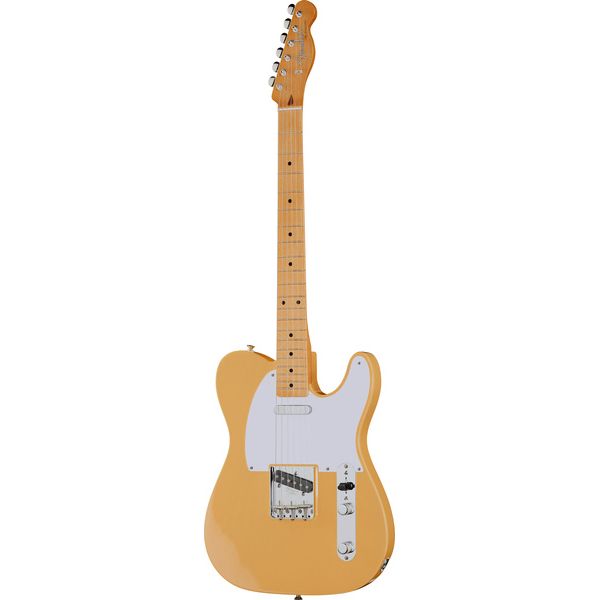
Fender’s Vintera III line is the current custodian of that original recipe, and the 50s Telecaster is about as close as you get to the blackguard-era original without paying Custom Shop money.
Butterscotch blonde finish, ash body, maple everything. It looks like it rolled straight out of a 1950s Fullerton catalog. Let’s see if it plays like one too.
Build and Specs
Ash body, maple bolt-on neck, maple fretboard with black dot inlays. That’s the exact wood combo that defined the earliest production Telecasters, and it’s a big part of why this thing rings out the way it does even unplugged.
The neck carries a Late ’50s „V” profile, which is chunkier than a modern C-shape but genuinely comfortable once your hand adjusts. Give it a week and you’ll wonder why more necks don’t feel like this.
A vintage-radius 7.25″ fretboard, 21 tall vintage frets, bone nut, and a period-correct 3-saddle bridge with steel saddles complete the throwback package.
Hardware and Electronics
- 2x Vintage-Style Late ’50s Tele single-coil pickups
- Master volume, master tone, 3-way switch
- Nickel/chrome hardware, Fender vintage-style tuners
- Includes a Deluxe gigbag
Playability and Tone
That thicker V neck profile is genuinely divisive. Players coming from modern superstrats sometimes need a few sessions to adjust, but fans of vintage necks tend to fall for it immediately — it fills the palm in a way slim modern necks just don’t.
Tonally, this is textbook Tele twang. Bright, snappy, with that characteristic bridge-pickup bite that cuts through a mix without needing extra EQ help. The neck pickup is warmer and rounder, closer to a jazz box than you’d expect from a Tele.
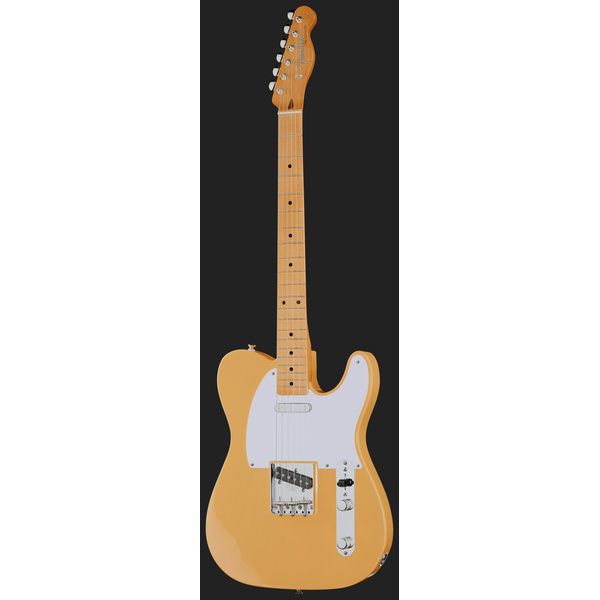
The middle „in-between” position, technically both pickups wired in parallel rather than a true blend, gives you that classic Tele quack that country and funk players chase constantly. It’s genuinely one of the most useful sounds this guitar makes.
Who It’s For
Country, blues, indie, funk, classic rock players — basically anyone who wants that unmistakable Tele snap without a ton of modern bells and whistles getting in the way. It’s also a great platform for pedal players since the pickups take gain and modulation beautifully.
If you’re chasing high-gain metal tones or need a tremolo arm, this isn’t the guitar. Vintage-correct Teles are single-coil, fixed-bridge instruments through and through.
Honest Niggles
- Single coils mean noticeable hum with high-gain pedals, especially near computer monitors
- The V neck profile takes an adjustment period for some players
- No coil-splitting or modern conveniences — this is a purist’s guitar by design
- Butterscotch Blonde shows dings more visibly than a solid dark finish would
How It Compares
If a full Fender price tag is a stretch right now, our Squier Mini Strat review covers Fender’s budget-friendly sister brand, and the Sterling by Music Man Cutlass CT20HSS is worth a look for a modern alternative with active-style versatility.
Want to build out a proper Fender-flavored pedalboard to match? Our reviews of the Fender Marine Layer reverb and the Xotic BB Preamp both pair beautifully with single-coil tones like these.
For a British-flavored overdrive that plays nicely with a Tele’s brightness, check out the Wampler Pantheon Overdrive, and if you want to tame single-coil dynamics for cleaner rhythm work, the Keeley Compressor Plus is a genuinely great match.
Rounding out a Fender-family setup, our Fender Player II Mustang Bass review is worth a read if your bandmate needs a bass to match.
A Quick Word on „Vintera III”
Fender refreshed the Vintera line into its third generation recently, replacing the older Vintera II series. The core idea hasn’t changed — era-correct specs, real vintage-style pickups, and appointments that mirror what actually shipped from the factory decades ago — but detailing like pickguard material, wiring, and neck shaping has been fine-tuned again for this generation.
It’s also worth remembering the „Nocaster” naming quirk from this same era — Fender briefly shipped Telecasters without a headstock decal at all due to a trademark dispute, which is why some vintage 50s reissues borrow that name instead. Either way, the DNA underneath is identical: same body, same neck shape, same pickups. Just a slightly different chapter of the same story.
If you’ve played an older Vintera model before and found the neck profile too slim, it’s worth trying this newer version specifically, since the 50s-spec V profile here is noticeably chunkier and more period-accurate than some of the earlier reissue necks.
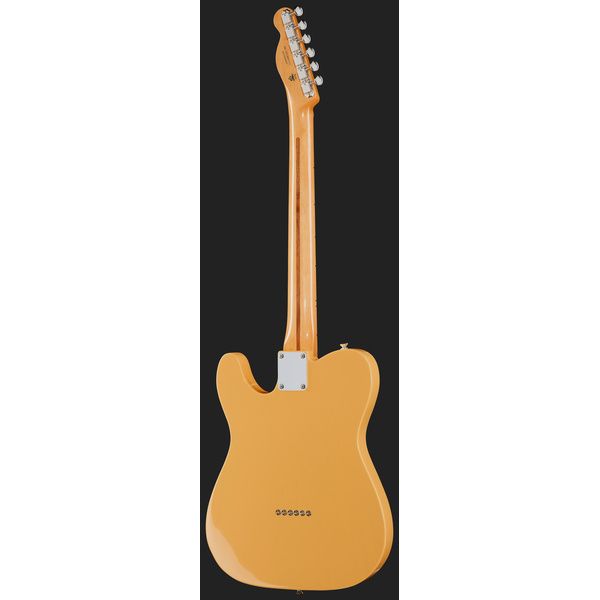
One more practical note: because ash is a heavier, harder tonewood than alder, expect this guitar to weigh a touch more than a typical Player-series Tele. Not a dealbreaker, but worth knowing if you’re sensitive to guitar weight on longer sets.
Full Specs
- Body: Ash
- Neck: Maple, bolt-on, Late ’50s „V” profile
- Fretboard: Maple, 7.25″ radius
- Scale: 25.5″ (648mm)
- Frets: 21, tall vintage
- Pickups: 2x Vintage-Style Late ’50s Tele single coils
- Bridge: 3-saddle vintage-style with steel saddles
- Finish: Butterscotch Blonde
- Includes: Deluxe gigbag
Final Verdict
The Fender Vintera III 50s Telecaster is a genuinely honest guitar. It doesn’t pretend to be more versatile than it is, and it doesn’t chase trends.
What it offers instead is a faithful recreation of the guitar that basically invented the solid-body electric as we know it, built to a standard that actually holds up under real gigging conditions rather than just looking good on a wall.
If you want authentic 50s Tele tone and feel without hunting down a beat-up original from a vintage dealer, this is about as close as most players will ever need to get. IMO it’s one of the more satisfying „grown-up” Fenders currently on Thomann’s shelves.