Watch It First
Ask ten fingerstyle players what acoustic they’d buy on a budget and you’ll get a weirdly consistent answer: the Seagull S6 Original.
It’s not flashy, it’s not trendy, and Seagull barely advertises. It just quietly keeps selling because it plays and sounds like it costs way more than it does.
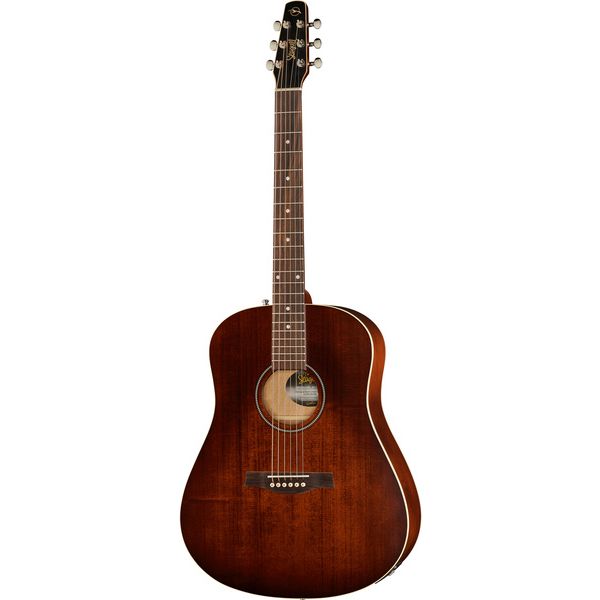
I looked at the Burnt Umber Presys version currently in stock at Thomann – solid spruce top, cherry back and sides, built-in electronics. Here’s the deal.
Where This Guitar Comes From
You won’t see Seagull sponsoring huge festival stages or running flashy ad campaigns. Word of mouth and forum threads have done most of the marketing for them, which honestly tells you something.
Seagull is a Godin family brand, built in La Patrie, Quebec, Canada – not outsourced overseas like a lot of guitars in this price range.
That matters more than it sounds. Seagull hand-selects and pressure-tests their tops before building, which is normally a step reserved for much pricier guitars.
The result: these guitars tend to sound „played in” faster than a typical budget dreadnought straight out of the box.
Fun fact: the Seagull S6 has been in continuous production since the late 1980s with only incremental changes. That kind of longevity in a product line usually means the design was right the first time.
Build and Specs
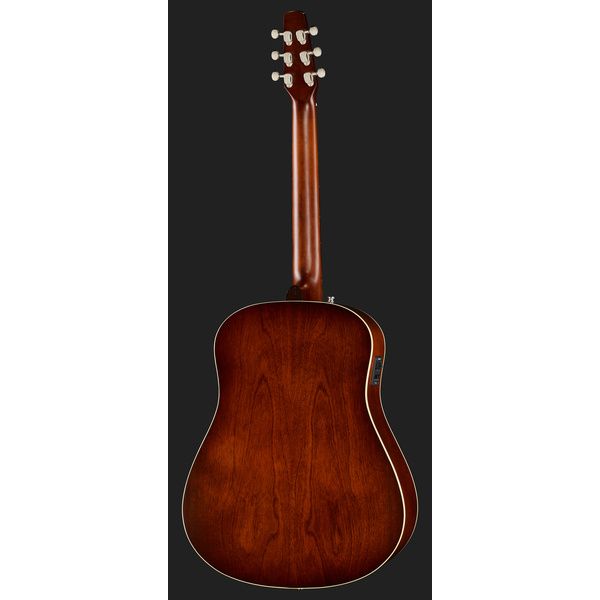
The Burnt Umber has a solid spruce top paired with cherry back and sides – a slightly less common tonewood combo than mahogany, and it gives a brighter, more articulate voice.
Neck is maple with a rosewood fretboard and simple dot inlays. Nothing fancy, but well finished.
The Nut Width Thing
Here’s the detail that gets fingerstyle players excited: a 45.7mm (1.8″) nut width. That’s noticeably wider than most mainstream dreadnoughts.
If you fingerpick and hate feeling like your fingers are tripping over each other, this is a genuinely big deal, not a marketing footnote.
Scale length is 648mm (25.5″), 21 frets, rosewood bridge. Fairly standard dreadnought geometry otherwise.
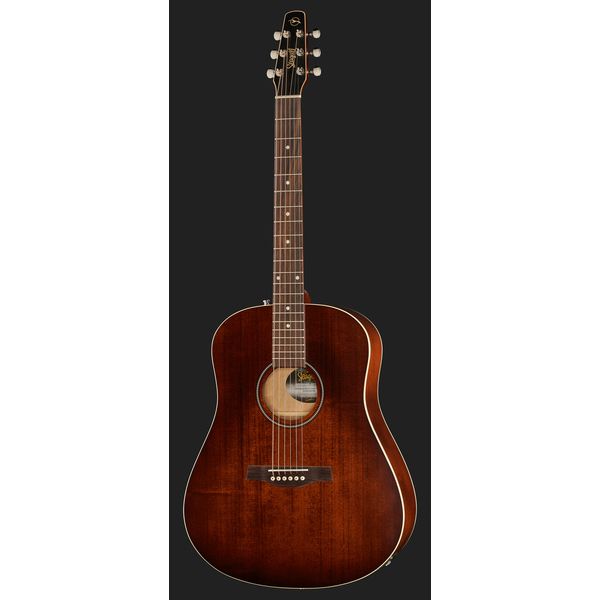
One more detail worth mentioning: the top is finished in what Seagull calls a „semi-gloss” style rather than a thick, heavy gloss coat. Thinner finishes generally let a top vibrate more freely, which is part of why these guitars open up quickly.
Plugged-In Tone (Fishman Presys II)
This particular version comes with a Fishman Presys II preamp built in – 3-band EQ, built-in tuner, the works.
It’s a genuinely solid mid-tier pickup system, not a cheap afterthought bolted on to justify a price bump. If you play open mics or small gigs, you won’t need a separate DI or outboard preamp.
Unplugged, the spruce/cherry combo is bright and balanced with decent projection for a solo-top guitar – not boomy like an all-mahogany dread, more articulate for picking patterns.
Who’s This For?
- Fingerstyle players who want a wider nut without paying classical-guitar money
- Singer-songwriters who need reliable plugged-in tone for coffee shop gigs and open mics
- Anyone who wants a „no surprises” acoustic that just sounds good the day it arrives
It’s less aimed at strummers who want maximum boom – for that, look at a mahogany-bodied dread instead.
It’s also a solid choice for a first „real” acoustic upgrade. If you started on a sub-800zł beginner pack guitar and you’re ready for something that actually holds tune and sounds good recorded, this is the kind of guitar people tend to keep for a decade rather than trade in after a year.
Recording engineers who’ve tracked with the S6 also point out it sits nicely in a mix without excessive boominess in the low end – useful if you’re home recording singer-songwriter stuff rather than just strumming around the house.
Honest Niggles
No gigbag or case included at this price point, which stings a little given some rivals throw one in.
The satin „Burnt Umber” finish looks great in person but shows fingerprints and light scuffs more than a gloss finish would. Wipe it down after sessions.
Some players find the factory action a touch high out of the box – a cheap setup at a local shop sorts this out in ten minutes, but budget for it.
A cheap setup and a fresh set of strings go a long way here too. Most of the „action too high” complaints online disappear after the first proper setup – factor that into your budget and don’t judge the guitar on factory shipping specs alone.
How It Compares
Against the Epiphone Hummingbird, the Seagull is far less flashy visually but arguably better built for the money – Epiphone wins on looks, Seagull wins on tone-per-dollar.
If you want something smaller and more travel-friendly, the Little Martin LX1E trades body size and volume for portability – different use case entirely.
Players who want a full-size Martin-branded alternative should check the Martin 000CJR-10E – smaller body, different tonal character, but similar price bracket.
Need an amp to go with your new acoustic? The Blackstar Sonnet 60 pairs nicely with the Presys pickup system for small venue gigs.
Or if you’re looking at a looping acoustic amp instead, the Fender Acoustic SFX II is worth a look for solo performers.
Specs at a Glance
- Body type: Dreadnought
- Top: Solid spruce
- Back and sides: Cherry
- Neck: Maple
- Fretboard: Rosewood, dot inlays
- Scale length: 648mm (25.5″)
- Nut width: 45.7mm (1.8″)
- Frets: 21
- Bridge: Rosewood
- Pickup: Fishman Presys II
- Made in: Canada
- Includes: No case or gigbag
Final Verdict
The Seagull S6 Original isn’t a guitar that wins on hype or Instagram looks. It wins on the stuff that actually matters once you’re sitting down playing it for an hour.
The wide nut, the pressure-tested solid top, the Fishman electronics – none of it is flashy, all of it is genuinely useful.
If you fingerpick, gig small venues, or just want an acoustic that punches above its price bracket without any gimmicks, this is an easy recommendation.
It won’t turn heads on looks alone, but it’ll make you sound better than a guitar this price has any right to. That’s kind of the whole point.