Watch It First
Martin doesn’t exactly have a reputation for „budget” or „travel” instruments – the name is basically synonymous with expensive dreadnoughts collecting dust in glass cases at guitar shops. So when they launched the Junior series, a lot of long-time players were skeptical. Could a small-bodied, mid-priced Martin actually sound like a Martin?
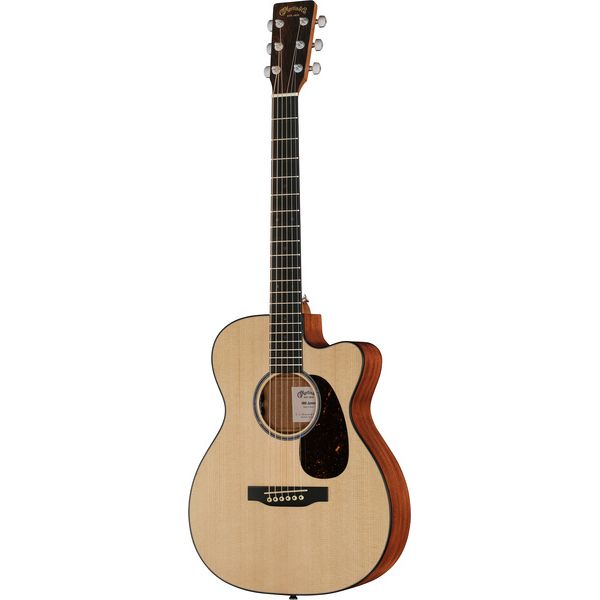
The 000CJR-10E is the answer: a scaled-down 000-shape body, 24.9″ scale length, cutaway, solid spruce top over solid sapele back and sides, and a built-in Martin E-1 pickup system for plugging straight into a PA or acoustic amp. On Thomann it’s currently listed under the „000C Jr E” naming, and worth flagging up front – lead times on this one can run long since Martin builds these in smaller batches, so if you want one, don’t expect next-week delivery.
I went through what makes this different from a standard travel guitar, whether the smaller body actually costs you tone, and who this is really built for.
Build and Materials
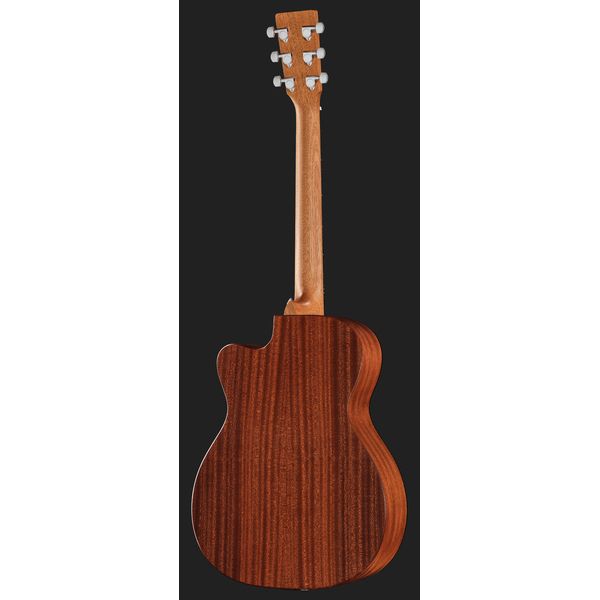
This isn’t a laminate travel guitar dressed up with a famous logo – it’s solid spruce on top, solid sapele back and sides, mahogany neck, ebony fretboard. That’s a genuinely proper wood spec for the price bracket, and it shows in how the guitar resonates compared to the laminate-bodied travel guitars most brands sell at this size.
If you’re coming from Martin’s even smaller Little Martin line, our Little Martin LX1E review is worth reading side by side with this one – the LX1E uses laminate construction and a shorter scale still, so the 000CJR-10E sits a clear step up in both material quality and playing feel.
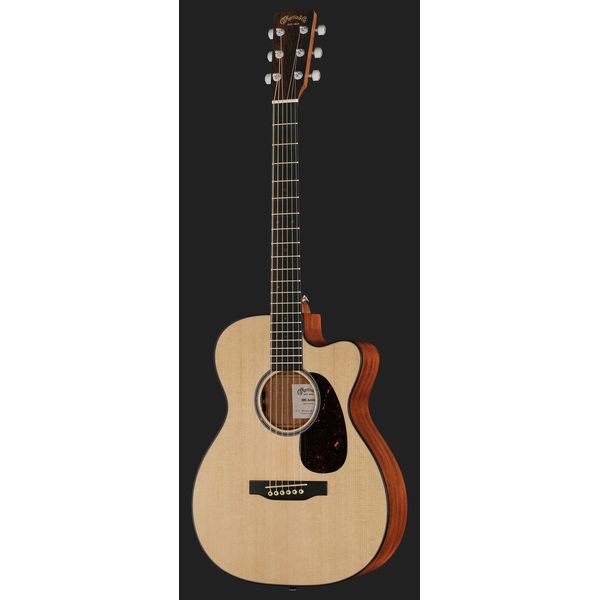
The cutaway gives easy access to the upper frets, which is a nice touch on a body this small – it means the reduced size doesn’t just serve portability, it actually opens up lead playing higher up the neck too.
Tone – Does the Smaller Body Cost You Anything?
Surprisingly, not much. The scaled-down body does give up a bit of low-end thump compared to a full-size dreadnought – that’s just physics, less air to move – but the balance and clarity that Martin is famous for carries through completely. Chords ring clean, fingerpicking sounds articulate rather than boxy, and there’s none of the midrange harshness that plagues a lot of smaller-bodied guitars trying to compensate for their size.
Plugged in through the Martin E-1 pickup, it translates well too – not the most exciting onboard system in the world, but genuinely usable straight into an acoustic amp or PA without sounding thin or quacky. If you’re building a small acoustic rig around it, our Blackstar Sonnet 60 review covers a solid amp pairing option.
Fingerstyle players in particular seem to gravitate toward this body size – the reduced volume ceiling isn’t a big deal when you’re not strumming for a crowd, and the articulation really shines on picked passages. If you’re shopping for strings to bring out that side of the guitar, our best guitar strings for fingerstyle guide is a good next stop.
Playability and Comfort
The mahogany neck feels substantial without being clubby, and the 44.5mm nut width gives enough room for fingerstyle work without feeling cramped. Fretwork on Martin’s Mexico-built instruments (which is where the Junior series is made) has been consistently solid in recent years – no sharp edges, clean fret ends, properly seated.
Where this guitar really earns its keep is exactly the scenario Martin designed it for: campfires, hotel rooms, small apartments, tour buses. It’s genuinely comfortable to hold for long sessions, in a way full-size dreadnoughts on your lap for hours just aren’t. If mahogany-neck tonal character interests you generally, our mahogany tonewood guide breaks down why it’s such a common choice for necks across price points.
It is also worth considering for anyone doing session work or writing on the road, where a full-size dreadnought is genuinely impractical to carry around but a laminate travel guitar feels like too big a tonal compromise. This sits right in the middle – small enough to travel with, good enough to actually record with in a pinch.
Who It’s For
Gigging musicians who want a genuine Martin tone in a package that fits in an overhead bin, songwriters who want a couch guitar that doesn’t feel like a downgrade from their main instrument, and anyone shopping in the „quality over size” mindset rather than pure budget-travel-guitar territory. If bluegrass and flatpicking are more your speed and you want something full-size instead, check our best Martin guitars for bluegrass roundup – a Junior-series guitar isn’t really built for that genre’s volume demands.
The Honest Niggles
- Long lead times – Thomann was showing 13-17 weeks at time of writing, so don’t buy this expecting quick delivery.
- Reduced low-end compared to a full-size dreadnought, which matters if you strum hard in a band setting.
- Onboard electronics are functional rather than exciting – fine for practice and small gigs, not studio-grade.
- Factory saddle can sit a touch high for some players’ taste – an easy setup fix, but budget for it.
Specs at a Glance
- Body: 000 Junior shape with cutaway
- Top: Solid spruce
- Back and sides: Solid sapele
- Neck: Mahogany, ebony fretboard
- Scale length: 632 mm (24.9″)
- Nut width: 44.5 mm
- Frets: 20
- Pickup: Martin E-1
- Bridge: Richlite
- Includes gig bag
Worth a final word on build consistency too: Martin has leaned hard into quality control on the Junior line since launch, and the general consensus among owners (backed up by what I saw going through the specs and demo units) is that these guitars leave the factory properly set up more often than not. That is not something you can say for every guitar at this price, travel-sized or otherwise.
Final Verdict
The 000CJR-10E proves a smaller Martin doesn’t have to mean a lesser Martin. Solid tonewoods throughout, genuine playability, and that unmistakable clarity in the voicing that the brand built its name on – just wrapped in a body that actually fits in a plane’s overhead locker.
If you can live with the wait time and you want a travel or couch guitar that doesn’t feel like a compromise, this is one of the smartest picks in the category right now. It’s not cheap for a „travel” guitar, but it punches well above the laminate-bodied competition it gets compared to.