Watch It First
Short scale basses get treated like a novelty sometimes – a „beginner” thing, or something for players with small hands. That’s never made sense to me, and the Fender Player II Mustang Bass is a pretty solid argument against the whole idea.
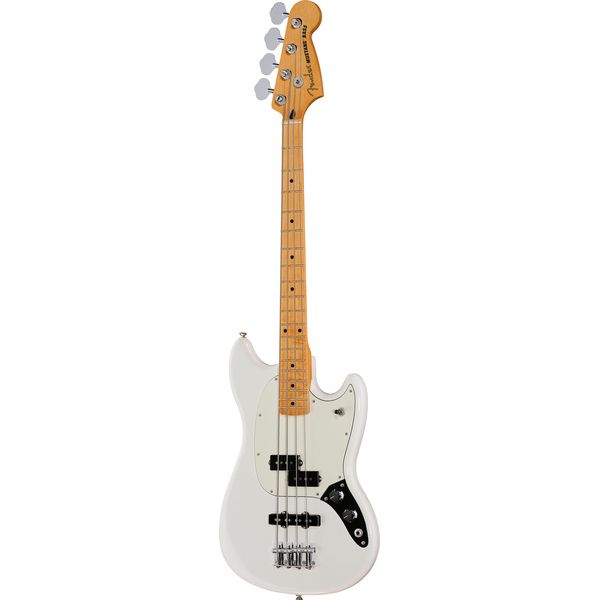
This is Fender’s current mid-range take on the Mustang Bass shape, and it packs a proper PJ pickup configuration into a genuinely compact, fun-to-play body.
I’ve spent enough time with short scale basses to know most of them feel like compromises. This one mostly doesn’t. Here’s the breakdown.
Tone: PJ Configuration Done Right
The pickup layout is the interesting part here – a Jazz Bass single coil at the bridge and a split-coil Precision Bass pickup in the middle position. That’s the classic PJ setup, and it gives you a lot more tonal range than a single-pickup Mustang Bass ever could.
Roll toward the P pickup and you get that thick, punchy Precision growl – great for rock and punk. Blend in the J pickup and things open up with more top-end snap, closer to what you’d want for funk or slap-heavy parts. The 3-way switch lets you jump between them or blend both, so you’re not locked into one voice for the whole gig.
Compared to a dedicated P-Bass like Fender’s own Rumble-powered rigs would suggest, this Mustang gives you more versatility in a smaller, lighter package – which matters more than people admit once you’ve hauled a full-size bass through a few flights of stairs.
Playability – The Actual Point of a Short Scale
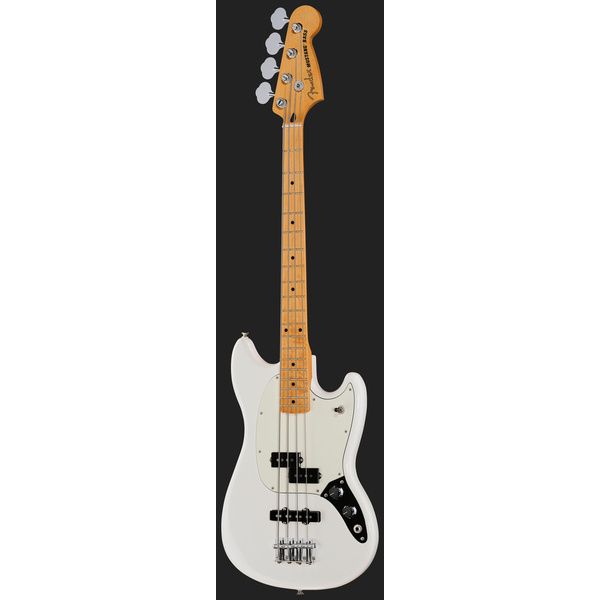
The 762mm (30″) scale length means noticeably lower string tension and closer fret spacing than a standard 34″ bass. That translates to easier bends, less hand fatigue over a long session, and a genuinely friendlier learning curve if you’re coming from guitar.
The Modern „C” neck profile is comfortable for a wide range of hand sizes – it’s not an ultra-thin „beginner” neck, it just feels natural. Combined with the 9.5″ fretboard radius, chords and fast runs both feel manageable rather than fighting the instrument.
At 19 frets it’s not chasing extended upper-register runs, but for the vast majority of bass parts – rhythm, groove, the occasional fill – you’ll never miss the extra real estate.
Build Quality
Fender’s Player II line stepped up noticeably from the original Player series, and it shows here. The pickguard is a 3-ply parchment design that suits the retro Mustang shape well, and the fit between neck pocket and body is tight with no gaps or finish overspray.
Tuning stability is solid thanks to the vintage-style Fender tuners and a properly cut synthetic bone nut. It’s not going to out-hold a locking-tuner setup during aggressive slap sessions, but for normal playing it stays put reliably between sets.
Who Actually Needs This
Guitarists who double on bass and don’t want to relearn hand geometry from scratch. Gigging bassists who want a lighter secondary instrument for smaller venues or travel. And honestly, anyone who’s been put off full-size basses by sheer bulk – this is a genuinely different physical experience to play.
If you’re chasing a more vintage single-pickup Mustang vibe instead, Fender’s signature JMJ Mustang Bass is worth a look too, though it sits in a noticeably higher price bracket. For most players, the Player II version covers more ground for less outlay.
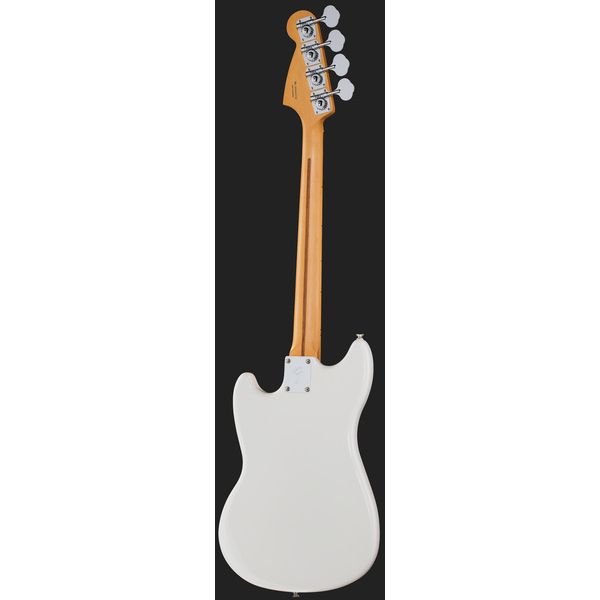
It’s also worth mentioning color options – Fender offers this in several finishes beyond the Polar White reviewed here, including sunburst and aquatone blue, all with the same spec sheet underneath. Pick based on looks; the tone and playability stay consistent across the range.
Honest Niggles
Nothing’s perfect, so here’s what to know going in:
- No case or gigbag included – budget for one separately if you’re gigging or flying with it
- Short scale strings can feel a little „floppy” at first if you’re used to standard scale tension – a slightly heavier gauge fixes this quickly
- 19 frets is plenty for most players, but shredders who need the full upper register will find it limiting
- Passive electronics only – no onboard EQ if you want more shaping without pedals
How It Compares
Against budget short-scale options like the Squier Classic Vibe Mustang Bass, the Player II justifies its higher price with genuinely nicer hardware, a more refined neck finish, and that added J pickup flexibility. Against something more boutique like the Reverend Basshouser Fatfish 32, the Mustang is more conventional but arguably more useful across a wider range of styles.
Pair it with a compact combo like the Hartke HD25 for practice, or step up to something with real headroom like the Hartke HD50 if you’re gigging small-to-mid rooms. If you’re new to offset shapes generally, our guide to offset guitars is a decent primer on why this body shape has stuck around since the 60s.
One more practical point: the reduced body size and shorter scale make this a genuinely great option for travel or apartment practice too. It fits in overhead bins in a soft gigbag where a full-size bass often won’t, and the lower string tension means less finger fatigue during long practice sessions at home.
Specs at a Glance
- Type: Short scale electric bass (762mm / 30″ scale)
- Body: Alder
- Neck: Maple, bolt-on, Modern „C” profile
- Fretboard: Maple, 9.5″ radius, 19 medium jumbo frets
- Pickups: Player Series Alnico 5 Jazz Bass (bridge) + Split Precision Bass (middle)
- Controls: Volume, tone, 3-way pickup selector switch
- Bridge: 4-saddle standard, nickel/chrome hardware
- Strings: Fender USA 7250M Nickel Plated Steel, .045-.105
Final Verdict
The Player II Mustang Bass proves short scale doesn’t mean compromised. Between the PJ pickup flexibility, the genuinely comfortable neck, and Fender’s typically solid Player-series build quality, this is a bass that can cover rock, punk, indie, and funk without breaking a sweat.
Whether you’re a guitarist adding a bass to the toolkit or a full-time bassist who wants something lighter for smaller gigs, this one earns its spot on the shortlist. Short scale, genuinely big fun.