Watch It First
Right, let’s talk about the amp that split guitar forums right down the middle the second it landed on shelves.
Fender basically stuffed a computer into a Deluxe Reverb cabinet and dared purists not to notice.
I plugged in expecting to roll my eyes. I did not roll my eyes.
So What Actually Is This Thing?
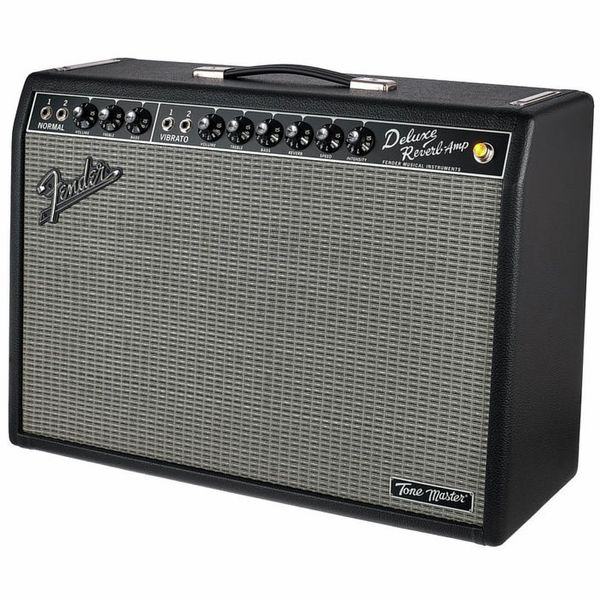
Short version: it’s a digital modelling combo built to sound and behave like a real blackface Deluxe Reverb, minus about half the weight.
It’s rated at 100 watts through a 12″ Jensen neodymium speaker, but that’s not really the point. The whole trick is that it simulates a 22-watt tube amp, sag and all, and lets you dial that „power” down to a whisper without losing the tone.
Two channels – Normal and Vibrato – just like the original. USB port for firmware updates. A proper XLR line out with cab simulation baked in. And it weighs about 11kg, which if you’ve ever carried a real Deluxe Reverb up a flight of stairs, you’ll understand is basically a miracle.
Does It Actually Sound Like a Real Deluxe?
This is the question everyone actually cares about, so let’s not dance around it.
Yes. Genuinely, yes. Clean tones have that glassy, slightly scooped Fender shimmer. Push the volume and it breaks up the way a blackface amp breaks up – not fizzy, not fake, just… right.
The reverb and vibrato are lovely too, lush and springy without sounding like a plugin someone bolted on as an afterthought. IMO the vibrato in particular nails that woozy, seasick wobble that made the original famous.
If you’ve spent time with a real tube Fender Blues Junior IV, the family resemblance is obvious. Different amp, same DNA. The Tone Master just does it without the maintenance headaches.
Where it gets genuinely clever is the power attenuation. You can knock the output all the way down to 0.2 watts and the tone barely changes shape – it just gets quieter. Try that with a real tube amp and see how far you get before it sounds thin and sad.
Playability and Build
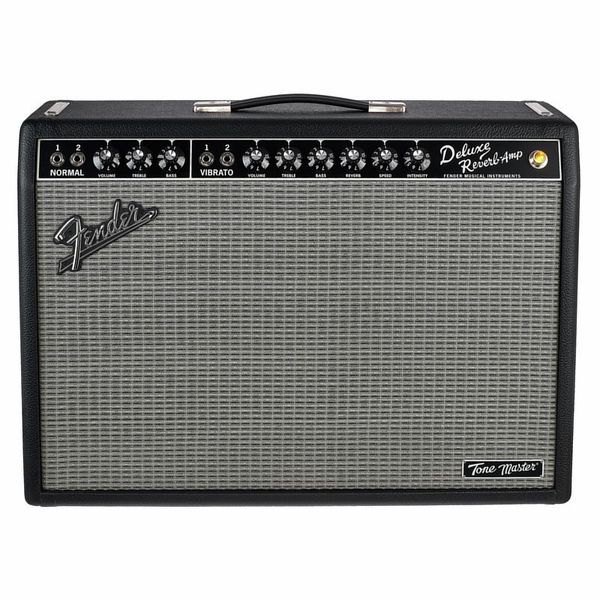
The pots turn a touch smoother than the vintage-style ones on a real Deluxe, but they respond the way you’d expect. Nothing feels cheap or plasticky here.
It ships with a two-button footswitch that controls reverb and vibrato, plus a padded cover, which is a nice touch Fender doesn’t always bother with.
The DI output deserves a special mention. Run it straight into a mixer or interface and you get a genuinely usable, mic’d-cab tone without actually mic’ing a cab. For home recording or a small stage with limited backline time, that’s huge.
Who’s This Actually For?
- Gigging players who are sick of throwing their back out loading a tube combo into a hatchback
- Home players in flats/apartments who want real amp dynamics at whisper volume
- Studio use where a reliable, repeatable DI tone matters more than tube mojo
- Anyone who wants blackface Fender tone without ever touching a tube again
If you’re chasing that classic clean-to-crunch Fender sound on something like a Player II Jazzmaster, this amp gets out of the way and just lets the guitar talk. That’s kind of the whole point of a Deluxe Reverb in the first place.
The Honest Niggles
Nothing’s perfect, so here’s the stuff that bugs me a little.
The Normal channel is kind of boring – no reverb or vibrato available on it at all, which feels like an odd limitation for a digital amp where that should be trivial to add. A firmware update could fix this tomorrow and hasn’t yet.
You only get two onboard impulse responses on the line out, and you can’t load your own. For a modelling amp in this price bracket that feels like a missed opportunity, especially with cheaper modellers like the Roland Cube-10GX offering more flexibility for less outlay.
And yeah, there’s the perennial argument about resale value on digital gear versus tube amps that just seem to hold their price forever. Fair point. But this thing is built to be used, not flipped in three years.
Fuzz pedals also don’t play quite as nicely here as they do into a real tube front end – the input saturation behaves a bit differently. Overdrives and boosts are totally fine, fuzz just needs a little more experimentation.
How It Stacks Up
If you want tube warmth on a budget and don’t mind the extra weight, something like the Blackstar TV-10 A is worth a look. If you want cheap and cheerful with a modern voicing, the Orange Crush 35RT is a completely different flavour but decent value.
None of them are really direct competitors though – the Tone Master occupies its own weird little niche of „sounds exactly like a specific vintage amp, weighs nothing, costs less than the original.” There isn’t much else doing that job this convincingly, not even amps built around analogue modelling like the Orange Super Crush 100.
Specs at a Glance
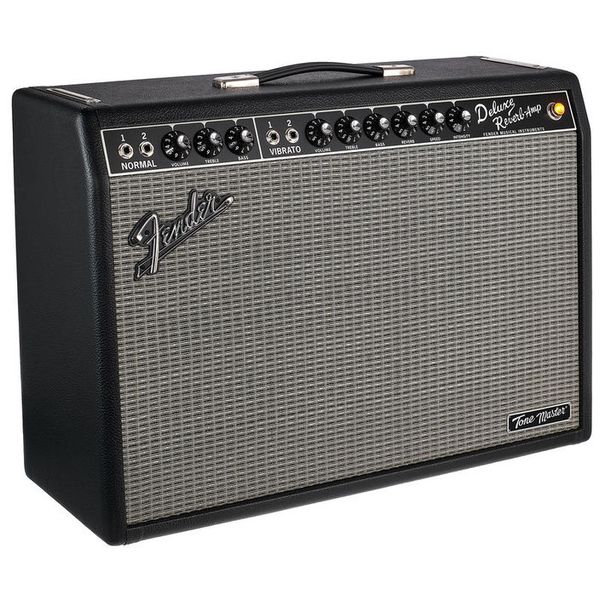
- Type: Digital modelling combo amp
- Channels: 2 (Normal, Vibrato)
- Power: 100W, simulates a 22W tube amp with 5 attenuation settings
- Speaker: 1x 12″ Jensen N-12K neodymium
- Effects: Spring reverb + vibrato (Vibrato channel only)
- Outputs: XLR line out with cab simulation, USB for firmware
- Included: 2-button footswitch, padded cover
- Weight: 11.3 kg
Final Verdict
The Tone Master Deluxe Reverb isn’t trying to reinvent anything. It’s trying to be a real Deluxe Reverb you can actually carry, gig without fear, and record straight into a laptop without a mic in sight.
On all three counts it delivers. The tone is close enough to fool most ears, the attenuator makes it usable literally anywhere, and the build quality is properly Fender.
Is it going to convert die-hard tube snobs? Probably not, and that’s fine – it was never really built for them. For everyone else who just wants that sound without the hassle, this amp punches way above its money. Worth a serious look.