Watch It First
Markbass built its whole reputation on one idea: bass heads don’t need to weigh as much as a car battery to sound huge. The Little Mark series is where that idea got proven.
The classic Little Mark III that a lot of bassists cut their teeth on has since moved aside for the Little Mark IV, the current version Markbass actually sells and supports.
Same philosophy, a few genuine upgrades. Let’s get into whether it’s still worth it in 2026.
The Whole Point: It Weighs Almost Nothing
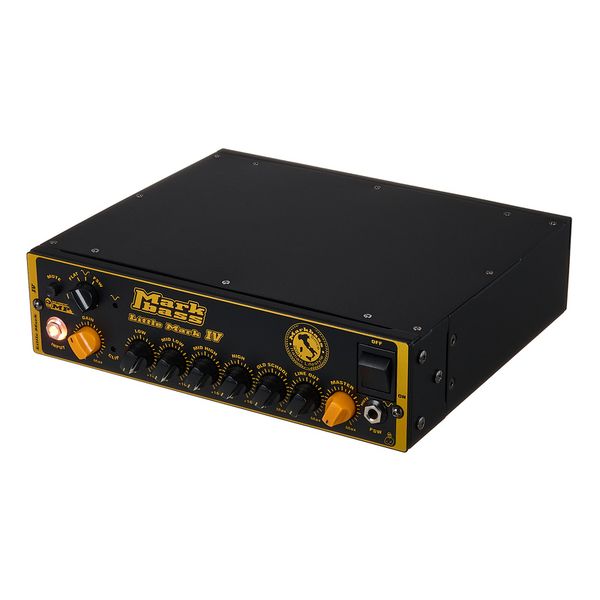
This head weighs under 3kg. You could carry it in a jacket pocket if the pocket were slightly ridiculous. If you’ve ever thrown your back out lugging an old-school valve head up three flights of stairs to a gig, you already understand why this matters more than any spec sheet number.
Despite the featherweight class-D power section, it pushes 500 watts at 4 ohms and 300 at 8 ohms, which is genuinely enough for most rooms, most bands, and most cabinets you’ll actually own.
What Changed From the III to the IV
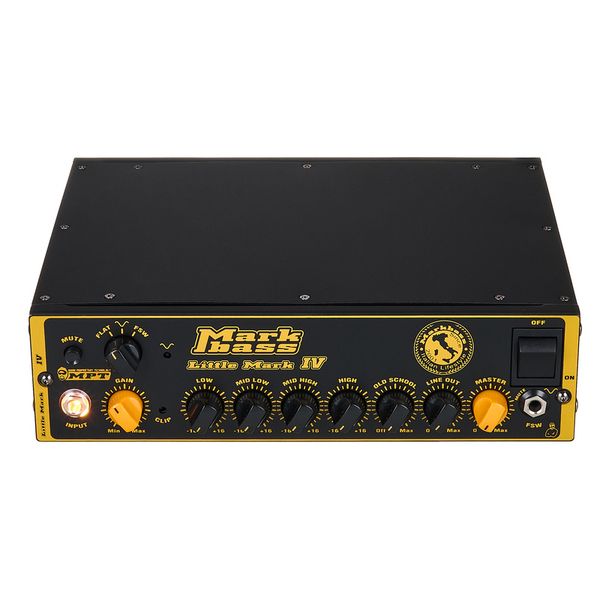
The headline addition is the „Old School” voicing switch, a simple toggle that rolls off some of the ultra-clean modern high end and pushes the mids forward for a warmer, more vintage-flavored tone. It’s a small feature, but it’s the one owners talk about most, because it genuinely changes the character of the amp rather than just tweaking the EQ.
There’s also a proper 4-band EQ with Low, Mid-Low, Mid-High, and High controls, a 3-way Flat/Scooped-mid/FSW voicing switch, balanced XLR DI out, a dedicated tuner output, and a full effects loop for anyone running a compressor or envelope filter in the chain.
How It Actually Sounds
Markbass’ house sound is clean, articulate, and fast. Every note comes through distinctly, even at speed, which slap and fingerstyle players tend to love and pick players sometimes find a bit too polite.
Flip the Old School switch and things get noticeably warmer and rounder, closer to what you’d expect from an old-school tube head without actually carrying one. It’s a genuinely useful tone-shaping tool, not a gimmick button that does nothing.
If you’re still deciding what kind of bass to pair with an amp like this, our best first bass guitars guide and our Fender American Professional II P Bass review are both worth a look before you commit to a rig.
The Honest Cons
- No headphone output, which feels like a strange omission on a home-practice-friendly amp this size.
- Only one Speakon speaker output, so running two cabs needs a Y-cable workaround.
- Very neutral tone by default, meaning some players will want to reach for the Old School switch or an EQ pedal immediately rather than plug and play.
- No onboard effects beyond the basic EQ and voicing options, so this is a clean platform, not an all-in-one solution.
None of these are surprising for a head at this size and weight, but worth flagging regardless.
Build quality is a genuine strong point, though. The chassis is aluminum, the knobs feel properly damped rather than loose, and owners who’ve been gigging with the Little Mark line for years report very few failures, which matters a lot for a class-D amp that lives inside gig bags and gets thrown in the back of vans.
Pairing It With a Cab
This head is designed to sit on top of a Markbass cabinet, and the combination genuinely does most of the work here. Markbass cabs are voiced to complement that clean, fast character rather than fight it, so if you’re buying new, pairing it with one of the brand’s own boxes gets you closest to what reviewers are actually hearing in demo videos.
That said, it plays nicely with most 4 or 8 ohm cabs from other brands too. If you’re shopping for basses to go with it, our Warwick RockBass Streamer 4 review, our Sire Marcus Miller V5 review, and our Ibanez SR600E review all cover basses that sit comfortably in this amp’s clean, articulate wheelhouse.
Who Should Actually Buy This
Gigging bassists who are tired of carrying heavy gear, session players who need something that fits in a backpack, and anyone upgrading from a combo amp who wants a proper head-and-cab setup without the usual weight penalty.
It’s also a smart pick for anyone who plays in more than one band or style, since the Old School switch effectively gives you two amps in one chassis. Show up to a funk gig, flip it one way; show up to a stoner-rock jam the next night, flip it back. That kind of flexibility is genuinely rare at this weight and this size.
If you play a lot of vintage-toned music and want something warmer out of the box, it’s still a great option thanks to the Old School switch, though pick players chasing an aggressive growl might prefer pairing it with a bass like the one in our Squier Classic Vibe ’60s Jazz Bass review to add some extra character before it even hits the amp.
Specs at a Glance
- Power: 500W @ 4 ohms, 300W @ 8 ohms
- Weight: under 3kg
- 4-band EQ: Low, Mid-Low, Mid-High, High
- Old School voicing switch for vintage-leaning tone
- 3-way Flat/Scooped-mid/FSW switch
- Balanced XLR DI output, dedicated tuner out
- Effects send/return loop
- Speakon speaker output
Final Verdict
Yes, it’s still worth it. The Little Mark IV takes everything that made the III a modern classic and adds one genuinely useful feature without messing with the formula that made bassists fall in love with this series in the first place.
If your back has ever complained after a gig, this is the amp that fixes that problem for good, IMO, while still sounding like a proper rig rather than a compromise. Pair it with a cab you already trust and you’ll probably forget it only weighs a few kilos within the first song.