Watch It First
There’s a reason the Xotic EP Booster has been living on pedalboards since 2009 and shows zero signs of retiring anytime soon.
One knob. No presets, no menus, no manual required. Just a tiny green box that somehow makes everything plugged into it sound better.
IMO that’s the entire pitch here, and honestly? It’s enough.
What’s Actually Inside This Thing
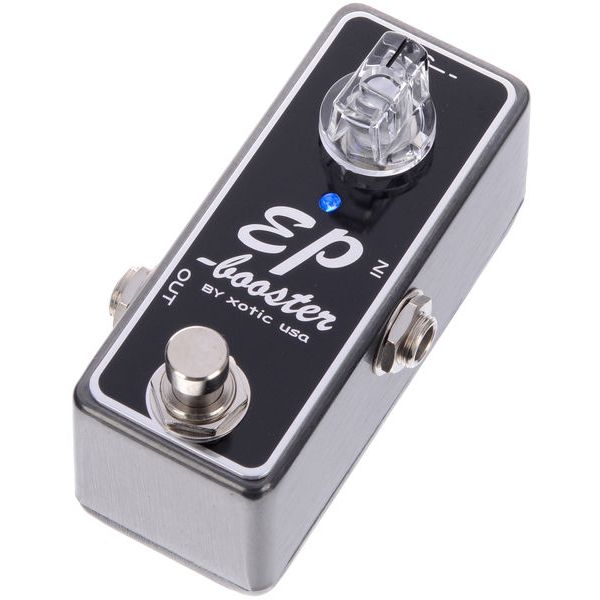
The EP Booster isn’t just a volume pedal in a smaller box. Xotic built the circuit around the preamp IC found in the legendary Echoplex EP-3 tape delay, the same unit that gave decades of guitarists that slightly compressed, slightly saturated always-on tone before delay was even part of the equation.
Under the hood you get a discrete FET-based circuit capable of pushing up to plus 20dB of clean gain. Open the enclosure – yes, you’ll need a screwdriver – and you’ll find internal DIP switches that let you tweak the gain frequency and EQ voicing to taste. It’s a one-time setup thing: dial it in, close the lid, forget about it.
If you’re into transparent gain pedals that add character without shouting about it, it’s worth comparing this against something like the MXR Custom Shop Timmy – different circuit, similar philosophy of boost that doesn’t sound like a boost.
The Single Knob (And Why That’s the Point)
Here’s the thing about having just one control: it forces a decision. You’re not sculpting a sound with the EP Booster, you’re deciding how much of „better” you want.
Turn it low and it just adds a bit of push into your amp’s front end – more sustain, slightly thicker mids, done. Turn it up and it starts acting like a genuine clean boost for solos, punching the signal into your amp or next-in-line drive pedal that much harder.
Most players run it somewhere around 9 to 10 o’clock as an always-on utility, and that’s really the sweet spot people rave about in the reviews.
How It Actually Sounds
This is where the EP Booster earns its reputation. It doesn’t add „more” in a generic sense – it adds a kind of warmth and thickness that makes chords sound fuller and single notes sing a little longer. Plug it straight into a clean amp channel and you’ll notice more of a glued-together quality to your tone rather than a simple volume jump.
Stack it in front of a drive pedal and things get interesting fast. Feed the EP Booster into something like a Tube Screamer clone, a Klon-style circuit, or even one of the overdrives built for VOX-style amps, and it pushes the front end of that pedal into earlier saturation – basically free extra grit without extra noise.
How It Compares to Other Boosters
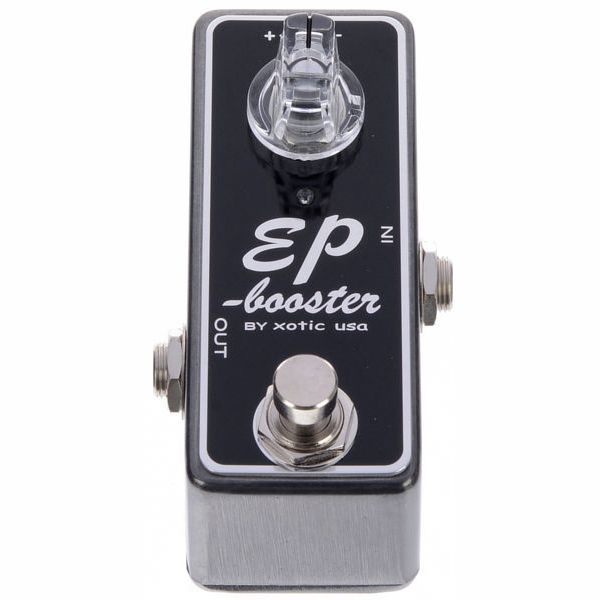
Thomann lists this thing alongside plenty of other boosters, and it’s worth knowing where it sits. The Boss BP-1W Waza Craft gives you a similar always-on philosophy but with a more scooped, hi-fi voicing. The MXR Micro Amp, meanwhile, is more of a blunt volume tool – great for a quick solo bump but without the same tonal personality.
The EP Booster splits the difference: it’s coloured enough to notice, subtle enough to leave on all night without anyone in the room clocking that it’s even there. That’s a narrower lane than it sounds, and not many pedals nail it.
On Pedalboard Placement
Most people run the EP Booster first in the signal chain, right after the guitar, so it’s shaping everything downstream. Some run it in the effects loop instead, right before the power amp, for a different kind of push – less „gain,” more „louder and fuller for solos.”
Either placement works. There’s no wrong answer here, which is refreshing given how fussy some boost pedals can be about ordering.
Who Should Actually Buy This
If you’re chasing an always-on pedal that just makes your rig sound more expensive than it is, this is squarely it. It works shockingly well even on budget gear – plug it in front of something like a Squier Sonic Strat or any of the guitars from our best cheap electric guitars for beginners roundup, and the amount of grown-up tone it adds is honestly a little unfair.
It’s also become a quiet favorite in ambient and shoegaze setups, where that subtle compression and thickening plays nicely under layers of modulation and reverb – worth a look if that’s your world, alongside picks from our best pedals for shoegaze list.
If you’re the type chasing dense, textured rock tones, it also slots naturally into a board built around indie rock essentials – it’s not a flashy pedal, but it’s the kind that quietly does the most work on the board.
Any Downsides?
Not many, but let’s be fair about it. The single-knob design means you’re not getting tone-shaping on the fly – those DIP switches are a „set once” affair, not something you’ll be adjusting between songs.
It also doesn’t come with a power supply, so budget for a 9V (or up to 18V if you want extra headroom) adapter separately. And because it’s not a distortion pedal, don’t expect it to get you into overdrive territory on its own – that’s not the assignment here.
Specs at a Glance
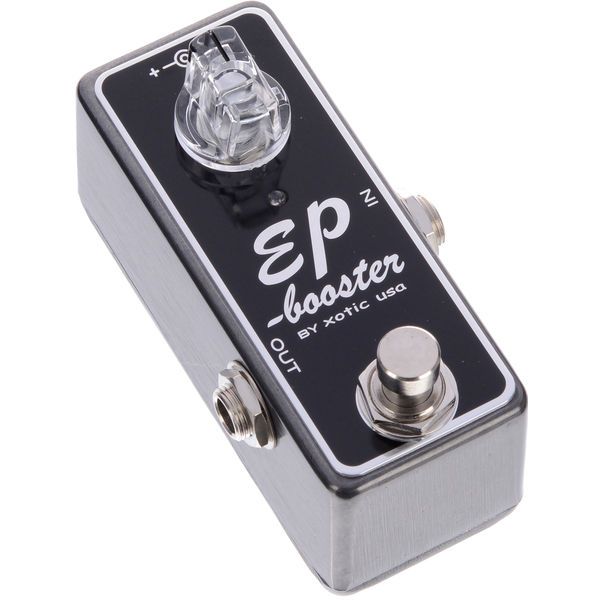
- Type: FET-based clean boost / preamp pedal
- Gain: up to +20 dB
- Circuit basis: modeled on the Echoplex EP-3 preamp IC
- Controls: single Volume knob + internal DIP switches for gain frequency & EQ voicing
- Bypass: true bypass
- Power: 9–18V DC (adapter not included)
- Built: USA-made, diecast aluminum enclosure
Final Verdict
The Xotic EP Booster isn’t trying to reinvent anything, and that’s exactly why it’s stuck around this long. It’s the kind of pedal you buy once, set up once, and then just… use, forever.
Is it the most exciting pedal on your board? No – it doesn’t even have an LED that changes colour. But plug it in front of literally anything and you’ll hear immediately why thousands of players (Hendrix-worshippers included, going by the reviews) keep this thing bolted down permanently.
If you want a no-nonsense way to make your whole rig sound a size bigger, this is still one of the smartest ways to spend on a pedalboard in 2026.