Watch It First
Marcus Miller putting his actual name on a budget-friendly bass line still feels a little unbelievable, honestly.
But here we are, years later, and the Sire V7 remains one of the best value Jazz-style basses you can buy.
I’ve been playing one for a while now, and I genuinely love it – here’s why.
Why This Bass Exists
Marcus Miller worked directly with Sire on the design of this line, and it shows. This isn’t a celebrity slapping their name on generic gear.
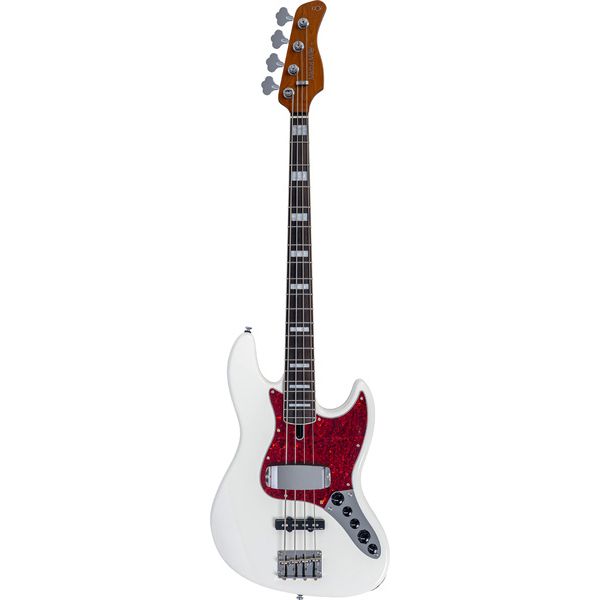
The V7 New Gen sits toward the top of Sire’s lineup – alder body, roasted maple neck, ebony fretboard, and active/passive switchable electronics.
Two Marcus Super-J Revolution single coils, a Marcus Heritage-3 preamp, and a Modern-S bridge round out the spec sheet. This is genuinely thoughtful gear, not a cash grab.
Miller has been vocal in interviews about being involved in tone-shaping decisions on this line, right down to pickup winding specs. That level of actual input is rare for a signature product at any price.
Build Quality
The roasted maple neck isn’t just for looks – it’s more stable against humidity and temperature swings than a standard maple neck, and it feels slightly warmer under the hand too.
Fretwork is excellent. Twenty stainless steel frets, dressed cleanly, no sharp edges anywhere along the neck.
The tortoise pickguard and cream binding give it a genuinely premium look that punches way above the price this bass actually sells for.
- Ebony fretboard feels fast and smooth under fingerstyle playing
- Open-geared premium tuners hold tune well, even under aggressive slap technique
- Chrome hardware throughout feels solid, no cheap plating visible anywhere
How It Plays
The C-shaped neck profile is comfortable for hours, and the 38mm nut width keeps things tight enough for fast fingerstyle runs without feeling cramped.
Balance on a strap is excellent – no neck-dive, which matters a lot if you’re standing for a 3-hour gig.
IMO the standout feature here is how effortless it is to switch between playing styles. Fingerstyle, pick, slap – it all feels natural without fighting the instrument.
Factory setup was close to ideal on the unit I played – low action, minimal buzz, ready to gig within minutes of unboxing. That’s not something you can say about every bass at this price.
The Tone – Active and Passive
This is where the V7 really separates itself from cheaper basses. You get a genuine active/passive switch, not just a volume-controlled active circuit.
In passive mode, you get classic J-Bass warmth and character – vintage, woody, honest.
Flip to active and the Marcus Heritage-3 preamp opens up a genuinely wide tonal palette – more bass, more treble headroom, and a mid control that can carve out serious slap presence.
Slap tone in active mode is where this bass earns its name. Percussive, punchy, with just the right amount of aggression without ever turning harsh.
Fingerstyle in passive mode is a completely different animal – round, warm, almost upright-bass-like when you dig in near the neck pickup. Genuinely one of the more versatile basses I’ve reviewed.
Who Should Buy This
Gigging bassists who need genuine tonal flexibility in one instrument – this covers vintage J-Bass tone and modern slap-ready active tone without needing two basses.
Session musicians will appreciate having that switch between passive warmth and active clarity available on the fly, especially when a setlist jumps between genres.
If you want a taste of the Sire formula at an even lower price point, our review of the Sire Marcus Miller V5 covers the step-down model, which is still genuinely excellent.
Curious how far down the range the quality holds up? Check our thoughts on the Sire Marcus Miller V3 too – a great entry point if the V7 is out of budget.
We’ve also covered the broader question of whether Sire Marcus Miller basses are actually good across the whole range, if you want the bigger picture before committing.
If P-Bass tone interests you more than Jazz-style, our review of the Squier Classic Vibe 60s Precision Bass covers that completely different flavor.
And for a genuinely great budget J-style alternative from a different brand entirely, the Harley Benton JB-75MN is worth cross-shopping too.
The Niggles
The active preamp needs a 9V battery, and like all active basses, that’s one more thing that can die on you mid-gig if you forget to check it.
At this price point you’re right at the edge of budget and mid-tier – some players might feel like they’re better off saving for a genuine Fender Jazz Bass instead, though the tone here holds its own.
The gloss finish shows fingerprints and smudges fairly easily – not a functional issue, just something to be aware of if you’re precious about how your gear looks under stage lights.
None of these are serious complaints. They’re the kind of minor notes you make when a bass is otherwise this solid.
Specs at a Glance
- 4-string electric bass guitar
- Body: Alder
- Neck: Bolt-on roasted maple
- Fingerboard: Ebony, white pearl block inlays
- Neck profile: C
- Frets: 20, medium, stainless steel
- Scale: 864mm (34 inch)
- Nut width: 38mm (1.5 inch)
- Pickups: 2 Marcus Super-J Revolution single coils
- Electronics: Marcus Heritage-3 preamp, active/passive switchable
- Bridge: Marcus Miller Modern-S
- Hardware: Chrome
Comparing It to the Real Fender Jazz Bass
It’s impossible to talk about a Jazz-style bass without the inevitable comparison, so let’s just address it directly.
A genuine Fender Jazz Bass, especially anything above the Player series, will have subtle refinements in fret leveling, hardware tolerances, and overall setup consistency that come from decades of factory tuning.
But in terms of pure tone and playability for the money, the V7 closes that gap further than most players expect. Blind tone tests between the two are closer than the price difference would suggest.
For working musicians who need reliability without a five-figure insurance policy on their gear, that gap is very easy to live with.
Final Verdict
The Sire Marcus Miller V7 earns its reputation honestly. Real input from an actual bass legend, genuinely flexible electronics, and build quality that doesn’t feel like a compromise.
Whether you need vintage J-Bass warmth or modern slap-ready clarity, this bass covers both without asking you to choose. That versatility alone makes it worth the money.
If you’re shopping in this price range for a Jazz-style bass and you skip trying one of these, you’re doing yourself a disservice. Genuinely one of my favorite basses to recommend 😉