Watch It First
Marshall stacks look amazing on a stage. They also do not fit in a bedroom, a flat, or most people’s cars.
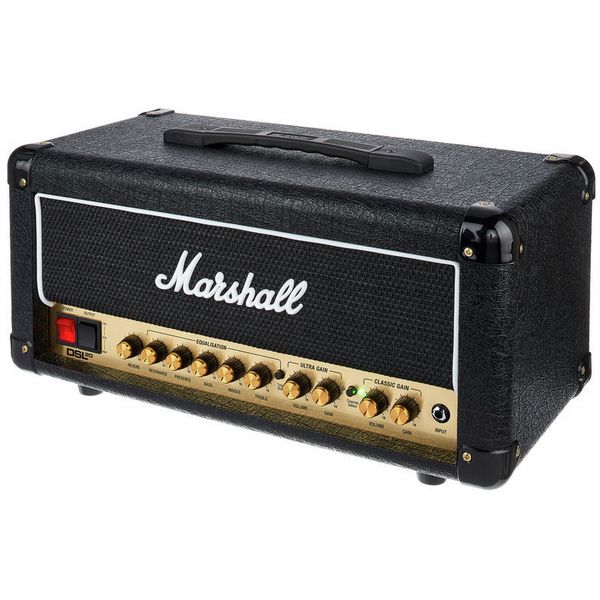
The DSL20HR is Marshall’s answer to that problem — a genuine all-tube head with real EL34 power tubes, shrunk down into what people affectionately call a „lunchbox” amp.
I went through the spec sheet and well over a hundred owner reviews to figure out if it actually delivers proper Marshall roar, or just the badge.
What Is a „Lunchbox” Head, Anyway?
It just means a small, low-wattage tube head, usually meant to sit on top of a single cab rather than a full stack. The DSL20HR is part of Marshall’s Reissue series, aiming for authentic DSL (Dual Super Lead) tone in a compact box.
Output is switchable between 20W and 10W, which matters more than it sounds — dropping to 10W lets you push the power tubes into that natural tube compression at a volume your neighbours can actually tolerate.
Build and Tone Controls
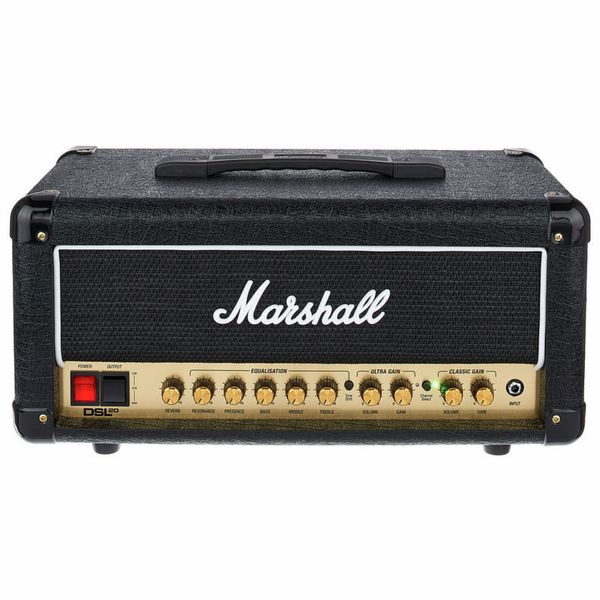
Under the hood: 3x ECC83 preamp tubes and 2x EL34 power tubes — the classic recipe. Two switchable channels (Classic Gain and Ultra Gain) each get independent Volume and Gain, while Bass, Middle, and Treble are shared across both. A Tone Shift button reshapes the midrange, and a Bass switch adds low-end boost.
You also get an emulated line out for silent recording, a series FX loop for time-based pedals, and a footswitch included in the box to flip channels hands-free. If you want the same DNA in a self-contained combo instead of a head, our Marshall DSL5CR review covers the smaller combo version of this same series.
How It Sounds
Owners consistently praise how versatile the two channels are — Classic Gain covers clean-to-crunch territory nicely, while Ultra Gain gets into proper rock and hard rock saturation. One long-time owner called it „an all around great amp” that cuts through drums easily when paired with a decent cab.
That last point matters more than you’d think. Another detailed owner review specifically noted that 20W into a 2×12 16-ohm cabinet can actually struggle to cut through a full band with drums, while the same head into a 4×12 16-ohm cab has headroom to spare. Wattage on paper doesn’t tell the whole story — cabinet pairing changes the equation a lot.
Not every review is glowing, either. At least one owner felt the higher gain settings got fizzy and harsh rather than thick, and noted this reissue is built in Asia rather than the UK, which they felt showed in the tone compared to older, pricier Marshalls. It’s honest feedback worth weighing — for hard rock and classic rock tones most players are thrilled, but if you’re chasing high-gain metal tones, a boost pedal in front (an OD-style overdrive with a flat EQ is the usual recommendation) will get you there more comfortably than cranking the Ultra channel alone.
Who It’s For
Home and studio players who want genuine tube tone without a full stack, gigging guitarists who already own (or plan to buy) a proper 4×12 or 2×12 cab, and anyone wanting their first „real” tube amp without Marshall’s flagship prices. If you want to see how it compares to Marshall’s more elaborate multi-channel offerings, our Marshall JVM410H review covers the other end of the range.
The Honest Niggles
A few owners mention the knobs and control feel a bit lightweight for the price — nothing that affects tone, but worth knowing if you’re used to sturdier vintage-style hardware. As mentioned, high-gain tones can lean fizzy without a boost in front, and the 20W/2×12 combination specifically may leave you wanting more headroom at full-band volume.
It’s also a head only — no cabinet included, so factor that into your budget. If low-volume flexibility matters more to you than all-tube purity, a modelling amp like the Marshall Code 50 or the solid-state Marshall MG50GFX will get you usable tones at bedroom volume more easily than any tube head will.
Living With It at Home
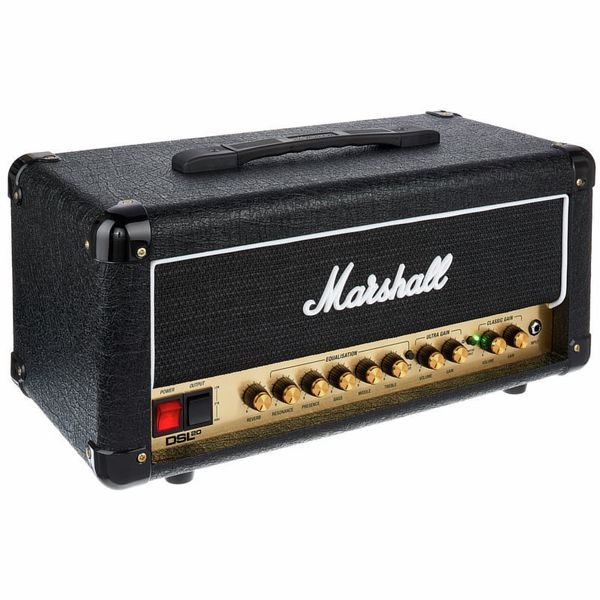
The 10W mode is the real party trick for home use. It lets the power amp start compressing and doing its thing at a volume that won’t get you a visit from downstairs, which is exactly the problem tiny practice amps and modellers try (and mostly fail) to fully replicate.
Pair it with a power attenuator or a lower-wattage 1×12 cab and you can get genuine tube saturation at genuinely liveable volumes. It’s also a great option for recording direct via the emulated line out if you don’t want to mic up a cab at all.
Worth adding: several owners specifically bought this as their very first tube amp after years on solid-state practice combos, and the consensus is that it’s a genuinely good entry point. The channel-switching footswitch means you’re not stuck riding a volume knob mid-song, and the emulated out means a laptop and a decent set of headphones is all you need to practice silently at 2am without losing that tube feel.
Specs at a Glance
- Type: all-tube head (Reissue series)
- Power: 20W, switchable to 10W
- Preamp tubes: 3x ECC83
- Power amp tubes: 2x EL34
- Channels: 2 (Classic Gain / Ultra Gain)
- Tone Shift midrange voicing button
- Bass Boost switch
- Shared 3-band EQ (Bass, Middle, Treble)
- Emulated line out
- Series FX loop
- Footswitch included
Final Verdict
The DSL20HR delivers genuine Marshall roar in a genuinely compact, affordable head, and the 20W/10W switch makes it far more livable at home than the wattage alone suggests. It’s a smart way into real tube tone.
Just go in knowing your cabinet choice matters — a 4×12 gives you real headroom, a smaller 2×12 might leave you wanting more at full band volume — and that a boost pedal helps tame the fizz at higher gain. Compare it against the Fender 65 Princeton Reverb if you want a different flavour of small tube amp entirely. IMO, for the money, it’s still one of the easiest ways to get a real Marshall stack sound without buying an actual stack.