Watch It First
There are 281 customer ratings on this guitar and it averages 4.6 out of 5. For a Strat copy that costs less than a decent pedal, that number should not be possible.
The Harley Benton ST-62 Vintage Series has been on sale since 2013 and it has quietly become the default answer whenever someone asks how cheap you can go without buying rubbish.
I wrote about the TE-52 a while back and said much the same thing. This is the Strat-shaped sibling, and honestly it might be the better guitar of the two.
Start With the Neck, Because That Is the Surprise
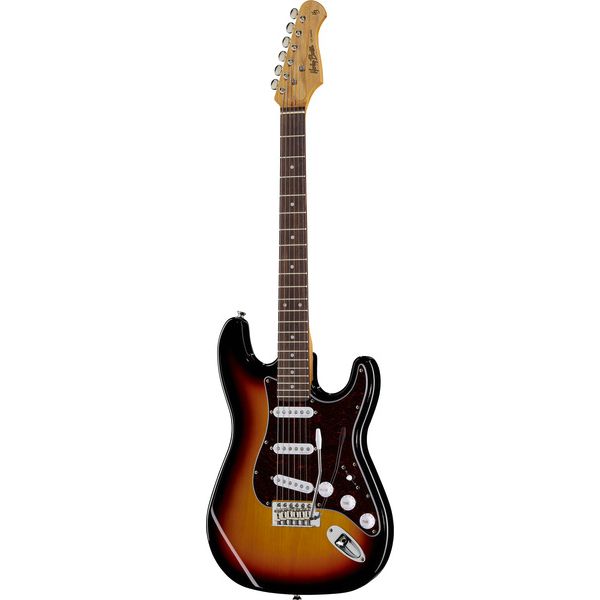
Bolt-on, caramelised Canadian maple, C profile, laurel fingerboard, 22 frets, 648 mm scale and a 305 mm (12 inch) radius.
Caramelised maple is roasted maple by another name. The wood is baked, which drives out moisture and resins, leaving it more stable against humidity swings and giving it that warm brown colour.
That is a spec you normally find on guitars costing five or six times as much. Harley Benton put it on a guitar that costs about the same as a night out.
The 12 inch radius is a deliberate modernisation. A real 1962 Strat had a 7.25 inch board and would choke on bends above the 12th fret. This one does not. Purists will grumble. Everyone else will bend happily.
There is also a dual action truss rod, which means you can adjust the neck in both directions rather than praying it moves the way you need. Again: not a given at this price.
The Pickups Are Better Than You Expect
Three Roswell STA alnico-5 single coils in the classic ST layout, one volume, two tones, five-way switch.
Roswell is Harley Benton in-house, and the alnico-5 magnets matter. A lot of cheap guitars ship ceramic pickups, which sound harsh and one-dimensional. These do not.
Position one is bright and reedy without turning into an ice pick. Position five is warm and round. Two and four give you that hollow quack, which is what most people actually buy a Strat for.
Are they as good as the Fender-designed alnicos in a Squier Classic Vibe? No. The Squier has more midrange complexity and a sweeter top end. But the gap is far smaller than the price gap, and that is the whole story of this guitar.
Hardware and the Tremolo
Chrome DLX hardware, a standard six-screw synchronised tremolo, Kluson-style machine heads, tortoise pickguard.
The trem works. Gentle vibrato, back in tune. Anything more athletic and it drifts, mostly because the nut binds rather than because the bridge is bad.
The tuners are the weakest link. They hold, but they are vague, and a set of decent sealed tuners is the single best upgrade you can make to this guitar. Lol, the upgrade costs a meaningful fraction of the guitar itself, which tells you something about the value on offer here.
What You Actually Get Wrong
- Basswood body. Light, soft, and it dents if you look at it funny. It sounds fine. It just does not have the low-end authority of alder or ash.
- Nut is plastic and cut roughly. Graphite or a proper bone nut is a cheap fix and a real improvement.
- Fret ends vary unit to unit. Most are fine. Some need a file. Buy from somewhere that takes returns.
- Setup out of the box is a lottery. Expect to spend half an hour with an allen key before it plays properly.
- Pots are scratchy on some units. A squirt of contact cleaner sorts it.
- No case, no bag, no strap. Obviously.
Who This Is Actually For
First guitar buyers, obviously. It is a proper full-size instrument with real specs, not a toy with strings.
But it is also for people who already own good guitars. This is the one you leave at the rehearsal room, take to the beach, hand to a friend, or gut for a parts project. The body and neck are a genuinely good platform for upgrades.
And it is for anyone who has ever wanted to try a Strat without committing. If it turns out the shape is not for you, you have lost very little. If it turns out you love it, you have a perfectly giggable guitar.
If you would rather have a Tele, the TE-52 is the same idea. If you want humbuckers and a modern feel, the Fusion-IV HH is the one to look at, and the SC-450 covers the Les Paul end.
If you can stretch a bit, the Squier Affinity Strat is the next rung up, and I compared the tiers above that in Fender Player vs Classic Vibe.
Specs at a Glance
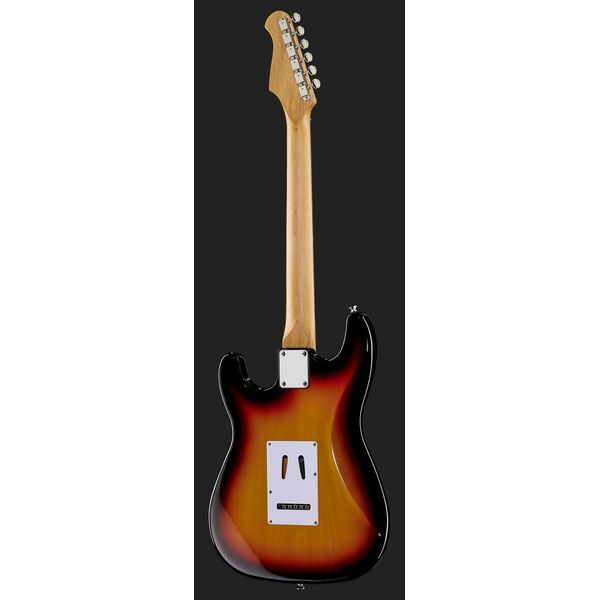
- Body: basswood (linden), 3-Tone Sunburst high gloss
- Neck: bolt-on caramelised Canadian maple, C profile
- Fingerboard: laurel, 305 mm (12 in) radius
- Frets: 22, dual action truss rod
- Scale: 648 mm, nut width 42 mm
- Pickups: 3 x Roswell STA alnico-5 single coils
- Controls: 1 volume, 2 tone, 5-way switch
- Bridge: synchronised vintage-style tremolo
- Hardware: chrome DLX, Kluson-style tuners, tortoise pickguard
- Thomann item number: 309878
The Upgrade Path, If You Catch the Bug
Half the appeal of an ST-62 is that it is a blank canvas nobody will judge you for cutting into. The body is routed to standard Strat dimensions and the pickguard is a standard 11-hole layout, so every aftermarket part on earth drops straight in without modification.
The sensible order is nut first, tuners second, then a steel trem block, and only then pickups if you still want more. Do it that way and you will notice each change. Do pickups first and you will have spent the most money on the least obvious improvement, which is the classic beginner mistake and one I have made myself more than once.
Final Verdict
I love this guitar for a slightly unromantic reason: it removes an excuse. Nobody can claim they cannot afford to start playing when this exists.
The roasted maple neck and alnico pickups are the two things that lift it above the pile of anonymous cheap Strats, and they are also the two things that are hardest to fix later. Everything that is wrong with it – nut, tuners, setup – is cheap and easy to put right.
It has been on sale for over a decade and it still averages 4.6 stars across nearly 300 buyers. That is not marketing. That is a lot of people getting more than they paid for.
Buy it, spend twenty minutes setting it up, put graphite in the nut slots, and then stop reading guitar reviews and go and play it. That is the whole point of a guitar this cheap.