Watch It First
Schecter has been quietly selling the same guitar since 2007 and nobody seems to mind. The Omen Extreme-6 is the one with the figured maple top — the pretty one in a lineup that is otherwise mostly matte black and menace.
Mahogany body, quilted or flamed top depending on the finish, 24 frets, two humbuckers, a Tune-O-Matic and absolutely no Floyd Rose in sight.
It is the least fashionable guitar Schecter makes and probably the most useful. Let me explain why.
The top is doing a lot of heavy lifting
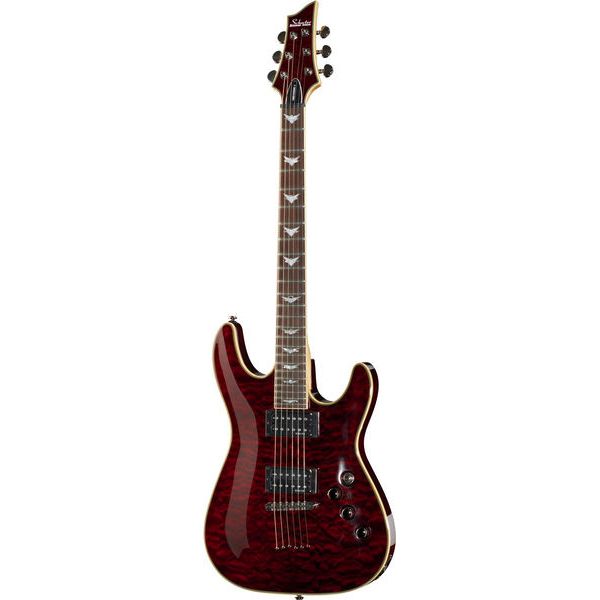
Let us be honest about what „Extreme” means here: it means a figured maple veneer over a mahogany body, and it is the entire reason this model exists as a separate SKU.
In Black Cherry it looks like a guitar that costs considerably more. The grain pops under stage lighting and the see-through finish means no two are quite identical.
Is a veneer cheating? A bit. But the standard Omen 6 costs less and looks plainer, so you know exactly what you are paying for and why. No pretending going on.
Mahogany plus 25.5 inches is an underrated combination
Most mahogany-bodied guitars come with a shorter Gibson-style scale. The Omen Extreme goes the other way: mahogany body, 648 mm (25.5″) scale.
The result is warmth from the wood and tightness from the string tension. Low-tuned riffs stay defined instead of going to mush, and single notes still have some meat on them.
It is the same trick the C-1 Hellraiser pulls, just with cheaper hardware and a lot less bling.
The neck is the surprise
Thin C, maple, satin-ish on the back. Not a Wizard-thin Ibanez neck, not a baseball bat either.
The 24 frets and the deep double cutaway mean the dusty end is genuinely reachable, which is more than you can say for a lot of guitars in this bracket.
Vector inlays instead of dots. Small thing, but they make the fretboard look like it belongs on a proper metal guitar rather than a beginner special.
Those Diamond Plus pickups
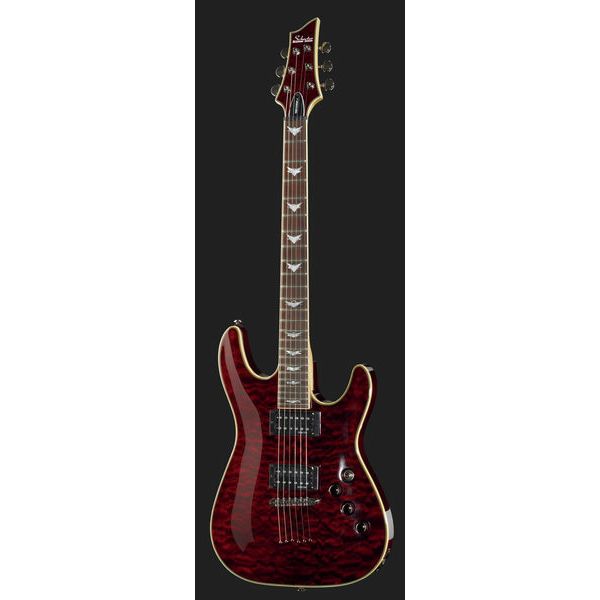
Two Schecter Diamond Plus humbuckers, ceramic, hot, and the single most argued-about part of this guitar.
They are fine. Genuinely fine. High output, plenty of grind, a slightly scooped voice that suits chugging far more than it suits blues.
What they are not is nuanced. Clean tones get a bit sterile and the bridge pickup can sound compressed if you push a valve amp hard.
The good news is that this is the easiest guitar in the world to upgrade. Standard humbucker routing, standard spacing, four conductors on most examples. Drop in a set of Duncans and it becomes a completely different instrument.
No Floyd, and that is a feature
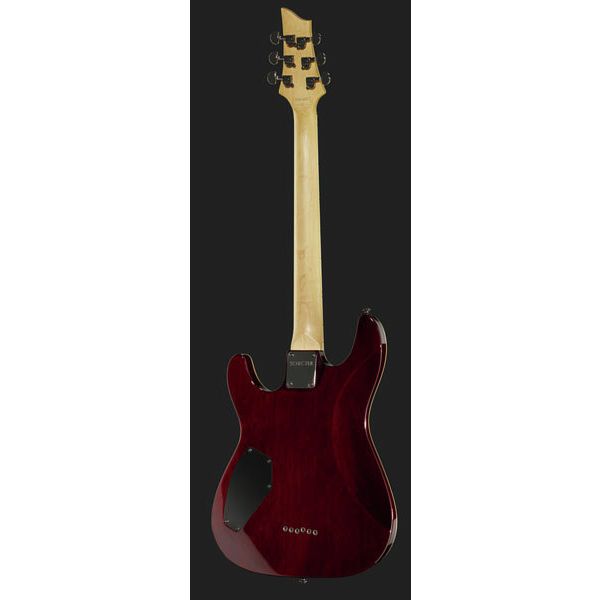
The Omen Extreme-6 ships with a Tune-O-Matic bridge with string-through-body construction. No locking nut, no fine tuners, no forty-minute string changes.
For a metal guitar in 2026 that is almost contrarian, but it means you can drop-tune it on a whim and it stays in tune. If you want the trem version, the Omen Extreme FR exists.
String-through also adds a bit of sustain and — more usefully — makes restringing at a gig something you can do in a hurry without swearing.
The niggles
Factory setups are inconsistent. Mine arrived with high action and a fret end or two you could feel. Twenty minutes with a file and a hex key sorted it, but not everyone wants that job.
The tuners are unbranded and merely OK. They hold, but they are the first thing I would replace after the pickups.
And it is heavy. Mahogany plus a 24-fret neck adds up, and there is no belly cut or forearm contour to speak of. Long sets will let you know about it.
One more, IMO: the black chrome hardware looks great for about six months and then starts to wear at the bridge saddles.
How it stacks up against its own family
The Omen Extreme sits below the Damien and Hellraiser lines and above the plain Omen. Damien models bring active-voiced pickups and darker cosmetics; Hellraisers bring EMGs and abalone binding.
If you want something faster and more modern, the Sun Valley Super Shredder is the one to look at. If you want the tuning-stability nerd option, the Banshee Mach-6 with EverTune is genuinely clever.
The Omen Extreme is the sensible middle. It is the one you buy when you want a good-looking metal guitar you can gig, not a spec-sheet trophy.
Who should skip it
Anyone who plays mostly clean, anyone who needs a trem, and anyone who wants a guitar that is perfect out of the box with zero fettling.
If you want a figured top on something more traditional, the Epiphone Les Paul Custom is a very different animal at similar money.
What it actually sounds like in a room
Plugged into a valve amp with the gain at about two o’clock, the Omen Extreme does exactly what you want: thick, chesty rhythm tone with enough top end to keep pick attack audible.
Drop the tuning to D standard and it gets better. The 25.5″ scale keeps everything from flopping around, and the mahogany stops the whole thing sounding thin and clacky.
Neck pickup on a clean channel is where it gets less convincing. There is a woolly quality to it that suits arpeggios and not much else. Blues players, look elsewhere.
Split-coil tricks are worth trying if your example has four-conductor pickups. It is not a Strat, but it opens up a usable second voice for the price of a push-pull pot.
Feedback resistance is good, which matters more than people think when you are standing in front of a loud cab.
Specs
- Body: Mahogany
- Top: Figured/quilted maple
- Neck: Maple, bolt-on, thin C profile
- Fretboard: Rosewood with vector inlays
- Frets: 24
- Scale: 648 mm (25.5″)
- Pickups: 2 x Schecter Diamond Plus humbuckers
- Bridge: Tune-O-Matic with string-through-body
- Controls: 2 volume, 1 tone, 3-way switch
- Finish: Black Cherry (other colours available)
Final Verdict
Nineteen years on the market is not an accident. The Schecter Omen Extreme-6 survives because it does the boring things well and looks far more expensive than it is.
Buy it, set it up properly, and live with the stock pickups for a few months. If they still bug you, swap them — the guitar underneath is more than good enough to justify the spend.
It punches above its money, and it will still be in the catalogue long after this year’s trendy metal guitar has quietly disappeared.