Watch It First
Fender quietly moved on from the Vintera II line and rolled out Vintera III, and somehow barely anyone talks about it. Weird, because the 70s Jazz Bass in this new lineup is genuinely one of the better reissue basses I’ve played in a while.
If you were holding out for a Vintera II 70s Jazz Bass specifically, heads up, Thomann’s moved past that generation entirely. This is the direct successor, same concept, same era being reissued, just refined.
I got proper hands-on time with the Candy Apple Red version and came away pretty impressed, especially for the price bracket it sits in.
Body And Neck
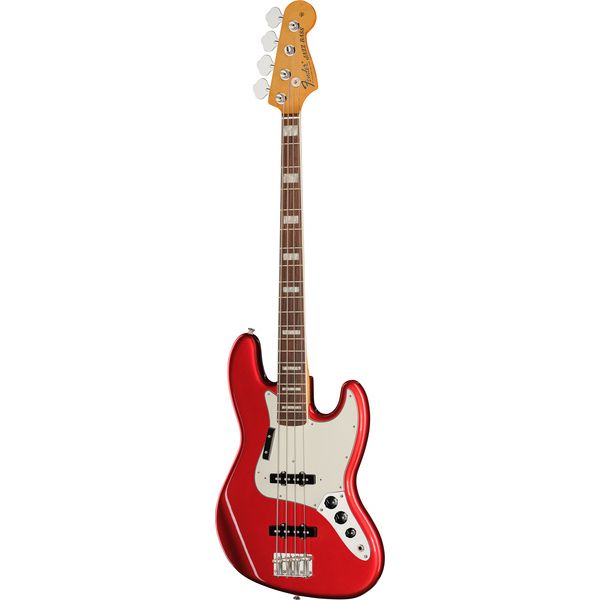
Alder body, bolt-on maple neck with an Early ’70s „C” profile, rosewood fingerboard with those big vintage-style pearloid block inlays. It looks exactly like what it’s supposed to look like: a 1970s Jazz Bass, full stop.
The fingerboard radius is a vintage-correct 7.25 inches, which some players find too curved for aggressive modern technique, but for fingerstyle groove playing it feels right at home and matches the era this bass is chasing.
34 inch scale, 20 vintage-style frets, bone nut, 38.1mm nut width. Standard Jazz Bass dimensions through and through.
Pickups And Tone
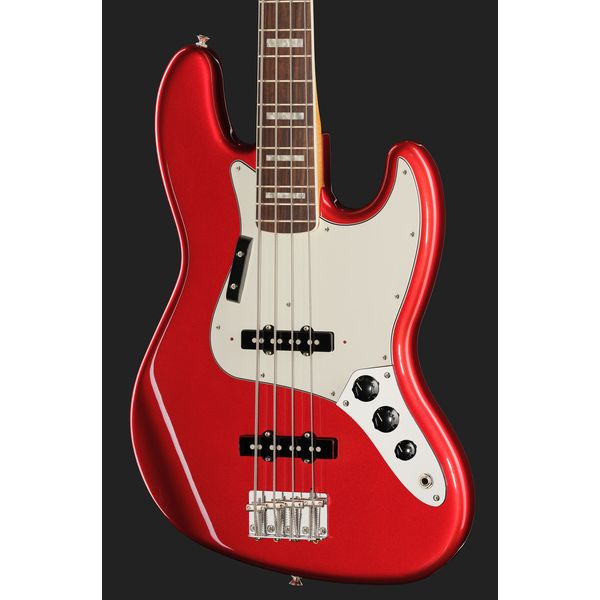
Two vintage-style Early ’70s Jazz Bass single coils, passive wiring, two volumes and one master tone, exactly like the originals. No active EQ, no modern tricks, just honest passive Jazz Bass tone.
Bridge pickup solo’d gives you that classic growly, slightly nasal Jazz Bass bite that cuts through a mix without needing a ton of EQ help. Blend both pickups and you get the warm, rounded thump that’s been sampled on more records than anyone could count.
Neck pickup alone is where the real magic is IMO, deep, woody, almost upright-bass-adjacent warmth that works beautifully for jazz, soul, and R&B lines.
Playability
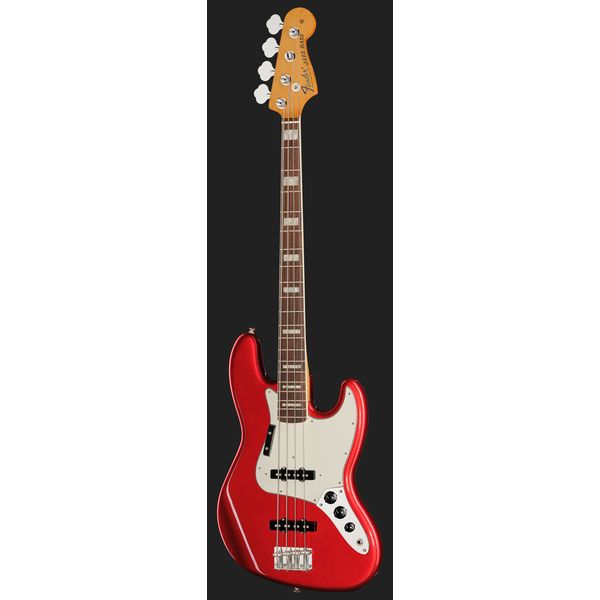
The C profile neck feels substantial without being a handful, and the setup out of the box was genuinely playable with low action and no fret buzz. That’s not always a given even at higher price points.
Balance on a strap is solid too, no neck-diving issues, which some Jazz Basses with slimmer bodies can suffer from. Comes with a gigbag in the box which is a nice bonus for something in this price range.
The vintage-style open-gear tuners hold tuning well once stretched in, and the 4-saddle vintage bridge with threaded steel saddles gives you enough intonation adjustment range without being fiddly.
How It Compares
If your budget doesn’t stretch this far, the Squier Sonic Precision Bass gets you into P-Bass territory for a fraction of the price, though obviously the tone and build quality gap is real. For something in a similar ballpark but with a totally different character, the Epiphone Embassy Bass is worth a look too.
If you already love the Vintera III line, our review of the Vintera III 50s Telecaster covers the guitar side of the same series and the family resemblance in build quality and vibe is obvious.
For amp pairing, a Fender Rumble 40 is a sensible budget-friendly starting point at home, while something like the Ampeg Rocket Bass RB-110 gives you a bit more headroom and that classic Ampeg midrange growl for band practice.
Who It’s For
Session players, funk and soul bassists, anyone chasing that classic 70s Jazz Bass growl without wanting to hunt down (and pay for) a genuine vintage instrument. Also a solid choice if you already own a modern Jazz Bass and want something with more character for specific gigs or recordings.
If you play a lot of modern metal or need extended range, this obviously isn’t the tool for that job, look at something like the Ibanez EHB600 instead for a completely different, more modern approach to bass design.
Quick Specs
- Body: Alder
- Neck: Maple, bolt-on, Early ’70s „C” profile
- Fingerboard: Rosewood, 7.25″ radius, vintage block inlays
- Scale: 864mm / 34 inch
- Frets: 20, vintage
- Pickups: 2x Vintage-Style Early ’70s Jazz Bass Single Coil
- Controls: 2x volume, 1x master tone (passive)
- Bridge: 4-saddle vintage-style, threaded steel saddles
- Includes: Gigbag
The Niggles
The 7.25 inch radius fingerboard, while period-correct, isn’t for everyone. If you bend strings hard or play with a really low, fast action, you might notice some fretting out on the higher frets.
Passive-only electronics mean less tonal flexibility than active Jazz Basses, no built-in EQ boost if you need more output for a specific room. And this being a proper reissue at a proper reissue price, it’s a noticeably bigger investment than the Player or Squier lines, so budget accordingly.
Weight can also run on the heavier side depending on the alder cut used, so if you play long sets standing up, try one in person first if you can.
Setup And String Choice
It comes strung with Fender USA 7250M nickel-plated strings, gauged .045 to .105, which is a pretty standard medium set that suits the vintage voicing well. If you want an even woodier, more vintage-correct thump, flatwounds are worth trying on this bass specifically since the passive single coils respond really nicely to them.
Setup-wise, expect to do a small truss rod and intonation check after it settles in from shipping, which is normal for any bass regardless of price. Once it’s dialed in though, it stays stable, and the vintage-style bridge saddles make future adjustments straightforward if your playing style or string gauge changes down the line.
Final Verdict
Fender nailed the assignment here. This isn’t a reissue in name only, it actually feels and sounds like it’s chasing a specific decade of tone, and it succeeds. The growl, the warmth, the vintage-correct feel under the fingers, it’s all there.
If a proper passive Jazz Bass with genuine vintage character is on your list, this belongs on the shortlist. It’s not cheap, but it’s also not trying to be, and once you’ve played through both pickup positions you’ll understand why.
Solid recommendation from me, and one of the more convincing „reissue” instruments I’ve played in the current Fender lineup.