Watch It First
Of all the offsets Fender makes, the Jaguar is the one people are most nervous about. Too many switches, weird bridge, short scale, reputation for being fiddly.
The Player II Jaguar quietly fixes most of that without turning it into a Strat with a funny outline. It is the version I would actually recommend to someone who is Jaguar-curious rather than Jaguar-obsessed.
And crucially it is a real step up from the Squier Classic Vibe 70s Jaguar rather than just a nicer logo on the headstock. Here is where the money goes.
The Simplification Nobody Complains About
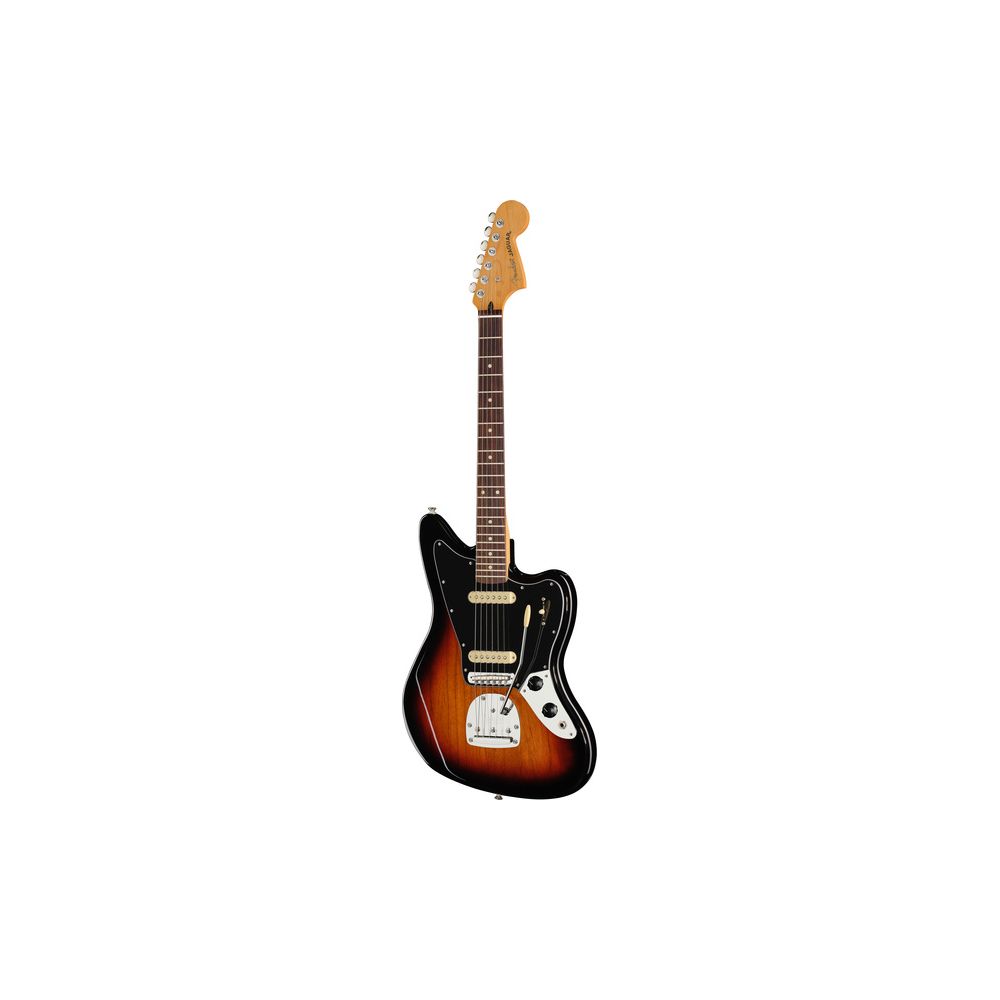
Vintage Jaguars have a rhythm circuit, a lead circuit, three slider switches and a strangle switch. It is a lot of guitar to learn before you can play a song on it.
The Player II drops all that for a master volume, a master tone and a 3-way blade switch. Purists will grumble. Everyone else will get on with it.
You lose the rhythm circuit, which was always a bit of a niche party trick. You gain a guitar you can pick up cold and use.
The Bridge Got Fixed Too
The classic Jaguar bridge problem is strings jumping out of the saddles when you dig in. Fender addressed it here with Mustang saddles on the Jaguar bridge plate.
Deeper string grooves, no more chasing your low E across the bridge mid-chorus. It is a small change that removes the single most annoying thing about the design.
The vintage-style floating tremolo is still there and still lovely for shimmer and wobble. Do not expect divebombs – that is not what this arm is for.
What The Short Scale Actually Does
The 610 mm (24 inch) scale is the shortest of the Fender electrics and it changes the guitar completely.
Lower string tension means bends take almost no effort and chords feel slinkier. If you have small hands or you have been fighting a 25.5 inch scale, this is a revelation.
The downside is that the low end gets a bit looser. Drop tunings on a Jaguar are possible but you will want heavier strings than the .009s it ships with.
Those Jaguar Single Coils
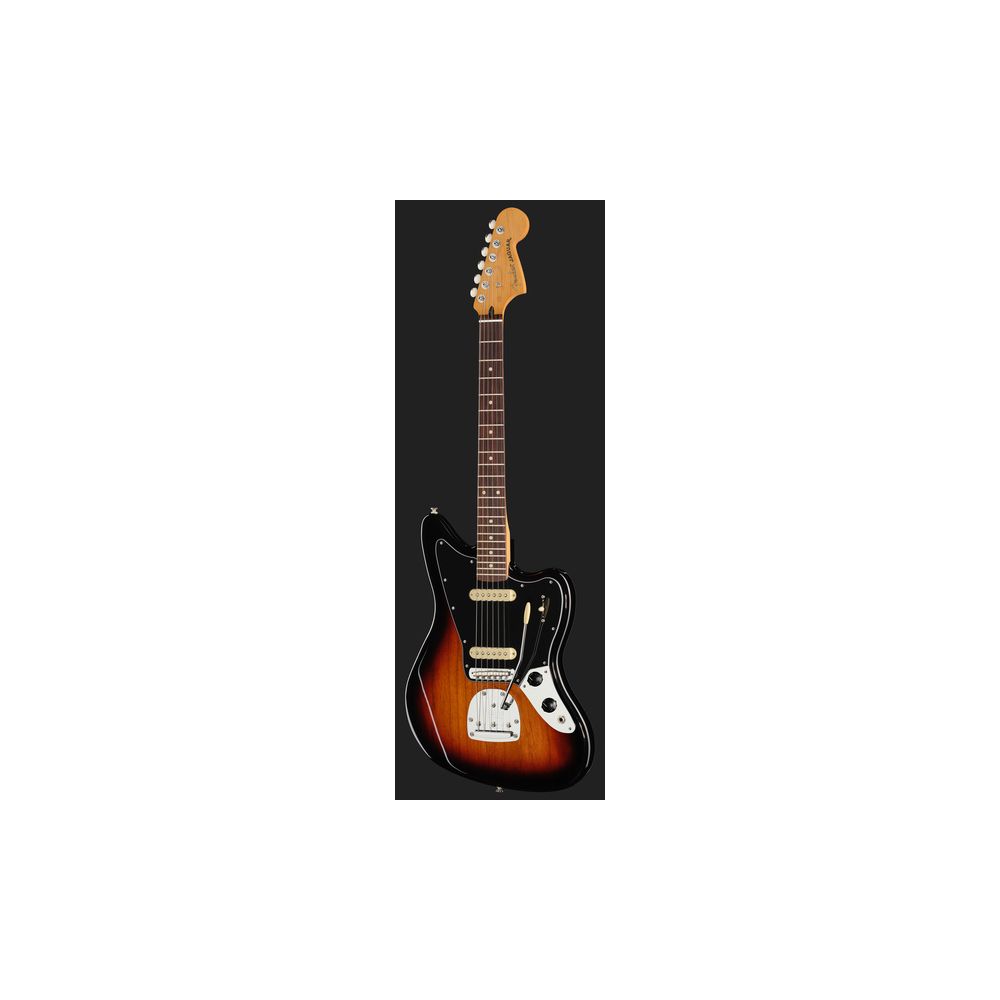
The Player Series Alnico 5 Jaguar single coils are the sound people actually come to this guitar for, and they are unlike anything else in the Fender range.
They are brighter and spikier than a Strat pickup, with a metal claw around each one that tightens the field and adds a slightly compressed, glassy edge.
Clean with a bit of reverb they chime. Through a fuzz they get gnarly and wild in a way that a Tele just does not. That is the whole reason the Jaguar became an indie and surf staple.
How It Differs From The Jazzmaster
People mix these up constantly. The Player II Jazzmaster has wide, flat soapbar pickups and a full 25.5 inch scale – warmer, thicker, more spread out.
The Jaguar is tighter, brighter and shorter. Think jangle and bite rather than warmth and swell.
If you want the same offset aesthetic on a bass, the Squier Affinity Jaguar Bass H covers that ground on a much smaller budget – very different instrument, same family look.
Player II Upgrades Worth Knowing About
If you have read my takes on the rest of the range you will recognise most of these. Fender updated the whole line at once.
- Rolled fingerboard edges – the single biggest feel upgrade, it makes a new guitar feel played-in.
- Rosewood fingerboard back on the menu after the pau ferro years.
- Fender ClassicGear tuners, which are a genuine improvement over the old standard set.
- Synthetic bone nut instead of plastic.
- A slightly nicer overall fit and finish than the outgoing Player line.
None of it is revolutionary. All of it adds up, in the same way it does on the Player II Telecaster and the Player II Stratocaster HSS.
Honest Niggles
The floating trem still needs setting up properly. Out of the box mine had a little too much travel and the intonation wandered until it settled.
The bridge, even improved, is a low-mass design. You lose a bit of sustain compared to a hardtail, which is part of the character but worth knowing.
And the Jaguar single coils are properly noisy in a room full of dimmers. That is single coils for you, but the bright voicing makes the hum more obvious IMO.
Who Should Buy One
Indie, shoegaze, surf and post-punk players, obviously. But also anyone with smaller hands who has bounced off standard-scale guitars and assumed the problem was them.
It also makes a great second guitar. If your main is a humbucker instrument, the Jaguar covers completely different territory without duplicating anything you own.
Specs at a Glance
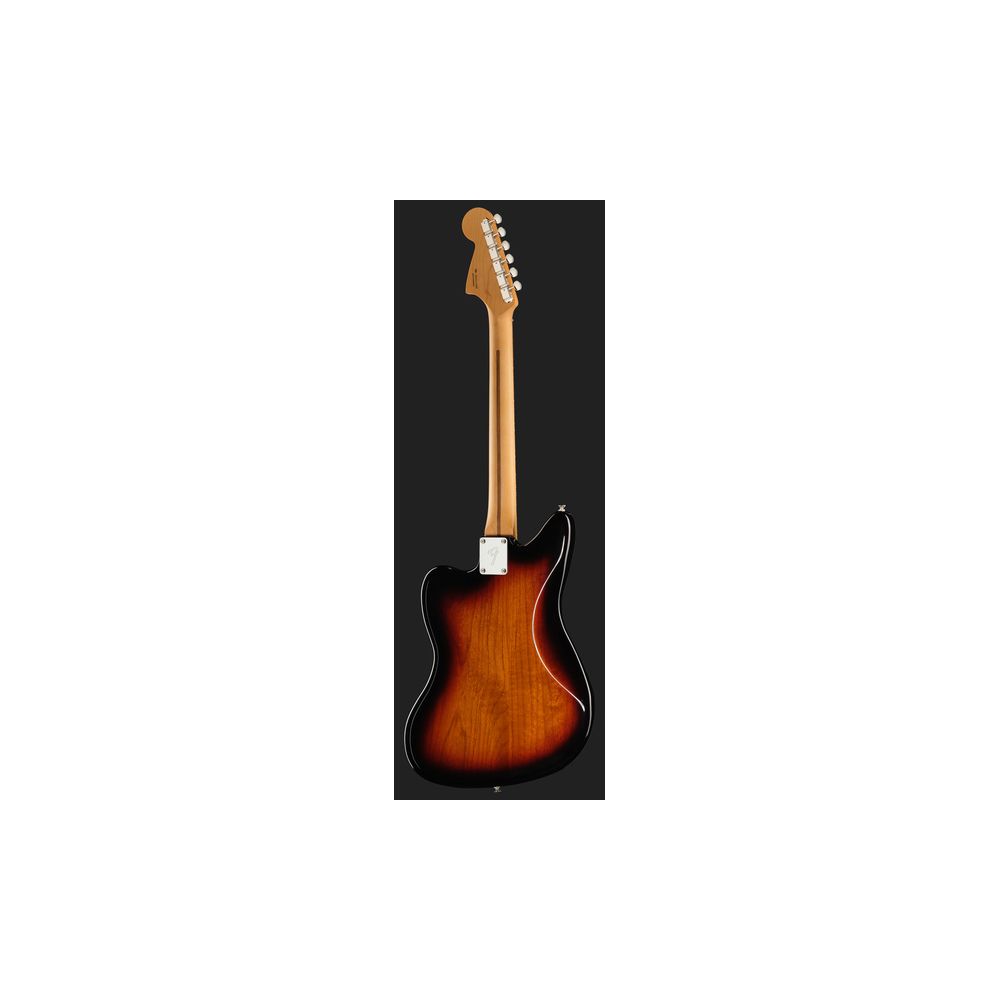
- Body: Alder
- Neck: Maple, bolt-on, Modern C profile, rolled edges
- Fingerboard: Rosewood, 241 mm (9.5 in) radius
- Frets: 22 medium jumbo
- Scale: 610 mm (24 in), 42 mm synthetic bone nut
- Pickups: 2 x Player Series Alnico 5 Jaguar single coils
- Controls: Master volume, master tone, 3-way blade switch
- Bridge: Jaguar bridge with Mustang saddles, floating vintage-style tremolo
- Tuners: Fender ClassicGear, nickel/chrome hardware
- Finish: 3-Colour Sunburst
A Note On Strings And Setup
If you buy one, do yourself a favour and put heavier strings on it. The factory .009s on a 24 inch scale feel like cooked spaghetti, and they are the main reason people say Jaguars are floppy.
Move up to .010s or .011s and the whole guitar tightens up. Tuning stability improves, the trem behaves better, and the low end stops flapping around when you hit a power chord hard.
It is a cheap fix that transforms the instrument, and it is the one bit of advice I would give anyone buying their first offset. Fender ships every scale length with the same gauge, which has never made much sense to me.
Final Verdict
The Player II Jaguar is the most approachable Jaguar Fender has made. It kept the sound and the shape and threw out the parts that made people give up on the design.
Against the Squier Classic Vibe you are paying for the alder body, the rolled edges, the better hardware and the pickups – and you can hear and feel all four.
It is not a do-everything guitar and it never pretended to be. Metal players should look elsewhere. Anyone chasing jangle, bite and that specific offset feel should stop reading and go play one.
For my money it is the most characterful electric in the whole Player II line. And there is a lot of Player II line.