Watch It First
The Telecaster is a slab of wood with a plank neck bolted on and two pickups screwed to it. Leo Fender designed it to be cheap to build and easy to repair.
Seventy-plus years later it is still one of the most used guitars in professional music, which is either a miracle or proof that he got it right first time.
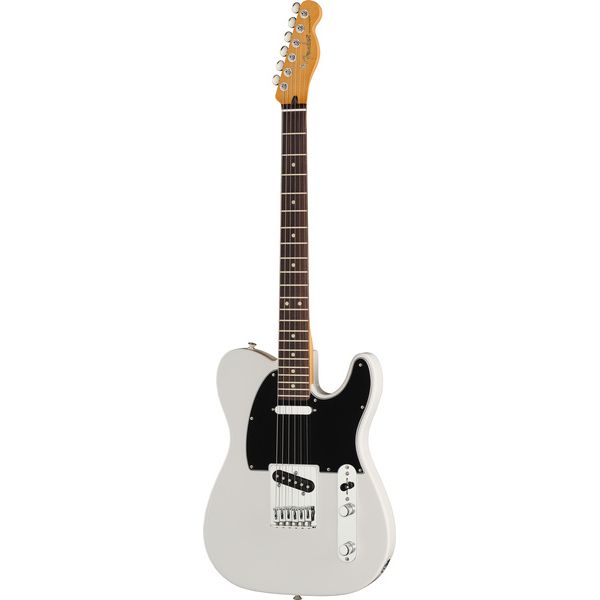
The Player II is the current Mexican-built version, and it quietly fixes a few things that used to annoy people about the Player line.
What Actually Changed From Player I
Two things matter. The first is the fingerboard – Player II gets a proper rosewood board rather than pau ferro on the dark-board models.
Small thing on paper. In the hand it is warmer looking and feels slightly softer under the fingers. Pau ferro was never bad, it was just a bit glassy.
The second is the bridge. Player II uses block steel saddles with string-through-body construction. The old bent-steel saddles were more vintage-correct but fiddlier to intonate.
Block saddles just work. Set them and forget them.
The rest of the spec
Alder body, bolt-on maple neck, Modern C profile, 241 mm radius, 22 medium jumbo frets, 648 mm scale and a 42 mm synthetic bone nut.
Pickups are Player Series Alnico 5 Tele single coils. Master volume, master tone, three-way switch, and Fender ClassicGear tuners.
No surprises anywhere. That is deliberate.
How It Plays
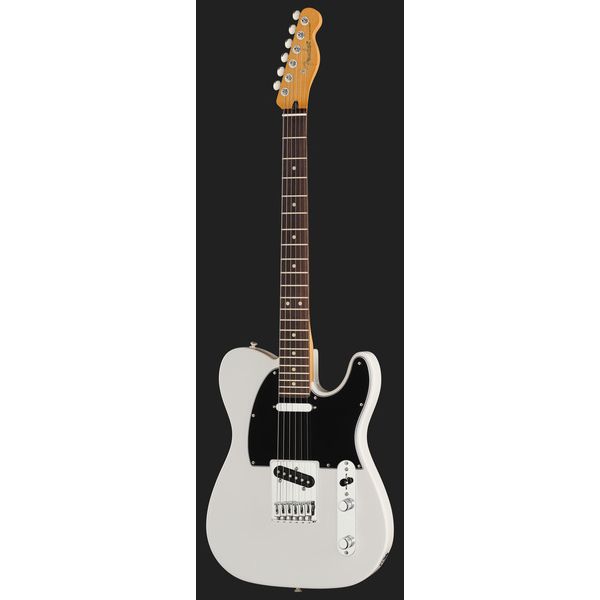
The Modern C neck is the best-judged compromise in guitar making. Not thin, not fat, works for basically everyone.
The 241 mm radius is the classic middle ground – flat enough for bends, curved enough for comfortable chording. Older Teles with a 184 mm radius choke out on big bends; this one does not.
Medium jumbo frets with rolled edges on the ones I have played. Fender have got much better at this over the last few years and it shows.
It is a light guitar. Alder plus a bolt-on neck plus no big carved top means it hangs comfortably for a full evening.
The bridge corner
The classic Tele complaint is the bridge plate lip digging into your palm when you mute. It is still there.
You either adapt your right hand or you swap the plate. Most people adapt within a week and then stop noticing forever.
How It Sounds
Bridge pickup first, because that is the reason people buy Telecasters.
It has that spanky, slightly nasal snap with a hard attack and a fast decay. Country players call it twang. Indie players call it jangle. It is the same thing.
These Alnico 5 units are a bit hotter and fuller than a true vintage-spec Tele pickup. Slightly less ice pick, slightly more body. IMO that is an improvement for most modern playing.
The neck pickup is warm, round and much more useful than Tele neck pickups have a reputation for being. Rolled back on the tone it does a decent jazz impression.
Middle position is the underrated one. Hollow, chimey, and perfect for clean rhythm work sitting under a vocal.
Push the bridge pickup into a mid-gain drive – something like a JHS 3 Series Overdrive – and it cuts through absolutely anything.
The Honest Niggles
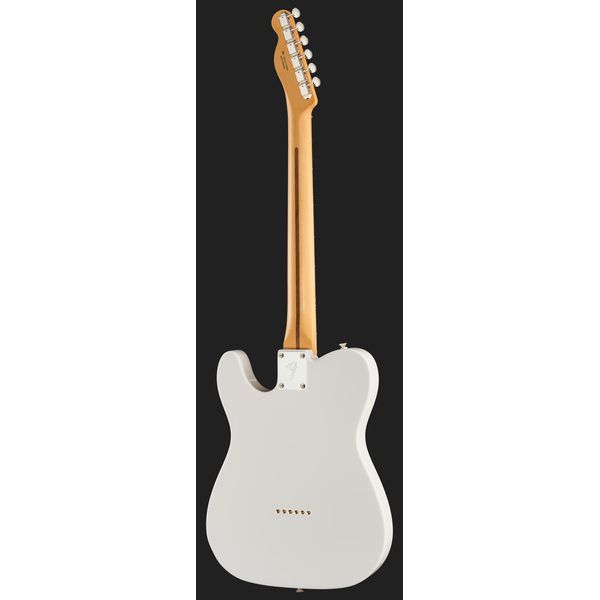
The Polar White finish is lovely but it is a plain solid colour, and the poly is thick. If you want to see wood grain, look at a sunburst.
Factory string gauge is 9-42, which is light for a Tele. Most people move up to 10s and the guitar immediately sounds fuller and stays in tune better.
ClassicGear tuners are fine. They are not locking tuners and they are not particularly smooth, but they hold pitch and they look right.
And the single coils hum. That is physics, not a fault. If that bothers you, you want humbuckers, and you want a different guitar – maybe the ESP LTD TE-200.
Who It Is For
Working musicians. Genuinely. If you play four different styles across a weekend, a Tele covers more of them than almost anything else.
It is also a great second guitar for someone who owns a humbucker guitar and needs the opposite flavour.
If you want vintage-correct rather than modernised, the Vintera III 50s Telecaster is the one to compare against.
If you want a Fender offset instead, the Player II Jazzmaster sits in the same range at a similar price.
And if you want single-coil-ish tones for less money, the Yamaha Pacifica 612V II is the value alternative everybody forgets about.
Specs at a Glance
- Body: alder
- Neck: maple, bolt-on, Modern C profile
- Fingerboard: rosewood with white dot inlays
- Radius: 241 mm
- Nut: synthetic bone, 42 mm
- Scale: 648 mm
- Frets: 22 medium jumbo
- Pickups: 2x Player Series Alnico 5 Tele single coils
- Controls: master volume, master tone, 3-way switch
- Bridge: 6-saddle Tele with block steel saddles, string-through body
- Tuners: Fender ClassicGear
- Pickguard: 3-ply black/white/black
- Factory strings: Fender USA 250L, 9-42
- Colour: Polar White
Final Verdict
The Player II Telecaster is not exciting and it is not trying to be. It is the guitar equivalent of a really good pair of boots.
The rosewood board and the block saddles are small upgrades that make a real difference to feel and to setup, and the pickups are pitched perfectly for modern playing without losing the Tele character.
It will not be the flashiest guitar in your collection. It will probably be the one you grab when you need something to just work.
If you have been holding out for a reason to finally buy a Tele, this generation is a very good one to jump in on.
Three Weeks Of Actual Use
I took it to two rehearsals and a function gig, which is about as broad a test as a guitar gets.
Covers band material means jumping from Motown to indie to a bit of soft rock in the same set, and this handled all of it without me touching a pedal switch more than usual.
The tuning stability was the standout. Non-locking tuners, a bone-substitute nut, and it barely moved across a three-hour night in a warm room.
The volume knob matters
Tele volume knobs are placed exactly where your little finger lands. Once you get used to riding it, you can go from clean to crunch without leaving the strings.
It also cleans up beautifully. Roll back to about six and a driven amp turns into a chimey clean that still has some hair on it.
Recording With It
Telecasters sit in a mix with almost no EQ, which is why so many producers have one lying around.
That upper-midrange snap occupies a frequency band nothing else is fighting for. Double track it and you get width without mud.
The neck pickup is the surprise for recording. Warm but articulate, and it does not disappear behind a bass guitar the way some humbuckers do.
Things Worth Buying Alongside It
A set of 10s. Genuinely, this is the first thing to change.
A decent compressor, if you plan on doing anything country-adjacent. Teles and compressors were made for each other.
And a strap with proper locks. It is a light guitar and light guitars swing more than heavy ones.
If you are still deciding between this and a humbucker guitar, the Yamaha Pacifica Standard Plus splits the difference nicely with its HSS layout.