Watch It First
I wrote about the Classic Vibe 60s Stratocaster yesterday and told you it was the safe pick. I stand by that. But a fair few of you immediately asked the obvious follow-up: what about the 50s?
So here we are. Same family, same factory, same money, and a guitar that feels noticeably different in the hands. Not better, not worse. Different.
If you already read the 50s vs 60s vs 70s roundup, this is the long-form version of the first column.
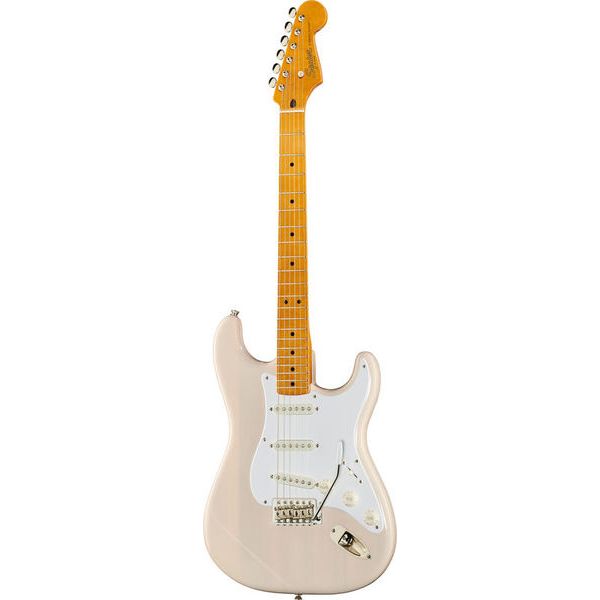
What Makes the 50s Version the 50s Version
Three things, and they all matter more than the year on the badge suggests.
First, the one-piece maple neck. No rosewood slab, no separate fingerboard – the frets go straight into the maple, and you get that hard, glassy attack that the 60s model softens. Black dot inlays, vintage truss rod adjustment at the heel.
Second, the pine body on the White Blonde. Actual pine, which is lighter than the poplar and nato Squier uses elsewhere, and which gives the guitar a slightly open, airy quality unplugged. The black version uses nato, FYI, so if the pine is the bit you want, get the blonde.
Third, the single-ply white pickguard and the small headstock logo. Cosmetic, sure, but this is a guitar bought largely on how it looks leaning against an amp.
How It Plays
The neck is a C profile with a 241 mm (9.5 inch) radius and 21 narrow tall frets. That combination is the sweet spot for most people – a bit of vintage curve for chords, tall enough frets that you are not fighting the board on bends.
It is a fuller neck than the 60s model in the palm. Not baseball bat territory, but you feel more wood. If you have small hands you may prefer the 60s.
The bone nut is the quiet star of the spec sheet. At this price almost everyone else fits plastic, and a bone nut genuinely helps tuning stability and open-string tone. Squier did not have to do that.
Fretwork out of the box was tidy on the two I have played. Ends dressed, no sprout, action a shade high but nothing a truss rod tweak and a saddle adjustment will not sort in ten minutes.
The Tremolo Situation
Six-saddle vintage-style synchronised trem, three springs, floating if you want it. It works, it stays in tune for gentle wobbles, and it will drift if you get enthusiastic.
Standard advice applies: either block it flat to the body if you never use it, or accept that a vintage trem is a vintage trem. The nut and the tuners are the usual culprits, and a little graphite in the nut slots buys you more stability than any expensive upgrade.
The Sound
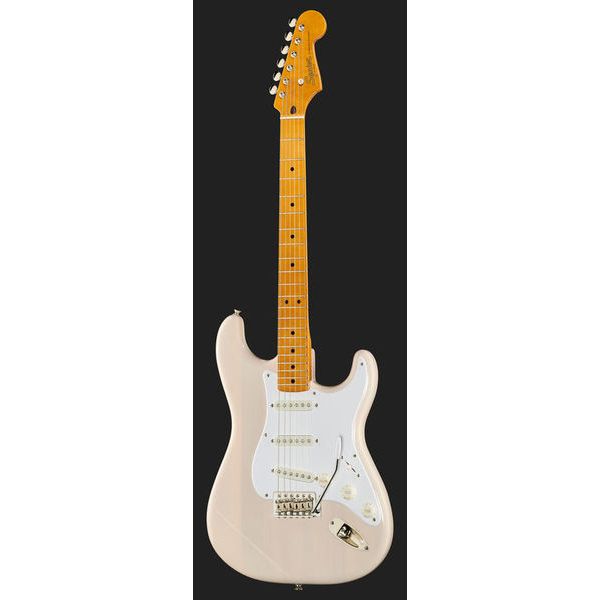
Three Fender-designed alnico single coils, one master volume, two tones, five-way switch. Standard issue, and they are properly good.
Position one is bright and cutting without being an ice pick. The maple board pushes the top end forward compared to the 60s rosewood model, so if you found the 60s a little polite, this is your answer.
Positions two and four are the reason anyone buys a Strat. Quacky, hollow, endlessly usable, and the alnico magnets keep it musical rather than thin.
The neck pickup is warm and round, and it is the one place where the 60s model edges ahead – rosewood takes a fraction of the glassiness off, which some people prefer for blues. Horses for courses.
Noise is the usual single-coil story. No shielding to speak of, so you will hear your dimmer switch. Nothing that a decent power supply and a body angle change will not manage.
The Honest Niggles
- The stock trem block is thin. An upgraded steel block is a cheap and genuinely audible improvement.
- Tuners are fine, not great. They hold, but they have a bit of slop. Locking tuners fix the trem drift more than anything else will.
- Pot tapers are uneven. Volume does most of its work in the last quarter turn.
- Finish thickness is heavier than a Fender-branded Strat. It looks lovely, it just does not breathe the same way.
- The pine bodies vary in weight more than you would expect. If weight matters to you, buy somewhere with a returns policy.
50s or 60s? And What About Going Up a Tier?
Buy the 50s if you want brightness, twang, a chunkier neck and that Buddy Holly / early Hendrix look. Buy the 60s if you want warmth, a slimmer neck and a slightly more modern feel.
If you want the same idea in a Telecaster, the Classic Vibe 50s Telecaster is arguably the best value in the entire Squier range.
If your budget is tighter, the Affinity Stratocaster gets you 80 per cent of the way for a lot less. Tighter still and the Harley Benton vintage series is the value benchmark nobody talks about politely.
And if you are wondering whether to just save up, I did the maths on that already in Fender Player vs Classic Vibe. Short version: the gap is smaller than the price difference suggests.
Specs at a Glance
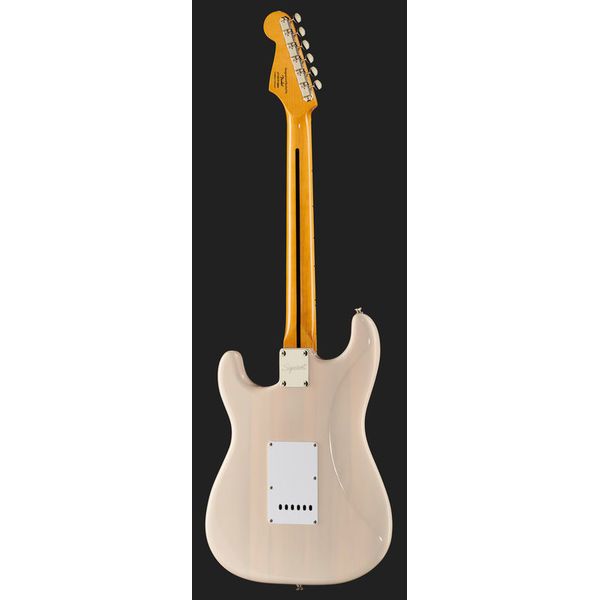
- Body: pine (White Blonde), nato on some finishes
- Neck: bolt-on maple, C profile, one-piece maple fingerboard
- Fingerboard radius: 241 mm (9.5 in)
- Frets: 21 narrow tall, black dot inlays
- Scale: 648 mm (25.5 in), nut width 42 mm, bone nut
- Pickups: 3 x Fender-designed alnico single coils
- Controls: 1 master volume, 2 tone, 5-way switch
- Bridge: 6-saddle vintage-style synchronised tremolo
- Hardware: nickel, single-ply white pickguard
- Thomann item number: 468405
Final Verdict
The Classic Vibe 50s Stratocaster is the guitar I recommend when someone says „I want a Strat” and does not have a strong opinion about anything else yet. It is complete. Nothing on it is a placeholder.
Bone nut, alnico pickups, one-piece maple neck, a body that is actually pine – that is a specification list from a guitar costing considerably more, and it is why these things hold their value on the used market.
It is not flawless. The tuners and trem block are where the accountants won. But those are twenty-minute fixes, and the parts you cannot easily change – neck, frets, geometry, pickups – are all right.
IMO the only wrong answer here is agonising over 50s versus 60s for three weeks. Pick the one that looks right to you, buy it, and go and learn some songs.