Watch It First
We already have a piece comparing the Classic Vibe 50s, 60s and 70s Strats against each other. This is not that.
This is the 60s on its own, without the other two in the room, because it is the one most people end up buying and it deserves a proper look.
Short version: it is the best value Strat Fender currently sells under any badge. Longer version below.
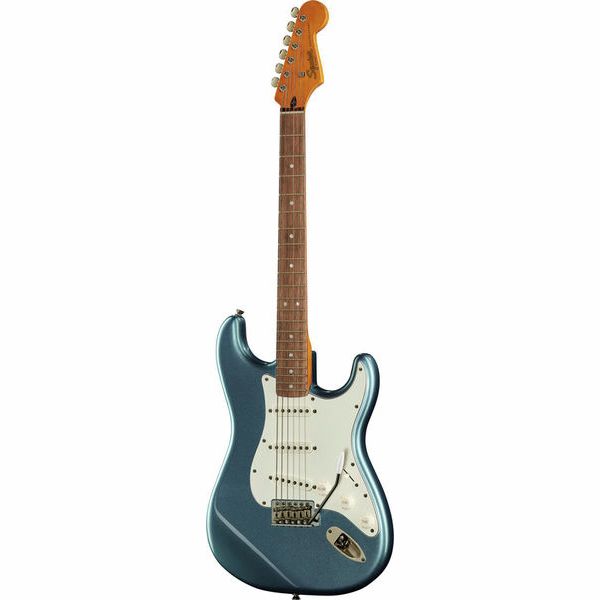
What makes it the „60s” one
Three things, mostly. A rosewood-look slab-style fingerboard — Indian laurel on the current run — rather than the one-piece maple neck of the 50s model.
Pearloid dot inlays instead of clay-coloured ones, a 3-ply parchment pickguard, and a slightly different pickup voicing aimed at the mid-60s Strat sound.
Everything else is shared: nato body, bolt-on maple neck, 21 narrow tall frets, 648 mm (25.5″) scale and a 9.5″ fingerboard radius.
That radius is the modern concession. Real 60s Strats were 7.25″ and fought you every time you bent a string above the 12th fret. Nobody sane misses that.
The bone nut is the detail nobody mentions
Squier fitted a real bone nut here, not the moulded plastic thing you normally get at this money.
It matters. Bone is what stops open strings sounding dull and it is a big part of why this guitar rings out better than the Affinity Strat sitting a couple of price tiers below.
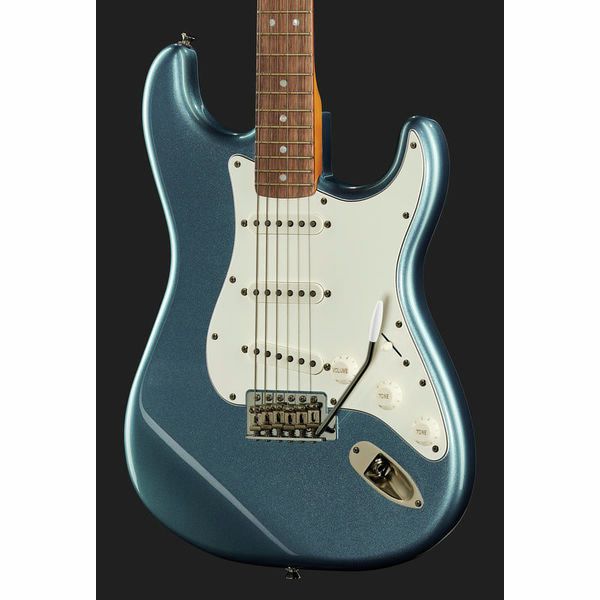
The tuners are vintage-style split-shaft, the tremolo is a 6-saddle vintage-style synchronised unit, and the hardware is nickel rather than chrome. Small things that add up to a guitar that feels considered.
The neck profile
A medium C, satin on the back, and honestly one of the most universally comfortable necks I have played at any price.
It is not chunky, it is not pencil-thin, and the satin finish means your hand does not stick to it after twenty minutes under lights.
Fret ends on recent examples have been consistently good. That was not always true of Squier and it is worth flagging.
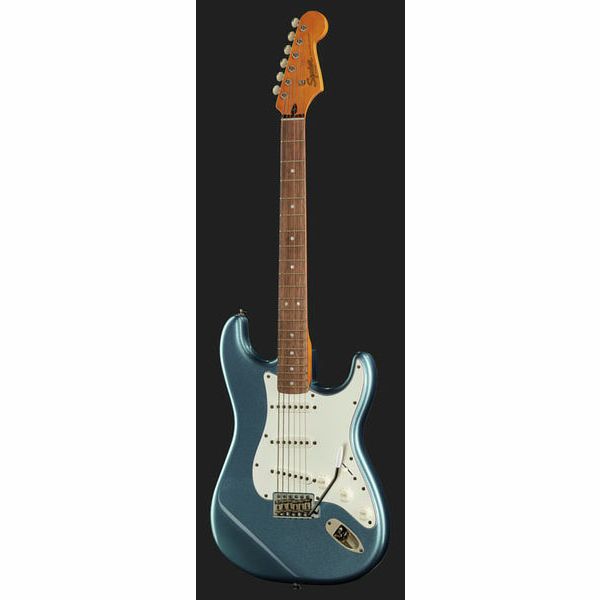
How the pickups actually sound
Three Fender-designed alnico single coils. Not ceramic, which is the important bit — ceramic single coils are what make cheap Strats sound brittle and glassy in the wrong way.
Position one is bright without being shrill. Position two does the cluck. Position four does the other cluck. The neck pickup is warm and rounded and gets you most of the way to the classic bluesy Strat sound.
Where they fall slightly short is output. They are polite. Push a valve amp hard and they break up later than you might expect, which is either authentic or annoying depending on your mood.
Against a Mexican Fender the gap is narrower than the price difference suggests. Our Player Strat vs Classic Vibe comparison goes deeper on that if you are stuck between the two.
The honest niggles
Tremolo springs and the block. The block is thin and the trem is set flat to the body from the factory, so if you want to float it you will be doing some setup work.
The stock strings are horrible. That is true of almost every guitar under a grand, but it is especially noticeable here because the guitar underneath is good enough to deserve better.
Pot tapers are a bit sudden. The tone controls do most of their work in the last quarter of the sweep, which takes getting used to.
And nato is not alder. It is a perfectly good tonewood and it is lighter than you expect, but purists will grumble and you should know before you buy.
So is it worth it?
Yes, and it is not particularly close. This is the point in the Squier range where the guitar stops being a compromise and starts being a guitar.
The upgrade path is also sensible. New strings, a proper setup, and maybe a trem block later. You do not need to replace the pickups, which is where most budget Strat money usually goes.
If you want the same build quality with a different flavour, the Classic Vibe 50s Telecaster and the Classic Vibe Jazzmaster are both cut from the same cloth.
Who should not buy one
Metal players. Obviously. Three single coils and a vintage trem is not the tool for the job and no amount of pedals will fix that.
Also anyone who wants a guitar that arrives perfect. It arrives good, and then you spend an hour making it great.
Living with it for a few months
The thing that keeps surprising me is how stable it stays. Nato is light and the neck is thin-ish, so I expected seasonal movement and truss rod fiddling. Barely any.
The vintage-style tuners are the weak link on paper and yet they hold fine as long as you wind the strings properly. Three wraps, no more, and the trem behaves.
It also takes pedals beautifully. Low-output single coils and an overdrive are a match made in heaven — the pickups let the pedal do the character work instead of fighting it.
The finish and the details
The gloss polyester finish is thicker than a nitro-finished Fender, which is exactly what you would expect at this money. It is also far more durable, so pick your side.
Lake Placid Blue in particular looks great in person. The 3-ply parchment guard has that slightly aged tint rather than stark white, which stops the whole thing looking like a catalogue photo.
Neck plate, string tree placement, the shape of the headstock decal — Squier has clearly spent time on the bits that make a guitar feel authentic rather than merely functional.
Specs
- Body: Nato
- Neck: Maple, bolt-on, C profile
- Fretboard: Indian laurel, 241 mm (9.5″) radius, pearloid dots
- Frets: 21 narrow tall
- Nut: Bone, 42 mm wide
- Scale: 648 mm (25.5″)
- Pickups: 3 x Fender-designed alnico single coils
- Controls: 1 master volume, 2 tone, 5-way switch
- Bridge: 6-saddle vintage-style synchronised tremolo
- Tuners: Vintage-style split shaft
- Hardware: Nickel
- Pickguard: 3-ply parchment
Final Verdict
The Squier Classic Vibe 60s Stratocaster is the guitar I hand to people who ask what a Strat is supposed to feel like.
It is not a cheap imitation of a Fender. It is a proper Strat that happens to be cheap, and after a setup it will hold its own on a stage or in a session without anyone raising an eyebrow.
Enormous value, and the single easiest recommendation in this entire category. Buy one, spend the change on strings and a decent cable.