Watch It First
A while back I wrote about the Epiphone Flying V 70s in Maui Blue and concluded it was an absurd amount of guitar for the money. I stand by that.
This is the other end of that conversation. The Gibson 70s Flying V is the guitar the Epiphone is politely imitating, made in Nashville, in a hardshell case, for several times the price.
So the question is not „is it good”. It obviously is. The question is whether the gap between the two justifies the gap in what you pay. Let us get into it.
Why The 70s Spec Specifically
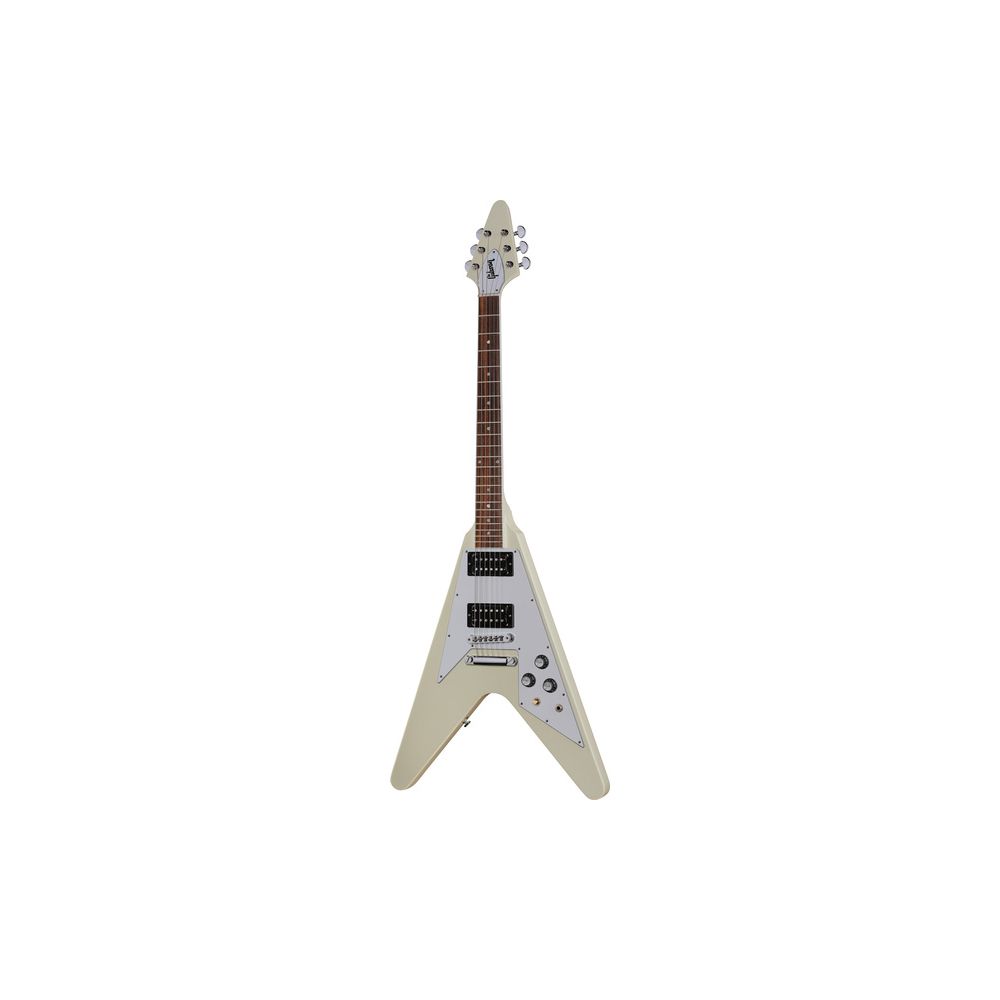
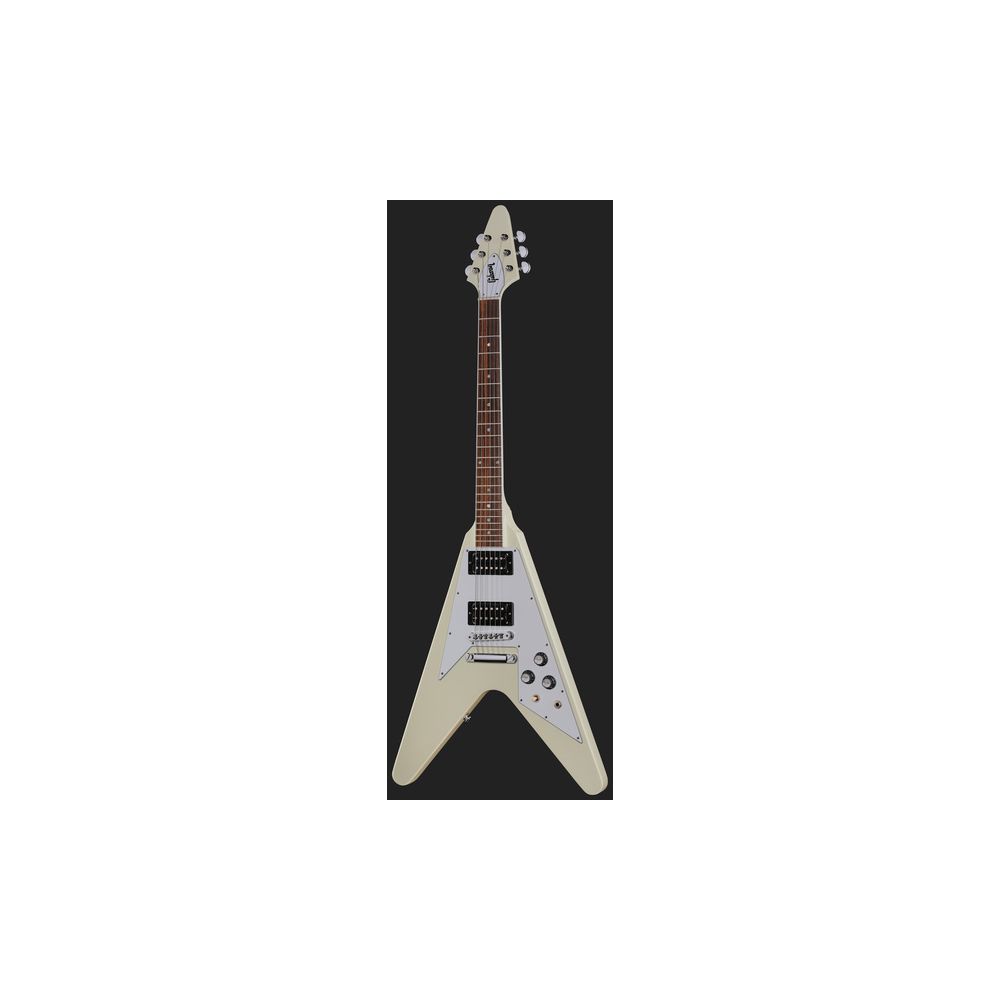
Gibson has made a lot of V variants over the decades and they are not interchangeable. The 70s version is the one with the bigger pickguard, the volume-volume-tone layout and the boxier control plate.
That matters because the 70s V is the one that ended up in the hands of half the guitarists you care about. It is the Michael Schenker era, the Judas Priest era, the shape that stopped being a novelty and became a serious rock instrument.
In Classic White it is genuinely striking. Photos do not do the finish justice – it is a warm, slightly creamy white rather than a clinical fridge white.
Mahogany, All The Way Through
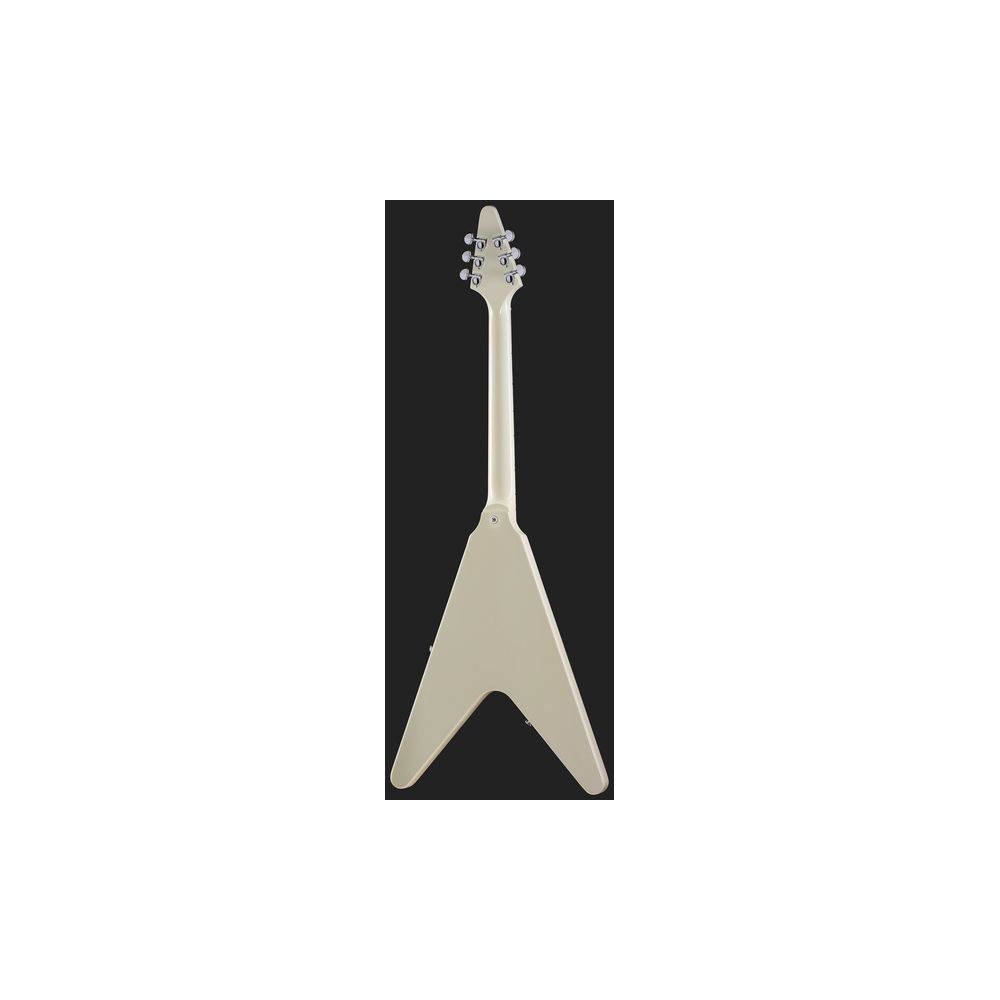
Mahogany body, mahogany neck, rosewood board. No maple top, no fancy veneer, no chambering games. It is about as simple a construction as Gibson does.
And a V is heavier than it looks. All that mahogany in a shape with no waist means the weight sits in a strange place until you stand up with it.
Which brings me to the thing everyone asks about.
Yes, You Have To Stand Up
Playing a Flying V sitting down is a genuine skill. There is no lower bout to rest on your leg, so you either straddle it classical-style or you perch it on your right thigh and hope.
Standing, it is a different instrument entirely. Perfectly balanced, no neck dive, and the upper frets are basically hanging in mid-air with nothing in the way.
The Gibson 70s Explorer from the same family solves the seated problem while keeping the attitude. If you practise on the sofa more than you gig, that is worth a thought.
The 70s Tribute Humbuckers
These are Gibson-designed pickups voiced to sit in the middle ground – hotter than a PAF clone, nowhere near an active.
The bridge is punchy and slightly mid-forward, which is exactly what you want out of a V. It cuts through a band mix without needing a boost pedal glued to the front of your amp.
The neck pickup is the one that surprised me. Warm, thick, and it cleans up properly when you roll the volume back – which is where the Orange Drop capacitors earn their keep.
Two Volumes, One Tone
The 70s wiring means you can set the neck pickup for clean rhythm, the bridge for lead, and flick between them without touching your amp.
It is an old trick and it still works. Weirdly few modern guitars in this price bracket bother with independent volumes any more.
Compared with something like the Les Paul Standard 60s, the V feels more direct and less compressed. Less thump, more bite.
The Bits That Are Worth The Money
This is where the Epiphone comparison actually gets interesting, because the differences are real but not always obvious.
- Made in USA build quality – fretwork, nut slotting and finish are consistently better out of the box.
- Aluminium Tune-o-Matic and stopbar rather than the usual zinc, which noticeably brightens the attack.
- Hardshell case included, which for an awkward shape like this is not optional – V-shaped cases are expensive to buy separately.
- The Slim Taper neck, which is one of the nicest necks Gibson currently puts on anything.
- Resale value that does not fall off a cliff the moment you leave the shop.
Is that worth the multiple? If you gig regularly, probably yes. If it is going to live on a wall hook, honestly the Epiphone will scratch the same itch.
Honest Niggles
The 628 mm scale and the shape mean the low E tuner is a long way from your face at the first fret. Tuning by ear mid-song is a stretch, literally.
The pointed lower wing will dig into your ribcage if you play with the guitar high. Strap position on a V is a real decision, not a preference.
And 22 frets in 2026 feels a touch stingy on a guitar this expensive, though nobody buying a V is doing so for shred access. lol
Who Should Buy One
Rock and metal players who have wanted this shape since they were fourteen and have finally got the budget. That is genuinely most of the market and there is nothing wrong with it.
It also makes a lot of sense as a second serious guitar next to something more conventional. If your main is an Explorer-style instrument or an Epiphone Les Paul Standard 60s, the V covers different ground both visually and sonically.
Specs at a Glance
- Body: Mahogany
- Neck: Mahogany, Slim Taper profile, glued in
- Fingerboard: Rosewood
- Frets: 22
- Scale: 628 mm (24.75 in)
- Pickups: 2 x Gibson 70s Tribute humbuckers
- Controls: 2 volume, 1 tone, Orange Drop capacitors, 3-way switch
- Bridge: Aluminium Tune-o-Matic with stopbar tailpiece
- Hardware: Chrome
- Finish: Classic White, hardshell case included, Made in USA
Final Verdict
The Gibson 70s Flying V is not a clever guitar. It does not have coil splits, it does not have a locking trem, and it will not do anything your amp cannot already do.
What it does have is a very specific sound and a very specific feel that no copy quite nails – that aluminium-bridge snap, the Slim Taper neck, the way the whole thing resonates against your ribs.
If you have played the Epiphone and loved it, this is the version that stops you wondering what you are missing.
Expensive? Yes. Worth it if you are going to actually play it, standing up, loud? Also yes.