Watch It First
I reviewed the Epiphone Explorer with the EMGs a while back and said it was an enormous amount of guitar for not very much money. All of that still stands.
This is the other end of the same conversation. All mahogany, built in the USA, hardshell case in the box, and a price tag that will make you want to sit down first.
So what does several times the money actually buy you? Genuinely quite a lot – and also less than you would hope.
Gibson vs Epiphone: Let Us Do This Bit First
It is the question everybody actually came here for, so there is no point burying it under three sections of history.
The Epiphone runs EMG actives and has a much more modern, aggressive, tightly compressed voice. It is built for metal and it makes no apology about that.
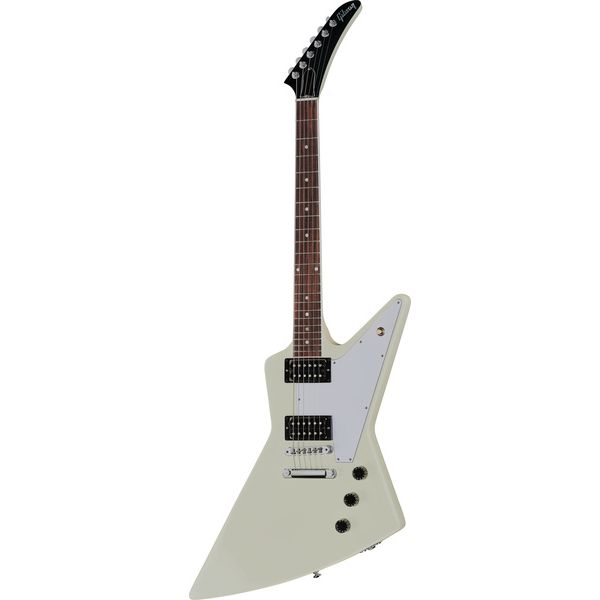
The Gibson 70s Explorer is a completely different animal. Passive 70s Tribute humbuckers, all-mahogany construction, Orange Drop capacitors, and a warm, thick, slightly loose character.
Neither one is better. They are solving different problems. The Epiphone is a tool; the Gibson is an instrument, with all the romance and inconvenience that implies.
- Gibson – mahogany body and neck, passive pickups, warmer and woodier
- Epiphone – far cheaper, active EMGs, tighter and more modern under high gain
- Gibson – USA build, hardshell case included, holds its value
- Epiphone – you can actually gig it without wincing every time it touches a mic stand
How It Sounds
The 70s Tribute humbuckers are moderate output, sitting closer to a hot PAF than any modern ceramic monster.
That is exactly the right call for this guitar. All that mahogany already hands you a thick low midrange, and a hotter pickup would just turn the whole thing to soup.
Bridge position is aggressive but articulate. Chords hold their shape under gain, which is really the only test that matters.
Neck position is fat, vocal and genuinely gorgeous for leads. It is the tone people buy Gibsons for in the first place.
The Orange Drops Are Not Just Marketing
The tone control on this actually works across its whole sweep, rather than doing nothing until eight and then strangling everything at nine.
Two volumes and one master tone. Roll the bridge volume back and it cleans up properly instead of simply getting quieter, which is the mark of well-chosen electronics.
Living With the Shape
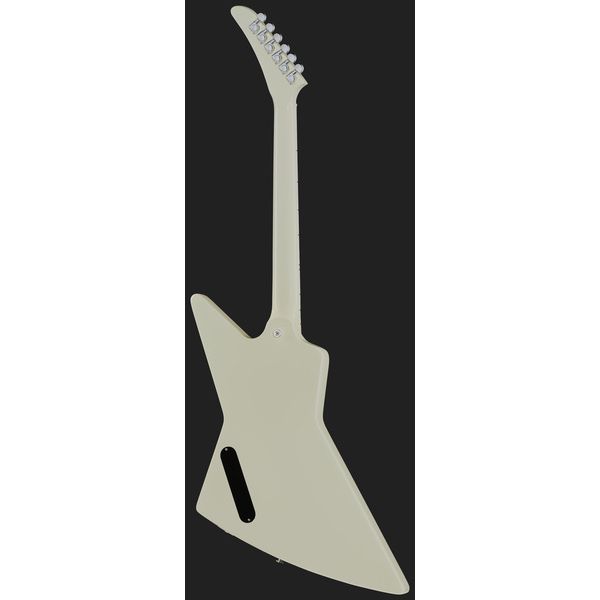
Nobody puts this in the marketing copy, so I will: an Explorer is absolutely enormous.
Sitting down it is a real challenge. The long lower wing perches on your right leg and pushes the neck out and away from you. Classical position is the only sensible answer.
Standing up it is brilliant. Perfectly balanced, zero neck dive, and the upper fret access is unbeatable because there is simply nothing in the way of your hand.
It also will not fit most stands, most gig bags, or the boot of a small car. The included hardshell case is not a luxury, it is a necessity.
The Jackson Kelly JS32 has this exact problem for the same geometric reasons, if you fancy trying the experience on a budget before committing.
The Neck
Slim Taper mahogany neck, rosewood board, 22 frets, 628 mm (24.75 inch) scale.
Slim Taper is the friendly Gibson profile – not a baseball bat, not a pencil. Most people get on with it within about thirty seconds.
The shorter scale means slinkier strings and easier bends than anything on a Fender scale. It also means slightly less tension and definition down low, which matters a lot if you tune down.
Set neck with a long tenon joint, and the sustain that comes with it is genuinely noticeable rather than imagined.
Build Quality and the Honest Bit
Mine was excellent. Nitro finish, clean edges, well-dressed frets, and the aluminium Tune-o-matic is a nice touch that saves a bit of weight at the back end.
But Gibson QC is famously variable, and at this money you should absolutely play the specific guitar you are buying rather than ordering blind and hoping.
The nitrocellulose finish will check, ding and yellow over time. Some people adore that. Some people will be devastated by it. Work out which one you are before you order.
- QC is inconsistent – play before you buy wherever that is possible
- Nitro finish marks if you so much as look at it wrong
- Genuinely awkward to play sitting down
- The 24.75 inch scale gets flabby in low tunings
- Expensive, and there is no honest way around that
- Classic White will yellow with age – a feature to some, a bug to others
Who Should Buy One?
Someone who has wanted an Explorer since they were fourteen and now finally has the means. That is not a joke – it is most of this market and it is a perfectly good reason to buy a guitar.
Also anyone playing classic rock, hard rock or traditional metal who wants a mahogany guitar that is neither a Les Paul nor an SG.
If you want the Gibson feel for a lot less, the Gibson SG Special is the cheapest way into the brand with real character intact.
And if you would rather keep the money, the Epiphone Les Paul Standard 60s and the Epiphone SG Custom both get you surprisingly close for a fraction of the outlay.
Specs at a Glance
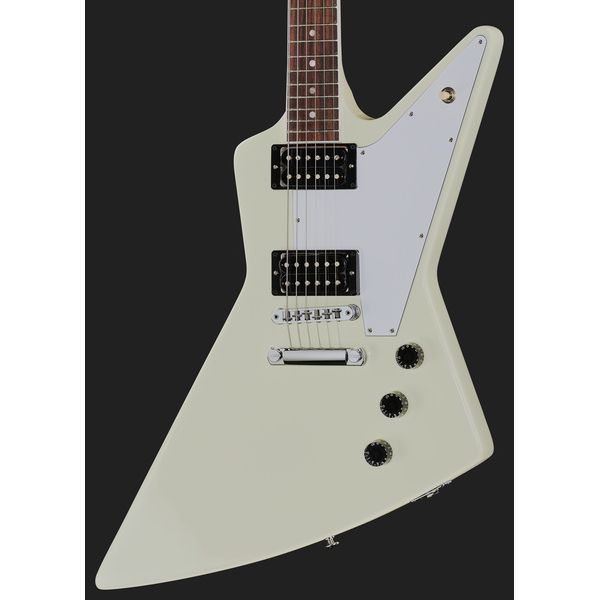
- Body: mahogany
- Neck: mahogany, set neck, Slim Taper profile
- Fretboard: rosewood
- Frets: 22
- Scale: 628 mm (24.75”)
- Pickups: 2x 70s Tribute humbuckers (passive)
- Controls: 2 volume, 1 tone, Orange Drop capacitors
- Bridge: aluminium Tune-o-matic with Stop Bar tailpiece
- Hardware: chrome
- Finish: Classic White, nitrocellulose
- Extras: hardshell case included
- Origin: made in the USA
- Thomann article number: 482428
Final Verdict
The Gibson 70s Explorer is not a rational purchase and it does not really try to be one.
What it is: a beautifully made, USA-built, all-mahogany guitar with genuinely great passive pickups, superb upper fret access and one of the best shapes anyone has ever drawn on a napkin.
What it is not: comfortable on the sofa, convenient to transport, or good value in any spreadsheet sense. The Epiphone will get you most of the way there for a fraction of the money.
But that last stretch is where the magic actually lives, and if you have read this far you already know you want one. lol