Watch It First
I walked into the Ibanez AF75 expecting a novelty. Big archtop shape, entry-level money, probably plays like a wardrobe door with strings on it.
Forty minutes later I was still sat on the shop stool noodling, and the assistant had given up on me. That is never a good sign for my bank balance.
So this is my honest take after properly living with one – what the AF75 nails, and the handful of things that genuinely wound me up.
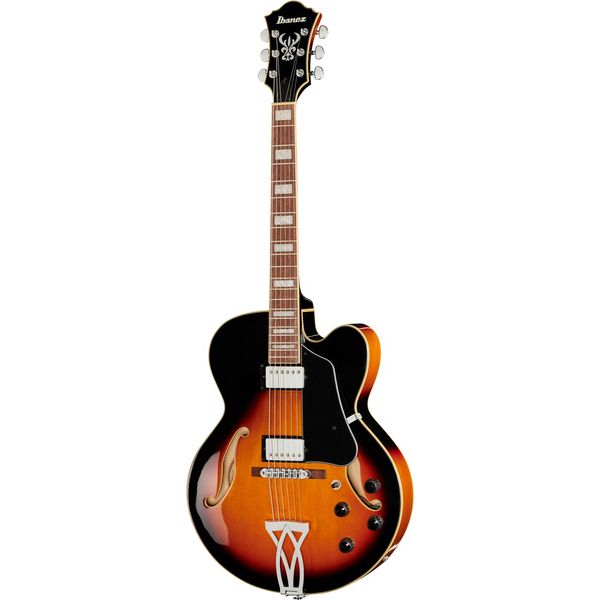
A Proper Hollow Body, Not a Fake One
Important bit first. The AF75 is a fully hollow body – no centre block, no sneaky sustain block hiding under the pickups where you cannot see it.
That matters far more than the spec sheet makes it sound. The body is 70mm deep and it genuinely moves air.
Play it unplugged in a quiet room and it is loud enough to practise on. Not acoustic-guitar loud, obviously, but miles beyond what any solidbody manages.
It also means feedback is a real thing once you turn up. I will come back to that, because it is the AF75 single honest flaw.
The Shape Suits Sitting Down Better Than You Think
That single-cutaway archtop looks enormous on a stand and feels weirdly civilised on your knee.
The upper bout sits high, so the neck ends up further out than your muscle memory expects. Took me about ten minutes to stop over-reaching for the first fret.
Standing up is a different story. It is light, and light plus a big body equals a bit of neck dive. Wide strap and you will forget about it.
How It Actually Sounds Plugged In
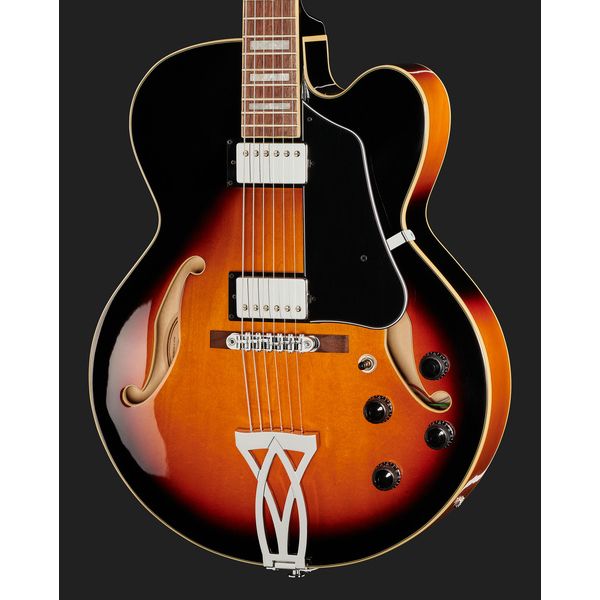
Two Classic Elite humbuckers, Ibanez own design, and they are the part everybody assumes will be rubbish.
They are not. Warm, a touch soft at the very top, and the neck pickup with the tone rolled back to about 7 does that fat woody jazz thing without you having to fight for it.
The bridge pickup is the more interesting one IMO. It has considerably more bite than a jazz box has any business having.
Nudge your amp into breakup and you get proper rockabilly snarl out of it. If that hollow twang is your thing, the Gretsch G2420 Streamliner scratches a very similar itch from the other direction.
It Is Not a One-Genre Guitar
People pigeonhole the AF75 as jazz-only. Blues, soul, gospel, indie jangle, dusty old country – all of it lands.
Where it falls over is high gain. Push the drive and the box starts howling before the tone gets anywhere interesting.
If you want the look with more gain headroom, the Ibanez AS93FM has a centre block and behaves itself far better under distortion.
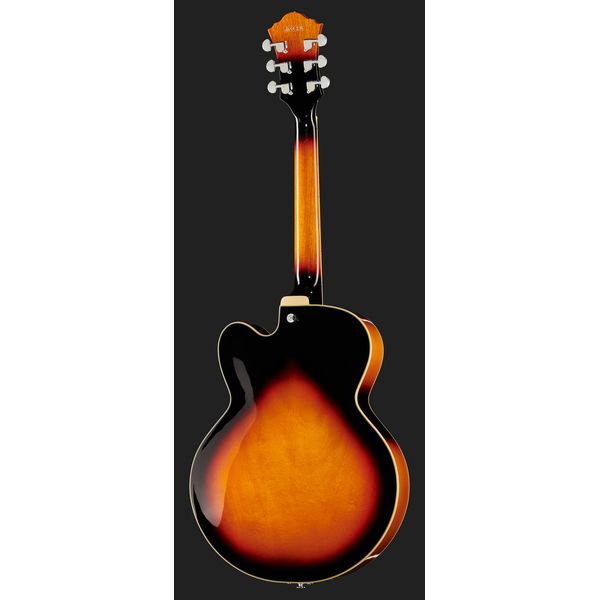
The Neck Is the Sleeper Feature
Ibanez necks are famously slim and the AF75 does not break the habit one bit.
It is a nyatoh set neck with a laurel fingerboard, 628mm scale, 43mm at the nut, 20 frets and acrylic block inlays that look far posher than they cost.
If you have come off an Ibanez AS53 or an AM73G, it will feel like home in about four bars.
For jazz players raised on a fat 50s Gibson profile it might read as slightly skinny. Purely personal taste, and honestly, faster necks on big boxes are underrated.
Build Quality – The Honest Version
This is where the budget shows, but not in any of the places that actually ruin a guitar.
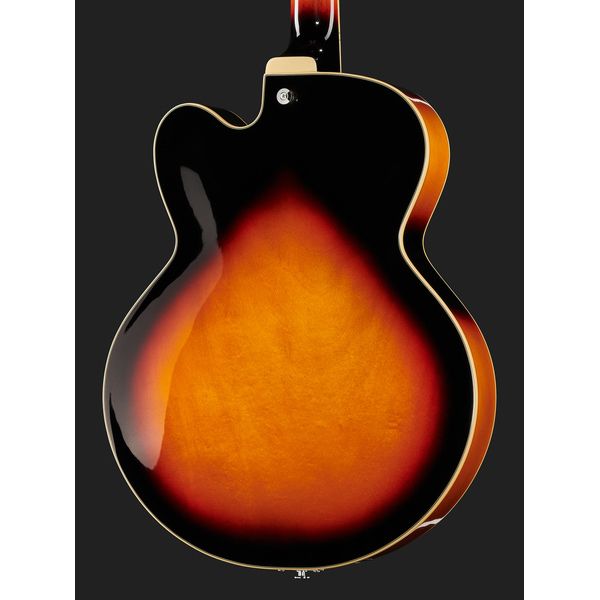
- Fully hollow basswood body, 70mm deep, brown sunburst gloss
- Nyatoh set neck, laurel fingerboard, acrylic block inlays
- 628mm (24.75″) scale, 43mm nut width, 20 frets
- 2 x Classic Elite humbuckers with 2 volume and 2 tone controls
- ART-1 bridge with VT60 trapeze tailpiece
- Chrome hardware and single-ply body binding
Fretwork on mine was solidly fine – no sprouting ends, a couple of spots that would benefit from a level and crown if you are fussy about that sort of thing.
The binding is clean and even, which honestly surprised me. The finish is thicker than you would get further up the ladder, but it is applied properly.
Tuners are the weak point. They hold tune well enough, but they feel gritty and vague and they are the first thing I would swap out.
The Niggles, Because There Are Some
Right. The bit most reviews skate straight past.
Feedback. At bedroom volume, no problem at all. On a loud stage with a cranked valve amp you will be doing that little dance to find the one spot where it stops squealing at you.
Stock strings. The factory roundwounds make it sound thinner than the guitar really is. Put flatwounds on before you judge it – it genuinely transforms the thing.
The trapeze tailpiece can rattle if you dig in hard. A bit of foam wedged under it and the problem vanishes.
The nut on mine was cut a shade high on the low E. Ten minutes with a file, or a small fee at a tech, and it plays properly.
None of that is a dealbreaker. All of it is worth knowing before you order, because a cheap guitar with a good setup beats an expensive one with a bad setup every single time.
Who Should Actually Buy One
Anyone curious about hollow bodies who does not fancy gambling serious money to find out whether they like them.
Jazz students, obviously. Blues players who want something that is not another Strat. Anyone who looked at the Epiphone ES-335 and found it a bit of a stretch this month.
It is also a cracking second guitar. Completely different voice, completely different feel, and it costs roughly what a decent overdrive pedal does.
What I Would Compare It Against
The Ibanez AG95QA is the smarter-dressed take on exactly the same idea if you can stretch a little further.
If you specifically want the sixties British-invasion jangle, the Epiphone Casino does it with P90s instead of humbuckers.
And pair it with something small and clean – even a Marshall MG15GFX at low volume shows off what the box is doing behind the pickups.
Final Verdict
The AF75 punches so far above its money that it slightly annoys me, and I do not say that lightly.
It is not a Gibson L-5 and nobody is pretending otherwise. What it is: a real, fully hollow archtop with a fast neck and pickups that genuinely do the job, at a price that makes saying no feel a bit silly.
Put flats on it, keep it away from a cranked amp in a tiny room, spend twenty minutes on the setup, and it will do most of what you ask of it for years.
Would I own one? I do. That is probably answer enough. 😉