Watch It First
Takamine doesn’t get talked about enough outside of gigging circles, which is a shame because they’ve been perfecting onboard pickup systems since before „acoustic-electric” was even a normal thing to say.
The GN71CE is their compact NEX-body guitar dressed up with gold hardware, a black walnut body, and a preamp that genuinely holds its own live.
I got hands-on with one to see if the looks are backed up by substance. Short answer: yes.
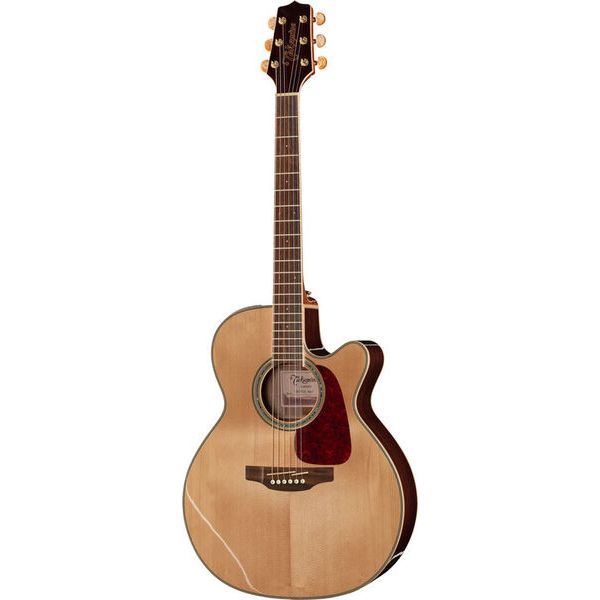
The NEX Body Shape
NEX is Takamine’s own take on a scaled-down jumbo – smaller and lighter than a true jumbo, but rounder and louder than a standard concert or auditorium shape.
It sits comfortably on the knee whether you’re standing or seated, and the cutaway gives real access to the upper frets without feeling like an afterthought.
- Body: NEX with cutaway
- Top: Solid spruce
- Bracing: X quartersawn
- Back & sides: Black walnut
- Neck: Mahogany
- Fretboard: Laurel, bound, 21 frets
- Electronics: Takamine TK-40D preamp with built-in tuner
- Hardware: Gold-plated
Wood Choice: Why Walnut Matters
Black walnut back and sides are a less common choice than mahogany or rosewood, and it shows in the tone – walnut tends to land somewhere between the two, warm but with clearer top-end definition.
Visually it’s a standout too. The grain has real character, and paired with the gold hardware and abalone rosette, this doesn’t look like a budget guitar even though it’s priced like one.
Neck Feel
The mahogany neck is on the slimmer side, which makes barre chords and fast runs less of a workout than they’d be on a chunkier dreadnought neck.
Binding along the fretboard is a nice touch you don’t often see at this price – it’s mostly cosmetic, but it signals the attention to detail Takamine puts into these builds.
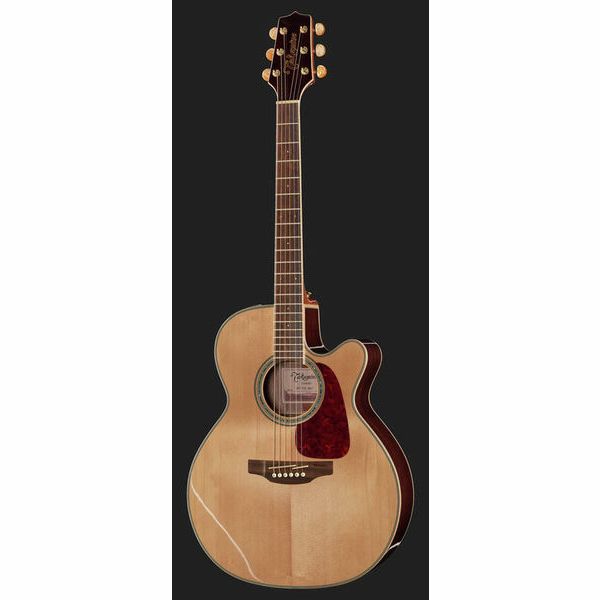
The TK-40D Preamp – Where Takamine Actually Wins
This is the real reason to buy a Takamine over most competitors. The TK-40D gives you a 3-band EQ, a mid-frequency sweep control, a notch filter for killing feedback, and a built-in chromatic tuner.
The notch filter alone is worth calling out – it lets you dial out the exact frequency causing feedback on a loud stage, something most preamps in this price range simply don’t offer.
If you play out regularly, this preamp is a genuine reason to pick the Takamine over guitars with more famous badges but lesser electronics.
Who It’s For
Gigging singer-songwriters and worship musicians are the obvious audience here – anyone who needs a guitar that sounds as good through a PA as it does in the living room.
It’s also a solid pick if you’ve been comparing options on our best cheap acoustic guitars list and want to skip straight to something stage-ready rather than upgrading twice.
Who Might Look Elsewhere
Strictly bedroom players who never plug in are paying for electronics they won’t use. A Seagull S6 or Ibanez AW54 gets similar acoustic tone for less.
Comparing the Field
Against the Epiphone Dove Studio, the Takamine is smaller and more manageable, while the Dove leans into big jumbo volume and vintage looks.
Compared to a Taylor GS Mini, the Takamine is a full-scale instrument rather than a travel-size guitar, so it’s the better single „only acoustic” choice if you’re not touring light.
Tone Notes
Unplugged, it’s bright without being thin, with enough low-mid warmth from the walnut to keep strummed chords from sounding harsh.
Plugged in, it stays close to the acoustic character rather than turning artificial, which is the whole point of paying extra for a proper onboard system instead of a bolt-on soundhole pickup.
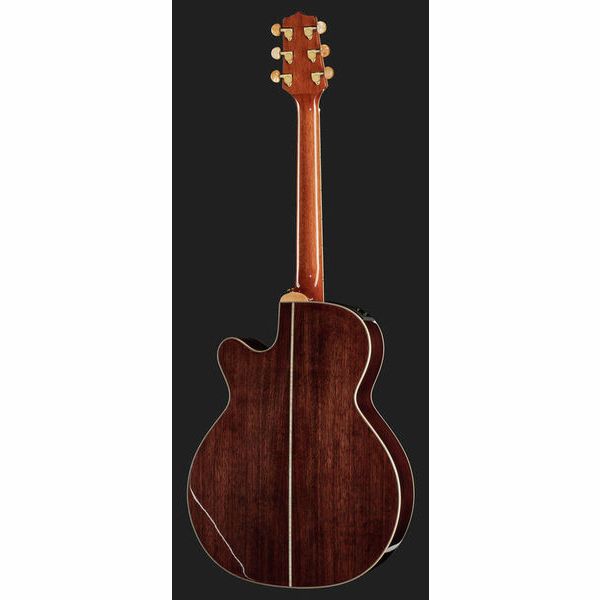
Hardware and Finish Details
Gold-plated tuners aren’t just for show – they’re smooth in operation and hold tune reliably, which matters more than the cosmetic upgrade most players assume it’s just about.
The abalone rosette around the soundhole catches the light nicely on stage, and the high-gloss natural finish shows off the walnut grain rather than hiding it under a thick coat of lacquer.
Owners consistently mention that the guitar looks and feels far more expensive than its price tag suggests, and having spent time with one, that tracks.
Recording With It
For home recording, the acoustic tone mics up nicely thanks to the balanced voicing – it doesn’t have the boomy low end that fights with a condenser mic placed too close to the soundhole.
Direct input through the TK-40D also works in a pinch for quick demos when setting up a mic isn’t practical, and it sounds far more usable than most piezo-only systems in a DI context.
The Niggles
The battery compartment door is plastic and feels a bit flimsy compared to the rest of the build – a small thing, but a few owners have flagged it as the weakest link.
The stock strings are functional but nothing special. Budget for a swap to something like Elixir Phosphor Bronze fairly early on.
No case comes in the box – it’s guitar only, so factor a gigbag or hard case into the budget if you’re moving it around.
Maintenance Notes
Like any solid-top guitar, keep an eye on humidity if you’re somewhere with dry winters – a simple soundhole humidifier is a cheap way to protect the top from cracking over time.
Wipe down the strings after playing and the walnut back and sides will keep their shine for years without needing much more than the occasional polish.
Final Verdict
The Takamine GN71CE is proof that the „boring” brands sometimes make the smartest buys. It looks sharp, plays comfortably, and the electronics genuinely outclass the competition at this price.
If you gig regularly and want one guitar that handles both the living room and the stage without compromise, this is a serious contender. Don’t let the less flashy name fool you.