Watch It First
I always tell people: watch the demo before you read my rambling. Ears don’t lie, my opinions sometimes do.
So, a short scale bass from Gretsch. Not the Junior Jet Bass II you might remember from a few years back (Thomann doesn’t carry that one anymore), but its spiritual successor, the Streamliner Jet Club Bass. Same idea, same 30 inch scale, same vibe, just a newer badge on the headstock.
I picked one of these up for a friend’s home studio project and ended up playing it way more than I expected to.
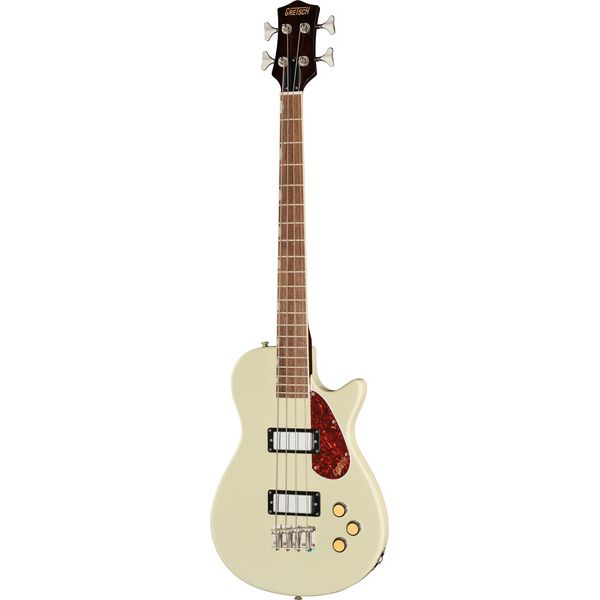
First impression: it’s light. Like, suspiciously light for something with a hollow-ish chambered feel to the tone. You pick it up expecting a Gretsch-shaped brick and instead you get something you could gig all night without your shoulder filing a complaint.
The short scale thing is the whole story here, honestly. If you’ve got smaller hands, shorter arms, or you’re coming from guitar and bass necks feel like tree trunks, this thing collapses that gap. IMO it’s one of the most underrated features in budget bass gear right now.
Build And Materials
Nato body, nato neck, bolt-on construction, laurel fingerboard with those pearloid Neo-Classic thumbnail inlays that make it look more expensive than it is. That’s the Gretsch magic trick, even the budget-friendly stuff has enough visual flair that nobody at the gig clocks it as an entry-level instrument.
The neck profile is a Slim C, about as inoffensive and easy to adapt to as neck shapes get. Bone nut, 305mm fretboard radius, 20 medium jumbo frets. Nothing exotic, just solid, sensible spec choices.
Pickups And Electronics
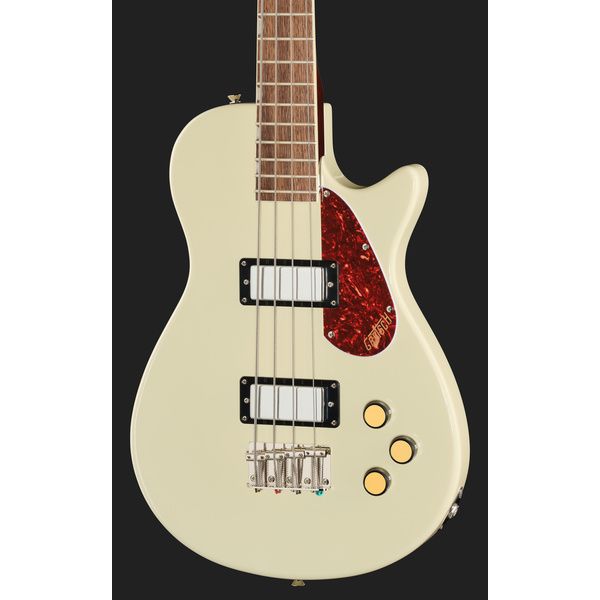
Two Bass Single Coils, passive electronics, two volume knobs plus a master tone. It’s about as simple as bass wiring gets, which I actually appreciate. Less to fiddle with, more time playing.
The single coils have that classic P-adjacent thump with a bit more clarity on top. Roll off the tone a touch and you’re in vintage Motown territory. Push everything up and there’s enough bite for punk or garage rock without getting harsh.
Is it as rich or complex as a proper Jazz Bass pickup pairing? No. But for the price bracket this thing lives in, it’s punching well above expectations.
Playability
This is where the short scale really earns its keep. String tension is noticeably looser than a standard 34 inch bass, which some players love and some think feels a little floppy, especially with the stock strings.
Personally I like it. Makes fast lines and slides easier, especially if you’re doubling on guitar in the same set.
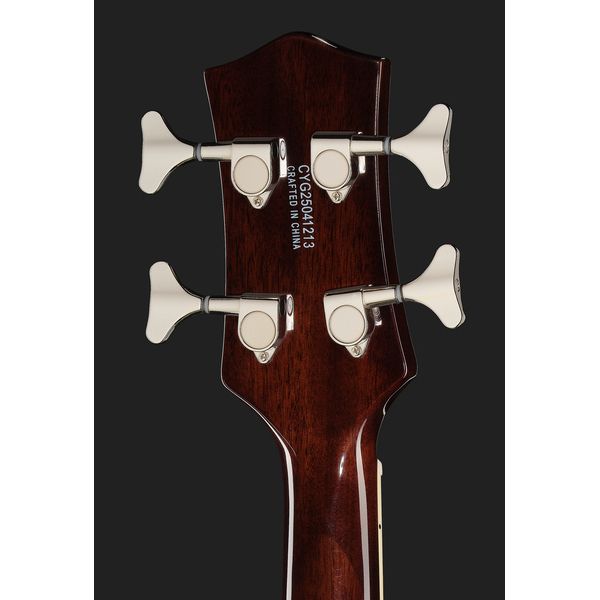
The 4-saddle adjustable bridge does its job, nickel hardware feels solid, die-cast tuners hold pitch fine. Nothing here screams „budget corner-cutting.”
Tone In The Mix
In a full band mix this thing sits somewhere between vintage P-Bass warmth and something a little more midrange-forward. It cuts through without needing a ton of EQ work, which is handy if you’re recording direct or running through a modest practice amp at home.
Play it through something like a Fender Rumble 40 and you get a genuinely satisfying low end for very little cash outlay. If you want something with a bit more headroom for band practice, our look at the Ampeg Rocket Bass RB-110 is worth a read too.
If you’re deciding between this and something like the Squier Sonic Precision Bass, it really comes down to scale length and tone character. The Squier leans more classic P-Bass thump, this leans a bit brighter and jangier thanks to those single coils.
Who Should Actually Buy This
Beginners with smaller hands, guitarists who double on bass occasionally, anyone who wants a genuinely interesting-looking instrument that doesn’t look like it came off a beginner pack shelf, and gigging players who want a fun backup bass that’s light enough to not destroy your back over a long night.
If you’re a metal player who needs 5 strings and extended range, this obviously isn’t your instrument. And if you’re chasing that huge scooped low end of a full 34 inch scale bass, you’ll find this a little thinner sounding by comparison.
For anyone eyeing something in the same short-scale bracket, it’s also worth comparing against the Epiphone Embassy Bass or something more modern and ergonomic like the Ibanez EHB600. Different price points, different personalities, but useful context if you’re shopping around. There’s also the Harley Benton PJ-4 Deluxe if budget is your main concern.
Quick Specs
- Body: Nato
- Neck: Nato, bolt-on, Slim C profile
- Fingerboard: Laurel, 305mm radius, pearloid Neo-Classic thumbnail inlays
- Scale: 760mm / 30 inch (short scale)
- Frets: 20, medium jumbo
- Nut width: 39.62mm, bone nut
- Pickups: 2x Bass Single Coil
- Controls: 2x volume, 1x master tone
- Bridge: Adjustable, 4-saddle
- Hardware: Nickel, die-cast tuners
The Niggles
Not everything is perfect, so let’s be honest about it. The stock strings are fine but not great, most owners end up swapping them within the first few months for something with a bit more punch.
The floppier string tension from the short scale can feel a little unfamiliar if you’re coming straight off a standard scale bass, and it takes a session or two to adjust your right hand attack.
Also, this isn’t a hollowbody in the way some other Gretsch models are, so if you were hoping for that big airy acoustic resonance, you won’t quite get it here. It’s more of a solid-ish construction with just enough chamber character to add some warmth.
One reviewer online mentioned the finish can vibrate a bit more than expected at higher volumes, and while I didn’t personally run into major issues, quality control on any budget-tier instrument can vary slightly unit to unit.
Final Verdict
Nobody’s claiming this replaces a proper American-made bass. But that’s not the point. The point is a genuinely fun, good-looking, easy-to-play short scale bass that doesn’t cost a fortune and still has that unmistakable Gretsch character stamped all over it.
If your hands are smaller, if you’re bouncing between guitar and bass, or if you just want something a little different from the fortieth P-Bass clone on the market, this earns a real recommendation from me. It’s not necessarily going to be your forever bass, but it might just become the one you reach for the most.
Give the demo another watch, then go try one in person if you can. Short scale basses are one of those things that really need to be felt in your hands before the lightbulb goes off 😉