Watch It First
Blackstar’s HT Club amps have been the brand’s flagship valve line for years, and the MkIII revision is the version you’ll actually find in stock these days.
The older HT Club 40 MkII has quietly been phased out — Thomann only carries the new MkIII now — so if you were hunting for the MkII specifically, this is effectively its direct replacement, and a pretty solid upgrade at that.
It’s a 40-watt, two-channel, all-valve combo with a couple of genuinely useful tricks up its sleeve. Let’s get into it.
Build Quality and First Impressions
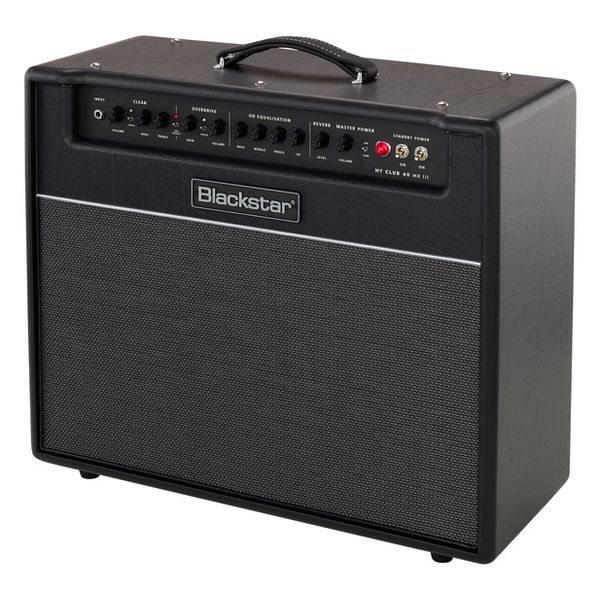
The MkIII ditches the old „amp head bolted to a wooden box” look for what Blackstar calls its modern boutique style — think leather-look panels, a cleaner control layout, and construction that feels genuinely road-ready rather than bedroom-only.
At 26kg it’s not a featherweight 1×12 combo, so you’ll want two hands and a bit of a plan for load-in, not a casual one-arm carry across the car park.
The included two-way footswitch is a nice touch — plenty of amps in this bracket make you buy that separately, and it isn’t cheap once you add it on top.
Cosmetically it’s a step up from the MkII too, with a slightly darker, more premium finish that actually looks the part next to boutique-branded combos costing twice as much.
What’s Actually Under the Hood
Two ECC83 preamp tubes and two EL34 power tubes drive a single 12″ Celestion speaker, which is the classic British recipe for that slightly hairy, chimey breakup everyone associates with UK-voiced amps.
You get two footswitchable channels — Boutique Clean and High Gain Overdrive — plus four voicings you can flip between on the fly, so the tonal range on paper is a lot wider than the two-channel label suggests.
Master volume and a power reduction switch down to roughly 10% of full output mean you can actually get real tube compression and sag at living-room volume, which isn’t something every „bedroom-friendly” amp genuinely delivers.
Playability and the Channels
The clean channel is properly clean, and thanks to the extended tone shaping on offer, it doesn’t collapse into one flat, sparkly voice the way some „clean” channels do once you push the volume.
Flip over to the overdrive channel and it moves from crunchy pub-rock rhythm tones into properly saturated lead territory without ever turning brittle, fizzy, or harsh at the top end — a common failure point on cheaper valve amps at this price.
Because both channels and all four voicings are footswitchable, you can build a genuinely wide palette of usable tones on stage without touching a single knob mid-song, which matters more than people think once you’re actually gigging.
The ISF Knob — Gimmick or Genius?
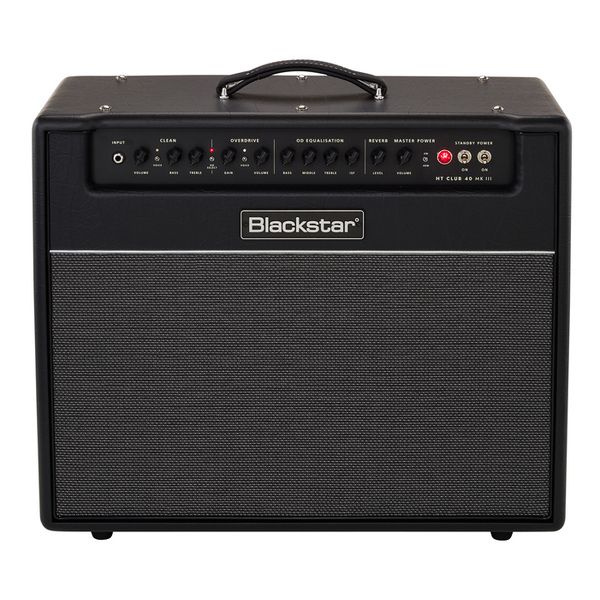
Blackstar’s Infinite Shape Feature (ISF) lets you sweep continuously between an American-voiced, tighter low end and a British-voiced, saggier one, all on a single knob, and it’s one of those features that sounds like marketing fluff right up until you actually sit down and use it.
It won’t magically turn this into two completely different amps, but it noticeably reshapes the midrange character and low-end tightness, and that’s genuinely more useful live than a lot of players expect going in.
Tone in the Room
Plugged into a humbucker-loaded guitar, the overdrive channel has that thick, slightly hairy, Marshall-adjacent growl Blackstar’s HT range has built its reputation on.
Single coils clean things up nicely on the clean channel, and there’s enough headroom before things start breaking up that you can genuinely use single coils and humbuckers on the same amp setting without one sounding wrong.
Whether you’re chasing blues crunch, classic rock rhythm, or something with a bit more gain, the amp doesn’t feel like it’s fighting you to get there — a refreshing change if you’ve ever wrestled with menu-diving on a modeling amp like the Peavey Vypyr X2 trying to land on one specific tone.
Recording, Reverb, and Silent Practice
A built-in digital reverb with a Dark/Light voicing switch rounds out the onboard effects, and its decay time is fully adjustable through Blackstar’s free Architect software over USB-C, which is a genuinely deep rabbit hole if you like tweaking.
The CabRig-loaded outputs (quarter-inch unbalanced, XLR balanced, and USB-C) mean you can go straight into a DAW, PA, or audio interface without ever putting a mic in front of the speaker — extremely handy if you gig small rooms or record from a home setup.
There’s also a proper effects loop with its own level switch, so pedal players running time-based effects aren’t left out in the cold the way they are on some combo amps.
Who’s This Actually For
If you want one amp that can cover gigging pub-rock and classic rock, bedroom-volume practice thanks to that power reduction switch, and home recording without extra gear, the HT Club 40 MkIII genuinely checks all three boxes at once.
It’s probably not the amp for someone chasing one very specific boutique tone — for that, you’re better off looking at something like the Marshall DSL1CR or building a pedal-driven rig around a cleaner platform amp.
But as a do-it-all combo that covers gig, studio, and practice-room duty from one box, it’s genuinely hard to beat at this price point, especially against amps like the Blackstar HT-20R MKIII if you want to compare within the same family.
Specs at a Glance
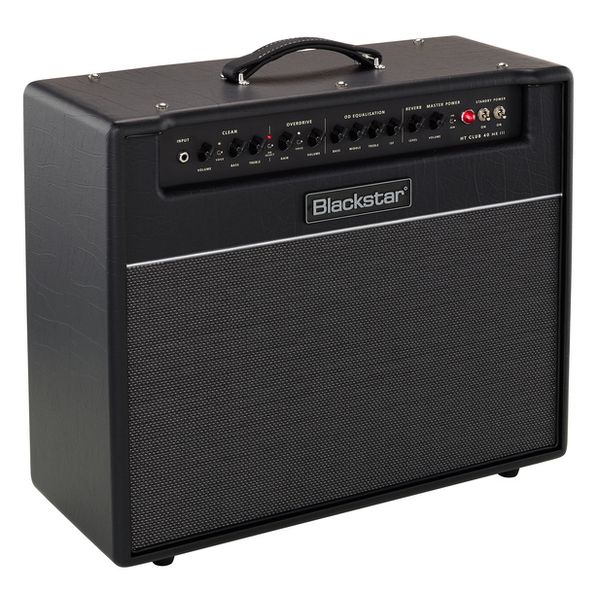
- Power: 40W all-valve, switchable down to roughly 10%
- Speaker: 1x 12″ Celestion
- Preamp/power tubes: 2x ECC83, 2x EL34
- Channels: 2 (Boutique Clean, High Gain Overdrive), footswitchable
- Voicings: 4, footswitchable, controlled via ISF
- Reverb: Digital, Dark/Light switch, editable via Architect software
- Outputs: 1/4″ unbalanced, XLR balanced, USB-C (CabRig loaded)
- Effects loop: Yes, with dedicated level switch
- Weight: 26kg
- Included: 2-way footswitch
The Niggles
- It’s genuinely heavy for a 1×12 combo — 26kg means it’s a two-person-friendly lift for stairs, not a quick solo carry.
- The digital reverb is solid but won’t fool anyone into thinking it’s a real spring tank; purists chasing authentic spring splash might still want an outboard pedal.
- If you truly only ever play at bedroom volume, you’re paying for headroom and power-tube saturation you may rarely tap into — something smaller like a Boss Dual Cube LX might suit you better and cost less.
- The control layout takes a session or two to feel intuitive if you’re coming from a simpler two-knob amp, mostly because of how much the ISF and voicing switches actually change the sound.
Final Verdict
The Blackstar HT Club 40 MkIII isn’t flashy, and it’s not trying to reinvent the wheel — it’s an honest, versatile, all-valve combo that goes from bedroom whisper to full-band stage volume without any real compromise along the way.
If you want a single amp that does clean, crunch, and heavier gain convincingly, and you don’t mind carrying a bit of extra weight to get there, this is genuinely one of the smarter buys in the 40-watt combo class right now.
It’s worth cross-shopping against something like the Marshall MS-2 or pairing a Fender-voiced guitar like the one in our Fender Vintera III 50s Telecaster review with a smaller head if you want to see what else is out there — but for players who want one box that does it all, the HT Club 40 MkIII earns its spot on the shortlist.