Watch It First
Call the Boss DC-2W Dimension C a chorus pedal and a bunch of Boss nerds will show up to correct you in the comments. Fair enough, honestly.
It does not warble like a normal chorus. There is no obvious pitch-bending LFO sweep – it just makes your signal sound wider, deeper, and more three-dimensional, like it is suddenly coming from more than one speaker.
It is a Waza Craft reissue of a genuinely legendary 80s box, and after living with one for a while, I get why people go a bit cult-ish about it.
What „Dimension” Actually Means
The original DC-2 (and the studio rack unit it is based on, the SDD-320) does not modulate pitch the way chorus and flanger pedals do. Instead it splits your signal, delays and subtly detunes one path, and blends it back in.
The result is width and depth without the seasick, underwater quality some chorus pedals get when pushed hard. It stays clean and present, just bigger.
Four Buttons, Twenty Sounds
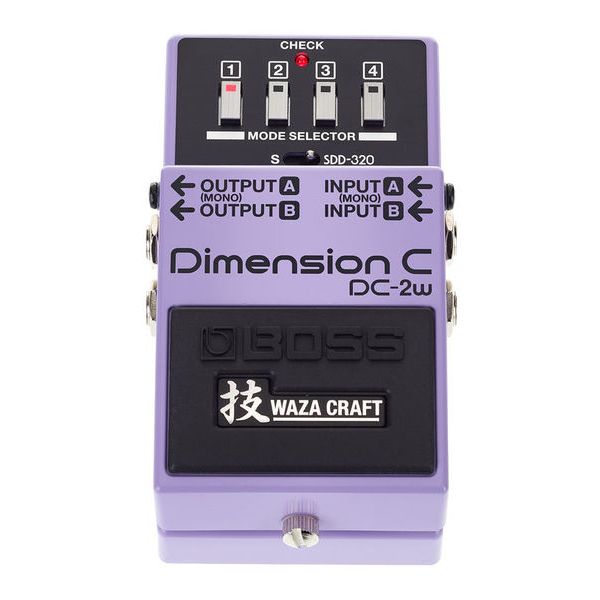
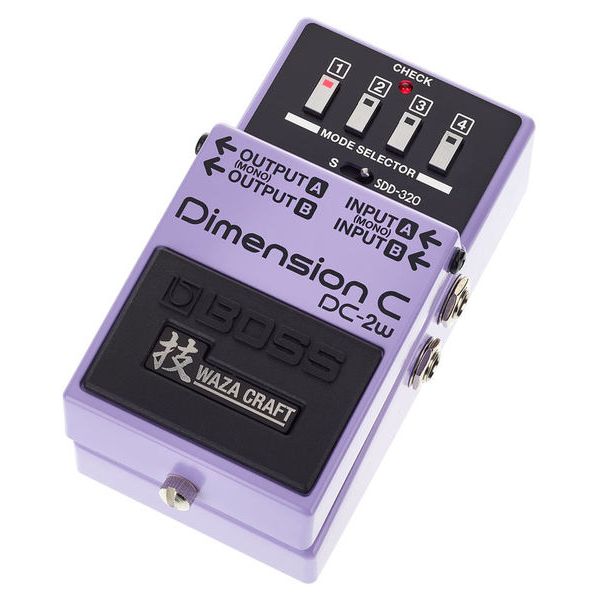
No knobs at all – just four preset buttons (1 through 4, increasing intensity), and you can press two together for six extra „in-between” blends. In SDD-320 mode you get a couple of entirely new textures on top of that.
Twenty usable sounds total, from barely-there to full-on 80s chorus-verb wash. It sounds limiting on paper, and honestly, it kind of is by design – but every single one of those twenty sounds is genuinely usable.
Tone – Standard Mode vs SDD-320 Mode
Standard mode nails the original DC-2 pedal sound – the one all over 80s records, that shimmery „everything just got huge” effect on clean and lightly-driven tones.
SDD-320 mode is warmer and a touch more lush, recreating the rack unit that inspired the pedal in the first place. If you are chasing that Andy Summers-style clean tone, this is the mode to live in.
True stereo output is a genuine highlight here too – run it into two amps and the width becomes almost physical. Mono still sounds great, but stereo is where this pedal really shows off.
Build and Playability
Waza Craft means premium components and analog circuitry, built in Japan, in Boss’s compact standard-size enclosure. No frills, just genuinely excellent build quality.
Because it is push-button rather than knob-based, it is dead simple to operate on a dark stage – no squinting at knob positions, just count the buttons. That is a small thing that matters a lot live.
It works beautifully on acoustic-electric and bass too, not just electric guitar – the width and depth trick translates well across instruments.
Who It’s Actually For
- Players chasing that specific 80s „widescreen” clean tone – think new wave, funk, pop
- Anyone running true stereo rigs who wants to actually use the width
- Studio players who want subtle depth without an obviously „chorus-y” sweep
- Boss Waza Craft collectors who already know exactly what they are getting
If you want a more traditional wobbly chorus alongside this, our MXR Analog Chorus review covers that more classic modulation route for comparison.
Honest Niggles
No knobs means no fine-tuning. If you want to dial in an exact custom blend rather than pick from four (or twenty) fixed voices, that rigidity might bug you.
It is also priced like the premium Waza Craft pedal it is – noticeably more than a basic chorus pedal. This is not an impulse buy, it is a know-exactly-why-you-want-this-pedal purchase.
And if you are after ambient washes and long swells rather than width and depth, something like EHX Freeze solves a completely different problem – worth knowing the difference before you buy.
Why Not Just Use a Regular Chorus?
Fair question. A standard chorus pedal like the Boss CH-1 gives you obvious, audible modulation – great for thickening a single note or adding movement to sustained chords.
The Dimension C is subtler and, IMO, more useful across an entire set. It does not fight for attention the way a heavy chorus can – it just makes everything you already play sound a bit bigger and more expensive. Leave it on all night and nobody will say nice chorus, they will just say your tone sounds great.
Quick Specs
- Type: Waza Craft analog dimension/chorus pedal
- Modes: Standard (DC-2) and SDD-320, 20 total sound variations
- Controls: 4 mode buttons (combinable)
- I/O: 2x inputs, 2x outputs (true stereo)
- Dimensions: 129 x 73 x 39 mm, 450g
- Built: Japan
If clean, dynamic tone is your whole game, pairing this with something like our Boss VE-8 Acoustic Singer review or a semi-hollow like the Ibanez AS93FM shows just how far a good clean tone can go.
Where To Put It On Your Board
Signal chain placement actually matters here more than with a lot of modulation pedals. Run it after your gain stages (fuzz, overdrive, distortion) so those pedals get a clean, undiluted signal to work with first.
Put it before delay and reverb if you want the width and depth baked into your repeats and washes too – that combination is genuinely huge sounding, especially in true stereo. Put it after time-based effects instead if you want your dry signal widened without touching the ambience.
Either order works, honestly – it is one of those pedals that is hard to place wrong. Experiment a bit and trust your ears rather than any strict rulebook.
Final Verdict
The DC-2W is not for everyone, and it is definitely not the cheapest way to add movement to your tone. But for the specific thing it does – width, depth, that unmistakable 80s „everything sounds huge” clean tone – nothing else quite gets there the same way.
If you have heard that sound on a record and wondered what it was, this is almost certainly it. Worth the premium price if that tone is what you are actually after.
Not a pedal you buy on a whim, but one you will probably keep forever once you understand what it is actually doing.