Watch It First
The multi-fx floor unit market is crowded right now, and most of it is either overpriced or underpowered. The Valeton GP-200 has quietly built a reputation for being neither.
It’s a budget-friendly all-in-one box with 140 amp models, 100+ effects, a looper, and a drum machine — the kind of spec sheet that used to cost three times as much a decade ago.
Question is whether it actually sounds good, or just reads well on paper. Let’s get into it.
What’s Actually in the Box
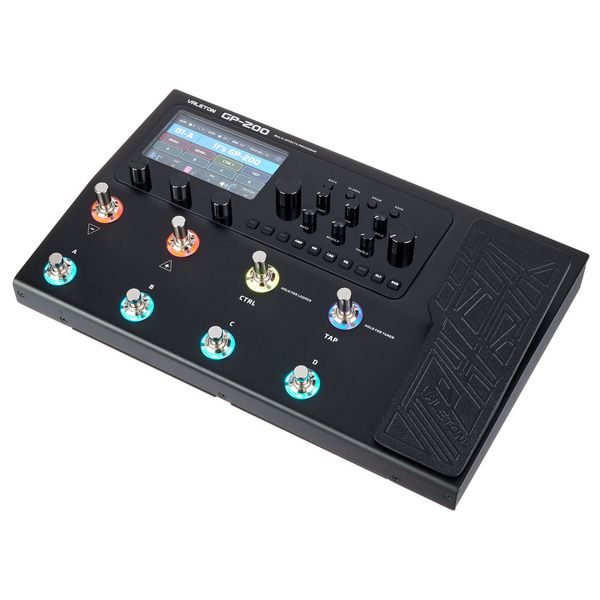
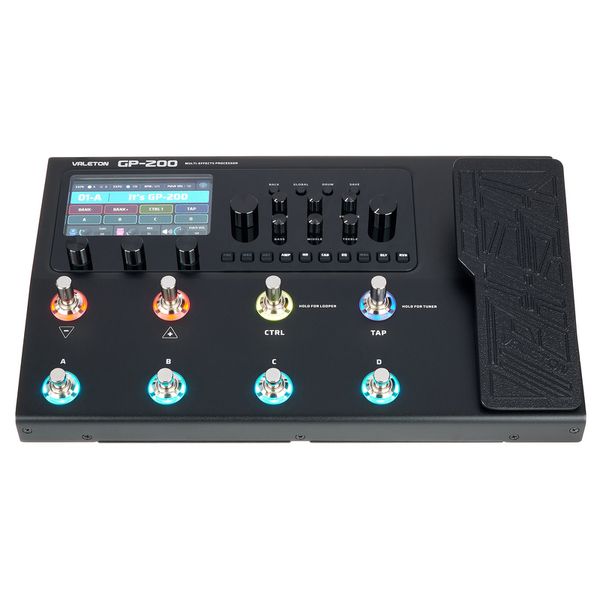
Metal chassis, colour LCD screen, 8 configurable LED footswitches with three footswitch layout templates, and a built-in expression pedal for wah and volume duties. That’s a serious amount of hardware for the price.
On the modeling side, HD amp modeling covers 140 guitar, bass, and acoustic amp types, paired with IR-based cab simulation. Effects-wise you get dynamics, drive, EQ, modulation, delay, and reverb blocks — well over 100 effects total, which is more than most players will ever touch, let alone need.
Then there’s the extra stuff that pushes this from „amp modeler” into „practice and writing tool”: a 180-second looper, 100 built-in drum patterns, and a chromatic tuner, all built in.
Connectivity
This is where the GP-200 quietly overdelivers. USB-C for direct recording, MIDI in/out/thru for external control, an effects loop for running real pedals alongside the modeling, balanced XLR outs for going straight to a PA or interface, plus a headphone output for silent practice. Nothing about the routing feels like an afterthought.
The onboard cab simulation uses IR-based modeling, and while you can’t load your own third-party IR files, the stock cab selection is broad enough to cover most guitar and bass tones without ever feeling like you’re stuck with one flat, generic speaker sound.
How It Sounds
The HD modeling platform is genuinely one of the better-sounding budget modelers I’ve tried. Classic amp voicings — think Plexi, Soldano, Fender-style cleans — come through with real touch sensitivity, not the compressed, flat feel that cheaper modelers often have.
High-gain tones hold up well too, staying tight and defined rather than collapsing into fizz, which matters if you’re running anything in the metal or hard rock space. It’s not going to fool a studio engineer into thinking it’s a real Soldano through a 4×12, but for gigging, practicing, and home recording, the gap has closed a lot.
Compared to something like the Zoom G2 Four, the Valeton’s amp models feel noticeably more three-dimensional, though the Zoom is smaller and cheaper if space and price are your priority over tonal depth.
Bass players shouldn’t skip past this one either — the amp bank includes dedicated bass models alongside the guitar ones, and the low end stays tight rather than flubby, which isn’t always true of guitar-first modelers that bolt bass tones on as an afterthought.
The looper is a genuine highlight — 180 seconds is plenty for building layered ideas, and combined with the drum patterns you can sketch out a full song structure without touching a DAW.
Who It’s For
It’s also just a genuinely good home practice tool. Headphone output plus a huge bank of amp tones means you can go from clean jazz voicings to full metal gain without waking anyone up or plugging in a single extra pedal.
Anyone who wants one box that covers practice, recording, and gigging without buying a stack of individual pedals. If you’ve been eyeing something like the Zoom MS-50G+ but want amp modeling built in too rather than just effects, this is a serious step up.
It’s also a great option if you gig in different venues and need different tones on tap without carrying an amp at all — plug straight into the PA via the XLR outs and you’re covered.
If you’d rather keep a real amp as your tone foundation and just want modulation and time-based effects, something like a modeling combo — the Marshall Code 50 or the more analogue-flavoured Vox MV50 Rock — might suit your workflow better than a floor unit.
Honest Niggles
- Menu navigation takes real time to learn — this isn’t a plug-and-play unit on day one
- No battery operation, mains power only
- At 2.37kg and 345mm wide, it’s not the most travel-friendly floor unit
- Some presets need noticeable tweaking before they sit well in a mix
The learning curve is the real one here. Budget an evening with the manual and some headphones before your first gig with it — it pays off fast once the layout clicks.
Real Amps or Modeling — Worth Considering
If tube amp purism matters to you more than convenience, nothing here changes that — an amp like the Marshall JVM410H will always feel different in the room than any modeler. But for the price, portability, and sheer flexibility on offer, the GP-200 makes a genuinely compelling case for going all-digital, especially if you record at home or gig in venues where hauling a tube head isn’t practical.
Specs at a Glance
- Design: Metal-bodied floor pedal
- Amp models: 140 (guitar/bass/acoustic)
- Effects: 100+ (Dynamics, Drive, EQ, Mod, Delay, Reverb)
- Footswitches: 8 configurable LED, 3 templates
- Looper: Up to 180 seconds
- Drum patterns: 100 built in
- Tuner: Built in
- Connectivity: USB-C, MIDI In/Out/Thru, FX loop, balanced XLR out, unbalanced 1/4″ out, headphone out, aux in
- Expression pedal: Integrated
- Power: 9V DC adapter (included), no battery operation
- Dimensions: 345 x 220 x 63 mm
- Weight: 2.37 kg
Final Verdict
The Valeton GP-200 punches well above its price bracket. The amp modeling is genuinely convincing, the effects are usable rather than just numerous, and the looper/drum machine combo makes it a legitimate songwriting tool, not just a gigging box.
Give yourself time to learn the menu system and this becomes one of the best value multi-fx units on the market right now. FYI — if you can stretch the budget slightly, the bundle with the gig bag is worth it since this thing is a bit awkward to carry loose.