Watch It First
Adding a seventh string is a bigger jump than it sounds. New tunings, a wider neck, a different right-hand technique for palm muting that low B string cleanly.
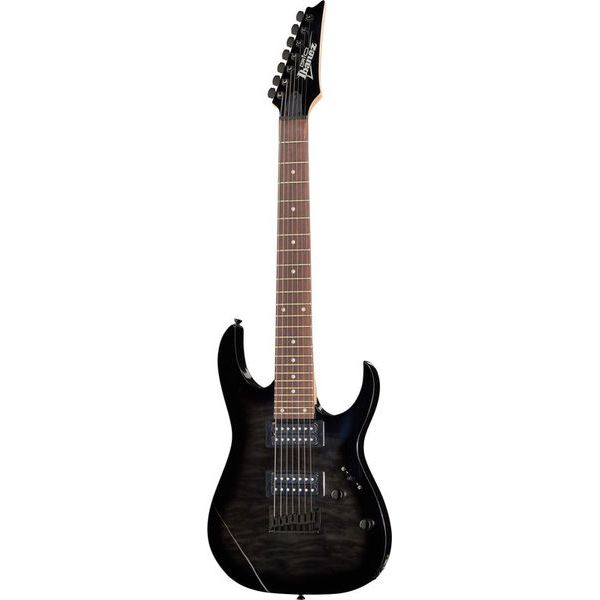
The Ibanez GRG7221QA-TKS exists to make that jump cheap. It’s the current version of the classic budget Gio 7-string, and it’s the guitar most people mean when they say „RG7221” these days since that older model number has been phased out.
I spent time with it to see if a sub-1500zł 7-string is actually worth buying, or just worth wanting.
A Quick Note on the Model Name
If you searched for „RG7221” and landed here, you’re in the right place. That specific model has been discontinued and replaced in Ibanez’s Gio lineup by the GRG7221QA — same idea, same price bracket, current production and actually in stock.
Build and Spec
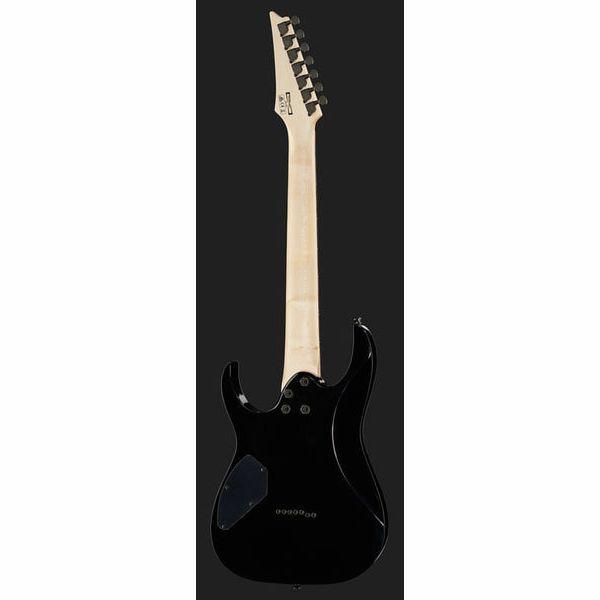
Poplar body, quilted maple top, bolt-on maple neck in the GRG7 profile. It’s a budget spec sheet, but a sensible one — nothing here is cutting corners in a way that hurts playability.
24 jumbo frets on a 648mm scale length give you the extra tension a low B string needs to stay tight and clear, rather than flubby. The nut is a wide 48mm, which sounds intimidating until you actually play it — your hand adjusts within the first practice session.
Two Infinity R humbuckers handle pickup duty, wired simply with no coil-splitting or push-pull gimmicks. This is a guitar built to do one job — high-gain riffing — and it doesn’t try to be a Swiss army knife.
Worth mentioning: this is also one of the most commonly modded budget 7-strings around. Because it sells in such high numbers, there’s a huge community of players who’ve swapped pickups, upgraded tuners, or added a stainless steel trem block equivalent — parts and advice are easy to find if you want to upgrade it later rather than replace it.
Hardware Notes
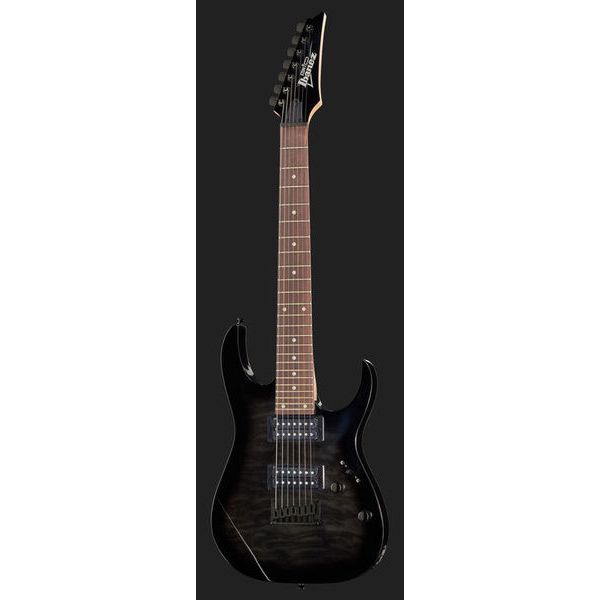
The F107 fixed bridge is a smart choice for this guitar — no floating trem to fight with when you’re already dealing with the tuning quirks of a 7-string. Black hardware throughout keeps the look cohesive, and the Transparent Black Sunburst finish over the quilted maple top genuinely looks more expensive than the price tag suggests.
Playability and Sound
The GRG7 neck profile is thin for a 7-string, which makes the transition from six strings far less painful than you’d expect. Chords still feel manageable, and palm-muted riffing on the low strings is where this guitar is happiest.
Plugged into a high-gain amp, the Infinity R pickups deliver tight, focused output — not the most articulate humbuckers on the market, but more than capable of chugging convincingly. Through something like the Marshall JVM410H or an Orange TH30H, this thing sounds properly heavy.
Clean tones are fine but unremarkable — a bit thin and slightly harsh on the top end. This isn’t a guitar you buy for its clean channel, and honestly nobody buying a 7-string Gio expects one.
If you want to push the gain further without relying entirely on your amp, a dedicated drive pedal like the JHS Angry Charlie V3 pairs surprisingly well, adding tightness to the low string without turning to mush.
Tuning and Setup Tips
Most players run this in standard 7-string tuning (B to E) or drop A for extra heaviness. Whatever you choose, don’t leave the factory strings on if you’re detuning further — a heavier gauge on that low string (.062 or above) makes a massive difference in clarity and tension feel.
Get a proper setup done after you buy, especially if you’re changing string gauges. It’s a cheap guitar, not a cheaply-designed one, and a good setup closes most of the gap between this and guitars twice the price.
Who It’s For
This is aimed squarely at players moving into extended-range territory for the first time — djent, prog, modern metal, thrash. If you’ve read anything about the best guitars for thrash metal or nu metal, a 7-string is usually the next logical step once you want lower, heavier tones without detuning your six-string into mush.
It’s also a sensible „is this actually for me” test guitar. Rather than dropping serious money on a Prestige-level 7-string or something like the Jackson lineup, you find out if you actually enjoy the extended range before committing further.
Home recording metal producers should take note too — this is a genuinely useful „one more guitar” to have around for tracking riffs an octave lower than your main six-string, without needing a whole new pedalboard setup to make it sit in a mix.
Honest Niggles
- Electronics can be a bit noisy/unshielded — some owners report needing extra shielding
- Clean tones are thin and a touch harsh
- Stock tuners hold okay but aren’t premium — expect to true them up often at first
- Fixed bridge means no vibrato options at all
None of these are surprising at this price, and owner reviews consistently mention that the guitar punches well above its cost once you accept its limits.
Specs at a Glance
- Body: Poplar
- Top: Quilted maple
- Neck: Maple (bolt-on), GRG7 profile
- Fretboard: Bound, dot inlays
- Frets: 24 Jumbo
- Scale length: 648mm
- Nut width: 48mm
- Pickups: 2x Infinity R humbuckers
- Bridge: F107 fixed
- Hardware: Black
- Colour: Transparent Black Sunburst
Final Verdict
For comparison, Harley Benton’s multiscale 7-string models undercut it slightly on price and add fanned frets, but the GRG7221QA’s straight scale and mainstream Ibanez ergonomics make it the easier, more familiar first 7-string for most players coming from a standard six-string guitar.
The GRG7221QA-TKS isn’t going to replace a Prestige 7-string, and it’s not trying to. What it does is give you a genuinely playable, good-sounding entry point into 7-string guitar without a scary price tag.
If you’re testing the waters before committing to extended range playing, or you just want a cheap riffing machine for the low tunings, this earns an easy recommendation. FYI — budget a bit extra for a setup and maybe a pickup upgrade down the line if you fall in love with it.