Watch It First
If you’ve ever plugged an acoustic-electric into a normal guitar amp and winced at how thin and quacky it sounded, you already know why dedicated acoustic amps exist.
The Fender Acoustic SFX II is Fender’s answer for the solo performer who needs more than just „loud” — stereo imaging, real effects, a mic input, and (this is the part that surprised me) a built-in looper.
It sits toward the premium end of the acoustic amp world. Let’s get into why.
What’s Actually Inside the Box
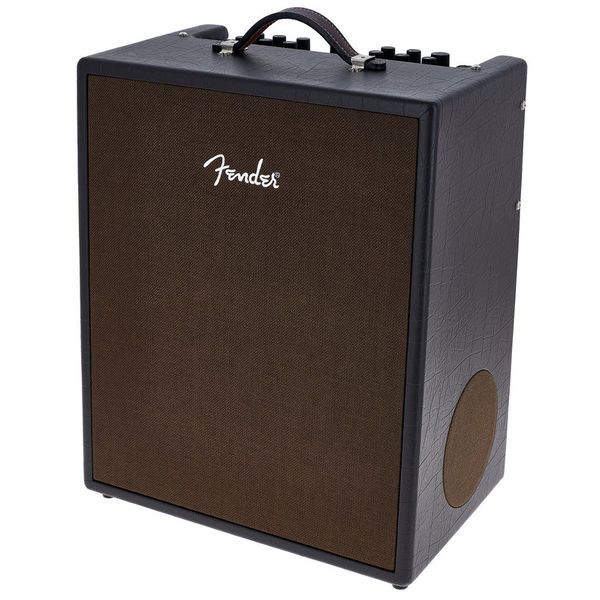
100 watts per channel is the headline number, split across an 8″ low-frequency woofer, a 6.5″ side-firing driver, and a hi-fi compression tweeter.
That side-firing speaker is the actual trick here. Instead of just blasting sound forward at whoever’s standing directly in front of you, it throws sound wide — so the amp fills a room rather than just the front row.
Two Channels, Two Different Jobs
Channel one is built for instruments — an XLR-combo input with switchable phantom power, in case you’re running an acoustic through a mic’d pickup setup rather than a piezo.
Channel two plays nicer with vocals or a second mic. Each channel gets its own three-band EQ, its own effects level, and its own effects selection — meaning your guitar and your voice never have to share a compromise setting.
The Effects Are Kind of the Whole Point
You get Room, Reverb, Echo, Delay, Chorus, and Vibratone, plus combined settings like Delay+Chorus and Delay+Reverb.
Vibratone deserves its own mention — it’s a rotary-speaker-style wobble that sounds fantastic on a clean acoustic-electric. If you’re into that kind of modulated shimmer, it scratches a similar itch to what you’d get chaining a couple of TC Electronic pedals together, except it’s already built in.
The Looper (Yes, Really)
Rec, Dub, Play/Stop, and Undo controls sit right on the front panel. This is a genuine hardware looper baked into an acoustic amp, not just a bullet point that turns out to be a gimmick.
Pair it with the optional MGT4 footswitch and you can flip channels, toggle effects, run the built-in tuner, and control the looper without bending over mid-song. For anyone doing solo loop-based sets, that’s a real workflow upgrade.
Bluetooth and the Practical Stuff
Bluetooth streaming means backing tracks straight from your phone, no cables needed.
Stereo XLR outputs mean you can feed a PA directly for bigger rooms without hunting down a DI box. And at under 10kg, it’s still a one-trip carry from the car — not exactly light, but not a back-breaker either.
Build Quality and Everyday Design
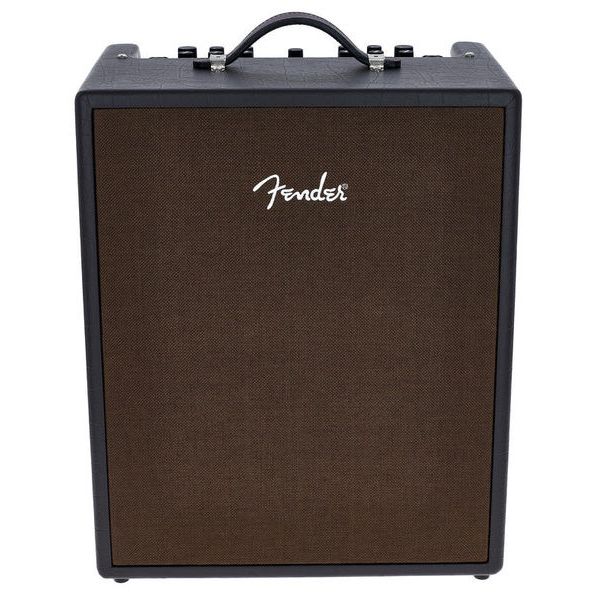
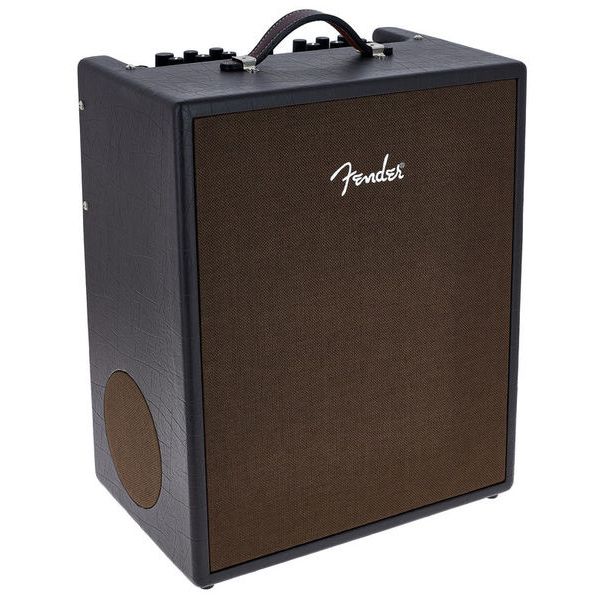
Fender wrapped this one in a closed dark brown housing that looks more like a piece of studio furniture than a typical guitar combo — it won’t look out of place sitting next to a piano at a house concert or a corporate gig.
The controls are grouped sensibly: each channel’s knobs are laid out in the same order, so switching between the instrument side and the vocal/mic side doesn’t require relearning the panel every time. Small thing, but it matters when you’re setting levels in a dim room five minutes before a set.
One thing worth flagging honestly: the phantom power runs at 18V rather than the more common 48V. Most modern condenser mics handle that fine, but if you’re planning to run a specific studio mic through the instrument channel, it’s worth double-checking compatibility first rather than assuming.
Is it a looker? Sure, in a understated way — Fender didn’t try to make this flashy, and that restraint suits the „this is a tool, not a toy” vibe the amp is going for.
Who Actually Needs This
If you’re a solo acoustic act playing coffee shops, small venues, or weddings, this genuinely replaces an amp, a small mixer, and half a pedalboard in one box.
If you just want something for practicing at home, this is overkill IMO — a simple combo like the Roland Cube-10GX does that job in a fraction of the footprint and price.
And if your rig is mostly electric? Obviously this isn’t for you — go read about something like the Marshall Code 25 instead.
What Guitar Pairs Well With It
Because the amp does a lot of the tonal shaping itself, it’s fairly forgiving of whatever pickup system your guitar happens to have.
Something like the Fender Redondo Player with its stock electronics sounds great running through this. Even a small-bodied travel guitar like the Little Martin LX1E benefits — the SFX II’s stereo width makes even a tiny instrument sound like it fills a room.
If you’re building a whole acoustic setup from scratch, our roundup of the best Fender acoustic guitars is a good place to start pairing gear with an amp like this.
Specs at a Glance
- Power: 100W x 2 channels (200W total system power)
- Speakers: 1x 8″ woofer, 1x 6.5″ side-firing driver, 1x compression tweeter
- Effects: Room, Reverb, Echo, Delay, Chorus, Vibratone, Delay+Chorus, Delay+Reverb
- Inputs: 2x XLR-combo (line/instrument) with switchable phantom power, 3.5mm aux-in
- Outputs: 2x XLR (mono/stereo switchable), 3.5mm headphone out
- Extras: Built-in looper (Rec/Dub/Play-Stop/Undo), Bluetooth streaming, footswitch input
- Weight: 9.9 kg
Final Verdict
The Fender Acoustic SFX II sits toward the premium end of acoustic amps, and it mostly earns that positioning.
It’s not a practice amp pretending to be a gig rig. It’s a genuine one-box solution for anyone doing solo acoustic shows on a regular basis — the looper alone justifies a chunk of the cost if you’d otherwise be buying a separate pedal for that.
FYI, the Bluetooth streaming alone can save you from buying a separate speaker just for backing tracks. Small thing, but it adds up.
If you already own a separate looper pedal and a reverb unit you love, this might feel like overlap you don’t need. But if you’re consolidating gear before a busy gig season, it punches well above its weight as an all-in-one rig — and it’s one of the most complete solo-performer amps Fender currently makes.