Watch It First
Bass players get a rough deal on practice amps. Guitarists have a hundred cheap options, but stuff a low B or E through a tiny speaker and most of them just fall apart.
The Fender Rumble 25 has been the default answer to „what bass amp do I get for bedroom practice” for years now. It’s everywhere, which usually means it’s either genuinely good or just heavily marketed.
I plugged in to find out which one it actually is.
Tone – Surprisingly Full for the Size
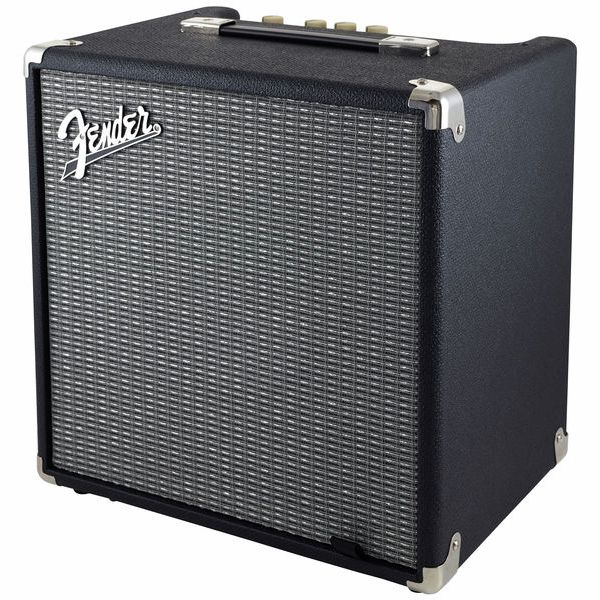
25 watts into a single 8″ speaker doesn’t sound like much on paper, and it isn’t going to move a room. But for what it is, the low end is genuinely more present than you’d expect.
The 3-band EQ (bass, mid, treble) actually does something – not just decoration knobs that all blend into mush. You can dial in a scooped modern tone or a thumpy vintage one without much fuss.
There’s also a Contour switch, which scoops the mids for that classic „hi-fi” bass sound, and an Overdrive switch for adding grit. Neither is going to fool anyone into thinking this is a tube amp, but they’re genuinely useful tone-shaping tools rather than gimmicks.
Push the volume up and the little 8″ speaker does start to strain – that’s just physics again, same story as most amps this size. Keep it at bedroom-to-small-room volume and it stays composed.
Play a five-string or drop-tuned bass through it and you’ll notice the lowest notes lose a bit of definition – the speaker just can’t fully reproduce the fundamental at that size. Standard four-string tuning is really where this amp is happiest.
Build and Practicality
At 9.5kg it’s noticeably heavier than a guitar practice amp in the same price bracket – bass speakers and cabinets just need more mass to move air properly. Still very manageable for carrying between rooms or to a lesson.
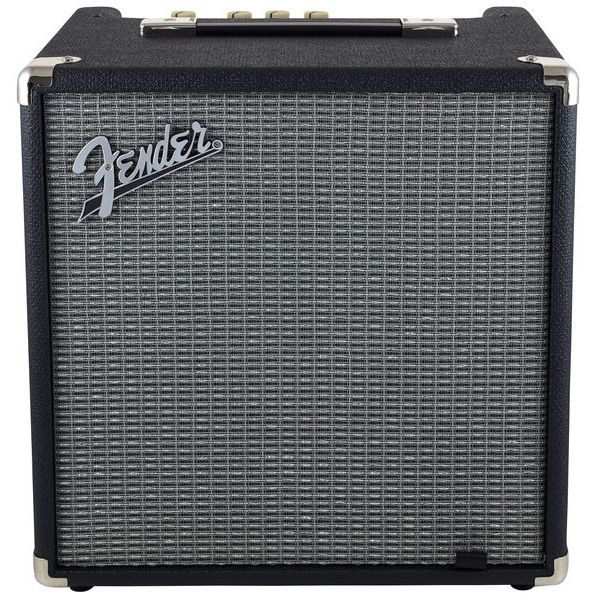
The vinyl covering and metal grille feel properly durable, which matters since bass amps tend to get knocked around more (bigger, clunkier gig bags, more corners to bump into doorframes).
Headphone output and aux input are both present, so silent practice along to a playlist works exactly like you’d want. The soft-touch knobs feel nicer than you’d expect at this price too – a small thing, but it adds up.
One nice touch some reviewers mention: the speaker itself is easy to swap out if you ever want to upgrade the tone down the line, since it’s a fairly standard 8″ format. Not something most beginners will do, but good to know the option exists.
It’s also worth mentioning how quiet the amp is at idle – no audible hum or hiss with the volume up and nothing plugged in, which matters more than people think when you’re recording quick phone videos or practicing late at night.
Who It’s For
Anyone starting out on bass needs one of these eventually, and this is a genuinely sensible first pick. Pair it with something from our 6 Best First Bass Guitars roundup and you’ve got a complete, no-regrets starter rig.
It’s also a solid practice-room or home-studio companion for players who already own something nicer like a Fender Player II Jazz Bass or a Schecter Stiletto Stealth-4 but don’t want to lug their gig rig around for casual practice.
If you’re gigging regularly, you’ll outgrow this fast – it’s not designed to keep up with a drummer at real volume. That’s what the bigger Rumble models, or something like the Markbass Little Mark IV head-and-cab setup, are for.
Parents shopping for a kid’s first bass rig land here a lot too, for the same reasons the guitar-side Fender practice amps get picked – cheap enough to not sting if the interest doesn’t stick, good enough that it won’t be the reason it doesn’t.
The Honest Niggles
No effects of any kind – no compression, no built-in modulation, nothing. Just clean tone shaping and an overdrive switch. Fine for practice, limiting if you wanted a one-box solution for everything.
The overdrive setting is usable but basic – don’t expect fuzz-pedal levels of character from it. It’s more „slight grit” than „tone-defining feature.”
It also won’t keep up with a full band at rehearsal volume unless the drummer is being unusually polite. This is a bedroom and small-room amp first, full stop – don’t buy it expecting gig-ready output.
There’s no DI output either, so if you’re recording direct you’ll be going through the headphone jack into an interface, same workaround as a lot of amps in this class.
If low-end headroom at real volume matters to you more than portability, it’s worth comparing against something like the Harley Benton budget bass options or stepping up a tier entirely – check our Harley Benton Beatbass review for a different angle on budget bass gear, or the Ibanez SRMS805 if you’re shopping for the bass itself rather than the amp.
Specs at a Glance
- Power: 25W into 1x 8″ Fender Special Design speaker
- 1 channel with switchable overdrive and contour
- 3-band EQ (bass, mid, treble)
- Headphone output and aux input
- Weight: 9.53kg
- Dimensions: 38.8 x 38.8 x 27.9cm
- Black vinyl covering, silver grille
Final Verdict
The Fender Rumble 25 earns its reputation as the default first bass amp. It’s not flashy, it’s not loud enough for a real gig, but it does the one job it’s built for extremely well: giving a beginner bassist a genuinely good-sounding way to practice.
Budget-wise it sits comfortably in „no-brainer starter purchase” territory – not the cheapest bass amp on the market, but the extra bit of money buys you real tone-shaping and a build quality that’ll survive years of bedroom and practice-room use.
If you’re buying your first bass rig, this is still one of the safest picks out there. Just budget for an upgrade once you start playing with other people – and when that day comes, you’ll know exactly why, because this little combo will have already told you everything it can’t do.