Watch It First
Klon clones are a whole genre of pedal at this point. Everyone’s got one, half of them sound identical, and most reviews just say „transparent, dynamic, buy it” and move on.
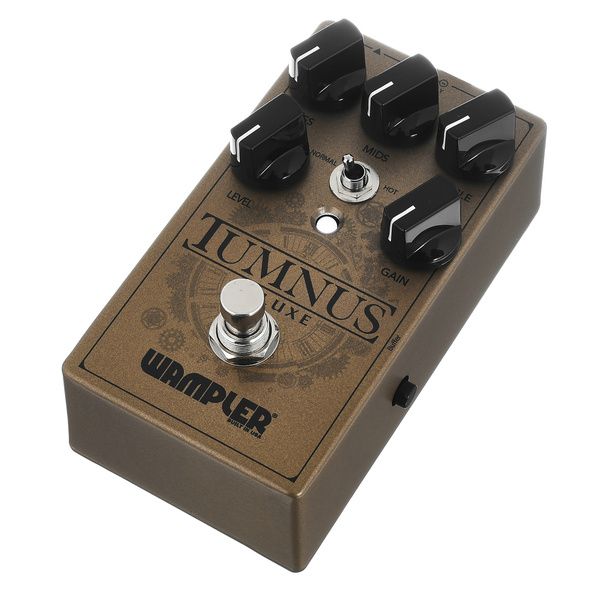
The Tumnus Deluxe is Wampler’s answer to „okay but what if I actually wanted to shape the tone too?” It takes the original Tumnus circuit and bolts on a proper 3-band EQ.
Does the extra control actually matter, or is it just more knobs for the sake of it? Let’s dig in.
Tone – Transparent, But Not Boring
The base circuit is the same Klon-style overdrive that made the original Tumnus a cult favourite – it doesn’t so much distort your tone as sharpen it. Push it as a boost into a clean amp and everything just sounds more there: more presence, more sustain, more sparkle on the top end.
Where the Deluxe earns its name is the active EQ. Bass, mids, and treble, all with real range – not the tiny „tone” knob most transparent drives give you. You can scoop the mids for a modern rock voicing, or push them for something that cuts through a dense band mix.
There’s also a Normal/Hot switch that adds extra gain on tap, which turns this from „subtle boost” into „legit overdrive” without needing a second pedal. That’s a genuinely useful bit of flexibility most Klon clones don’t bother with.
Stack it in front of an already-driven amp and it thickens things up nicely rather than turning to mud – a common failure point for lesser transparent drives.
Where a lot of budget Klon clones fall apart is the low-mid buildup once you stack them with other gain stages. The Tumnus Deluxe handles that surprisingly gracefully – the bass control lets you tighten things up before they get flubby, which is exactly the kind of practical fix a real EQ section should give you.
Build and Usability
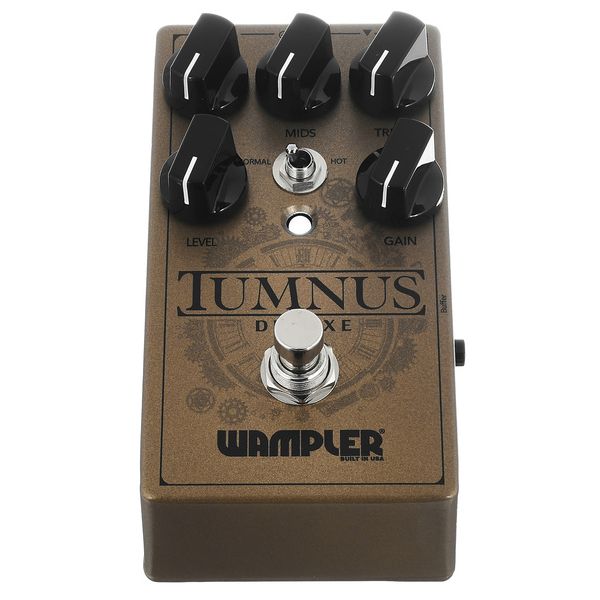
Made in the USA, and it feels like it – solid enclosure, smooth pots, a footswitch that clicks with confidence rather than that cheap plasticky feel some budget pedals have.
Switchable buffered or true bypass is a small but thoughtful touch – if you’re running long cable runs or a big pedalboard, the buffer option keeps your tone from getting dull by the time it reaches the amp.
It’s still a compact pedal despite the extra controls, so it won’t eat a ton of board space. Current draw is low too, at 70mA, so it won’t be greedy on your power supply.
The only real ergonomic gripe: five knobs on a compact enclosure means they’re close together. Fine for careful tweaking at home, a bit fiddly if you’re trying to make a quick adjustment mid-song with your foot.
Worth noting too – this pedal plays well as either an always-on tone-shaper or a stompable boost for solos, which is honestly rarer than it sounds. A lot of transparent drives are built with only one of those use cases in mind, and you can feel it. This one genuinely does both jobs.
Who It’s For
Players who already understand why a Klon-style drive is useful, but have been frustrated by how little control most of them give you. If you’ve read up on the MXR Custom Shop Timmy – another transparent overdrive darling – and wished it had a bit more tone-shaping, this is basically that wish granted.
It’s also a great match for anyone running a Vox-style amp, since transparent drives tend to play especially nicely with that chimey breakup – see our best overdrives for VOX amps roundup and the Vox AC15 C1X review for more on that pairing.
Jazz and blues players who want just enough grit without losing note clarity will also get a lot out of this – it fits right into the mindset behind our best guitar pedals for jazz picks.
Home recordists benefit too – since so much of getting a good DI or amp-sim tone comes down to how your dry signal is shaped before it hits anything else, having real EQ control at the drive stage saves a lot of fiddling later in the mix.
The Honest Niggles
Price is the obvious one. You’re paying a real premium over the standard Tumnus for the EQ section, and if you’re never going to touch those extra knobs, you’re better off saving your money on the non-Deluxe version.
The Hot mode, while useful, can get a little fizzy at extreme settings – not bad exactly, just not the pristine transparency the pedal is otherwise known for. Keep the gain reasonable and it stays clean.
And honestly, if all you want is a simple always-on boost, this might be more pedal than you need. There’s no shame in going for something simpler like a Cry Baby for expression instead, or keeping your board minimal with fewer, more purposeful pedals.
No battery door on the bottom either – well, there is, but swapping batteries means unscrewing the plate rather than a quick-access flap. Minor, but worth knowing if you rely on 9V batteries for backup power.
One last thing – because the EQ is active rather than passive, it’s easy to accidentally boost your overall volume quite a bit when you’re dialing things in. Keep an eye on your level knob so you don’t blow out your amp’s front end by accident on stage.
Specs at a Glance
- Klon-style transparent overdrive with active 3-band EQ
- Controls: gain, level, treble, mids, bass
- Normal/Hot gain switch
- Switchable buffered/true bypass
- Current draw: 70mA
- 9V battery or 9V DC power supply (not included)
- Dimensions: 64 x 114 x 38mm
- Made in USA
Final Verdict
The Tumnus Deluxe takes a pedal that was already excellent and gives you real reasons to reach for it over cheaper Klon clones. The EQ section isn’t a gimmick – it genuinely changes how usable the drive is across different amps and guitars.
It sits at the premium end of the transparent-overdrive market, and it earns that spot. If you’re the kind of player who tweaks constantly and wants a drive that adapts rather than one you adapt around, this is worth the money.
If you just want „a Klon in a box” and nothing more, save some cash and grab the standard Tumnus instead. But if control matters to you, the Deluxe is easily one of the best transparent drives on the market right now.