Watch It First
Quick disclaimer before we get into it: the Laney LX35R isn’t something Thomann actually stocks right now.
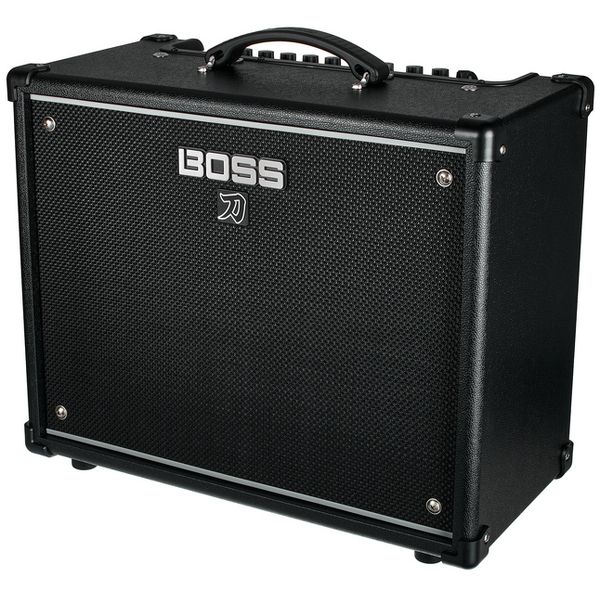
So instead of writing about a combo you can’t actually buy, I spent time with the amp that’s basically eating that whole segment of the market anyway – the Boss Katana 50 Gen 3.
Same idea as the Laney: affordable, solid-state-friendly practice/gig combo with built-in effects. Different execution entirely, and honestly a tough act to beat at this price.
Why This Is The Right Comparison
Laney’s LX series was aimed squarely at players who wanted one affordable combo that could do clean, crunch, and a bit of gain with built-in reverb – a genuine all-rounder for bedroom and small-gig use.
The Katana 50 Gen 3 covers that exact brief and then some, with digital amp modeling instead of a straightforward analog circuit. It’s a different approach to the same goal.
If you’ve been eyeing something in this segment generally, it’s also worth glancing at our roundup of amps for indie rock, since a lot of that list overlaps with what a practice-and-gig combo like this one is built for.
Tone – Twelve Amps In A Box
Six core amp voicings (Clean, Crunch, Lead, Brown, Acoustic, and the new Pushed type), each with a second variation – twelve tones total, none of them throwaway.
Boss’s Tube Logic engine genuinely responds to pick dynamics and volume knob changes the way a real tube amp does. It’s not perfect – nothing modeled ever fully is – but it’s close enough that you stop thinking about it after five minutes.
Brown mode is the one metalheads reach for first, and it delivers a tight, high-gain tone without turning to static. If you want to compare it against dedicated high-gain amps, check our distortion and overdrive amp guide.
Acoustic mode deserves a special mention too – it’s genuinely convincing for a modeled amp, turning your electric into something that can sit reasonably well in an unplugged jam without sounding fake or thin.
Five Effects Blocks, Not Gimmicks
Booster, Mod, FX, Delay, and Reverb, all independently controllable and all editable in real depth through the free Boss Tone Studio app.
You can genuinely skip a pedalboard for years with this thing. IMO that alone justifies the price for anyone starting out.
Build Quality
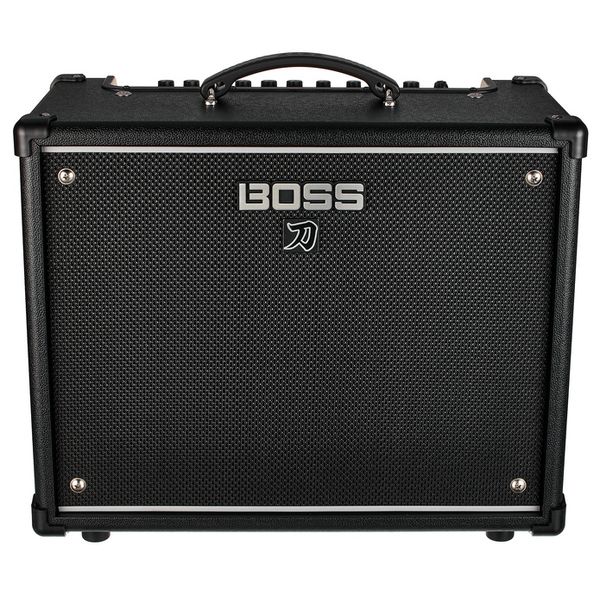
At 11.6kg, it’s light enough to carry in one hand, unlike most of the tube combos on this list. The cabinet feels solid, the custom-voiced 12″ speaker punches well above the compact size.
Knobs and switches feel properly clicky and durable – this is Boss’s third generation of the Katana, and it shows in the fit and finish. Nothing rattles, nothing feels like an afterthought.
Who’s This For
Beginners who don’t want to outgrow their first amp in six months. Intermediate players who want one box that covers every rehearsal genre. Home recorders who need a decent direct tone without micing a cab.
It’s basically the anti-Laney-LX in one sense: instead of a simpler analog circuit, you get flexibility. If you’re the type who’d rather compare against Marshall’s take on the same idea, our Marshall amps roundup covers where those land relative to this.
Playability and Usability
Power Control drops it from 50W down to Half or even 0.5W, keeping the same tonal character at living-room volume. This is the single best feature for home players.
Four onboard memory slots let you save your favorite settings and recall them with a footswitch (sold separately) – handy for quick clean/crunch/lead switching mid-song.
USB-C output means recording direct into your DAW is basically plug-and-play, and there’s a proper headphone jack with cab simulation for true silent practice – something the analog Laney LX35R never offered.
Room Sense, a spatial depth control for direct recording, is another small touch that shows Boss actually thought about how people use these amps today – plenty of us record more than we mic a cab these days.
Being Honest About The Cons
- No footswitch included – you’ll want one eventually and it’s an extra purchase.
- Bluetooth requires a separate adapter, not bundled in the box.
- Some owners find the stock speaker a touch thin compared to a proper tube combo’s speaker – a minority opinion, but it comes up.
- No external speaker output, so you’re stuck with the onboard 12″ unless you go the Power Amp In route.
- Deep-diving all the tone-shaping options really requires the app – the front panel alone won’t get you everything.
How It Stacks Up
Against something more purist like the Harley Benton Tube 5 Celestion, the Katana trades tube warmth for sheer flexibility – you’re choosing between „one great analog voice” and „twelve very good digital ones.”
Against Marshall’s budget offerings, like the Marshall MG10, the Katana is in a different league entirely on features, though obviously priced accordingly higher too.
And if you’re comparing budget-friendly tube options generally rather than modelers, our look at whether Bugera amps are actually good is a useful parallel read.
Specs At A Glance
- Power: 50W, adjustable via Power Control (0.5W / Half / Max)
- Speaker: 1x 12″ Custom
- Channels: 2, with 6 amp types x 2 variations (12 total voicings)
- Effects: 5 independent blocks – Booster, Mod, FX, Delay, Reverb
- Memory: 4 user preset slots
- Connectivity: USB-C, Aux In, headphone out, EXP pedal jack, footswitch jack, optional Bluetooth adapter
- Controls: Master, Gain, Volume, Bass, Middle, Treble, plus per-effect knobs
- Footswitch: sold separately
- Dimensions: 470 x 238 x 398 mm
- Weight: 11.6 kg
Final Verdict
The Laney LX35R may be gone from the shelves, but the gap it left is being filled by amps like this one, and honestly, most players will end up happier for it.
Twelve real amp voicings, five effects blocks, silent practice via headphones, and a price that still counts as a bargain – the Katana 50 Gen 3 is one of those rare products that gets recommended by literally everyone for good reason.
If you want one combo to grow with you from first chords to actual gigs, this is about as safe a bet as exists in this price range right now.