Watch It First
Sire built its whole reputation on one trick: making basses that cost a fraction of what they sound like. The V5 is where that trick gets refined into something genuinely dangerous for Fender’s wallet-share.
This is a passive J-Bass through and through. No active EQ, no gimmicks, just alder, roasted maple, and two single coils doing what J-Basses have done since 1961.
The question isn’t whether it’s a good budget bass. It’s whether it’s just a good bass, full stop. Let’s get into it.
Build and Materials
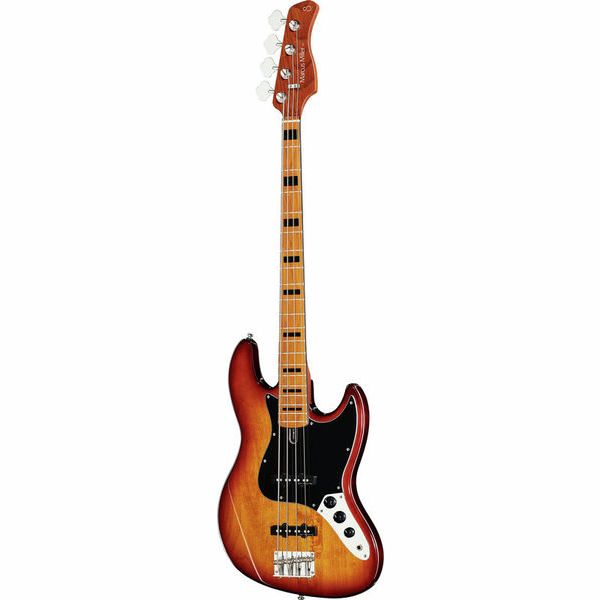
The body is alder, the classic tonewood choice for this style of bass. Nothing exotic, nothing that needs explaining â alder just works for J-Basses, and Sire knows it.
Where it gets interesting is the neck. Sire went with a one-piece roasted maple neck and fretboard, which isn’t something you’d expect at this price point.
Roasting the wood does two things: it makes the neck far less sensitive to humidity and temperature swings, and it gives it that warm caramel color everyone loves. FYI, this used to be a boutique-only feature a decade ago.
Hardware Details
- Genuine bone nut instead of the usual plastic filler
- 20 medium-small frets with rolled, comfortable edges
- Vintage-style bridge and chrome hardware throughout
- Tobacco Sunburst finish over the alder body
None of this screams „budget bass” when you’re holding it. It only starts to reveal its price bracket if you go hunting for flaws â and even then, you have to hunt.
Playability and Feel
The C-shaped neck profile is comfortable for pretty much any hand size. It’s not the slim „fast neck” some modern basses chase â it’s a proper vintage-style carve.
Long scale (34″), 38mm nut width, 241mm fretboard radius. Translation: it plays like a Jazz Bass should, because that’s exactly the recipe Sire copied.
Setup out of the box tends to be solid. Owner reviews consistently mention the bass arriving well-adjusted, action low without fret buzz. That’s not nothing â a lot of budget instruments need a full setup before they’re gig-ready.
Balance on the strap is decent too. It won’t neck-dive as badly as some lightweight basses in this range, though if you’re playing seated without a strap, you’ll notice the classic J-Bass tendency to want to slide off your knee.
Sound and Tone
Two Marcus Vintage-J Revolution single coils handle the tone duties here, and they’re genuinely excellent for the money.
Bridge pickup solo gives you that classic wiry, aggressive J-Bass growl â great for picking or aggressive fingerstyle where you need cut. Neck pickup solo goes the other way: fat, round, low-end forward.
Blend them together and you land on the „best of both worlds” tone that’s made the J-Bass a session-player staple for over 60 years. Slap, fingerstyle, pick â it handles all three without sounding like it’s compromising on any of them.
Electronics
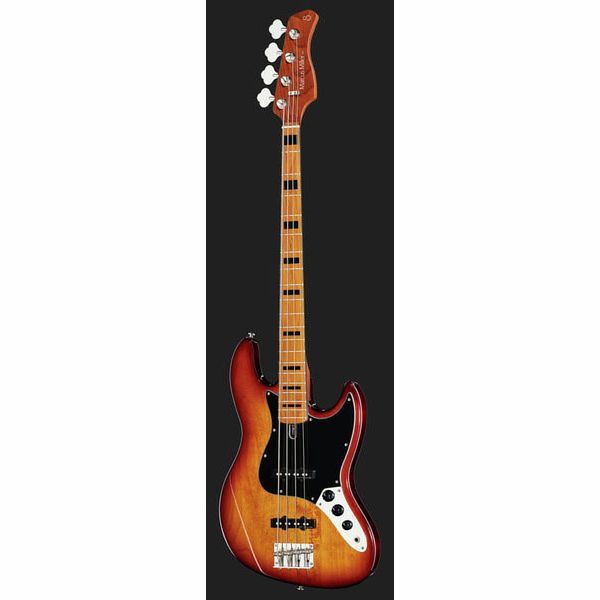
Fully passive setup: two volume knobs (one per pickup) and a single tone blender for both. No battery, no active EQ boost, no menu-diving.
If you’re coming from an active bass, this might feel limiting at first. But passive electronics are part of why this bass sounds so organic â it reacts to your amp and your playing dynamics instead of flattening everything with onboard EQ.
IMO this is the right call for a bass positioned as a classic-tone machine. If you want active electronics, Sire’s own V7 line covers that â but then you’re paying for something this bass was never trying to be.
Who Is This For?
Anyone who wants genuine Jazz Bass tone and feel without paying Fender or even Squier Classic Vibe money.
It’s also a smart second instrument for guitarists who occasionally get roped into playing bass â you’re not compromising on quality just because it’s not your main axe.
Gigging bassists on a budget should take this seriously too. Compare it against something like the Sire Marcus Miller M2 and you’ll see the V5 sits a rung higher thanks to that roasted maple neck and bone nut.
If you want a 5-string instead, Sire also sells the V5 in that configuration â worth a look if you need the low B for modern styles.
Worship bands and cover musicians are another obvious fit. You need reliability, classic tone, and something that won’t drift out of setup after a few humid gigs â the roasted maple neck actually helps here, not just cosmetically.
And if you’re a home recording nerd layering bass parts into mixes, the passive J-Bass tone is basically a „safe default” â it sits in a mix the way engineers expect a bass to sit, without extra EQ wrangling.
Worth a mention: if a P-Bass thump is more your thing than J-Bass snap, check out our Sire Marcus Miller P5 review â same brand, different flavor entirely.
Honest Niggles
The tuners are functional but nothing special â some owners upgrade them eventually, though it’s not urgent.
Poti (control knob) feel is a bit plasticky according to a few reviewers. Cosmetic gripe more than a functional one.
And because it’s a proper J-Bass body shape, it’s not the lightest instrument around. If you play long sets standing up, factor that in â though this is true of basically every Jazz Bass ever made, not just this one.
Some players compared it unfavorably to Sire’s own 5-string models in terms of outright tonal complexity. That’s a „compared to its own sibling” complaint though, not a „this bass is bad” complaint.
If none of that bothers you and you’re just weighing this against other budget four-strings, our Epiphone EB-3 review is a good contrast point â totally different tone profile, similar price bracket.
Specs at a Glance
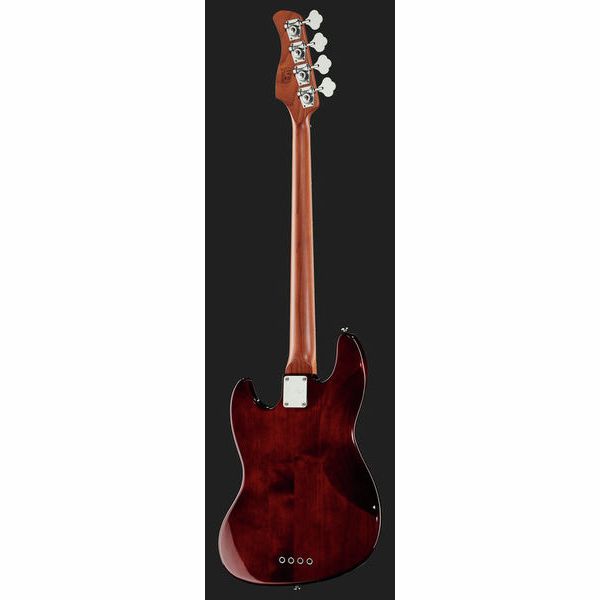
- Body: Alder
- Neck: One-piece roasted maple, C profile
- Fretboard: Roasted maple, 241mm radius
- Scale: 34″ (long scale)
- Nut: Bone, 38mm width
- Frets: 20 medium-small
- Pickups: 2x Marcus Vintage-J Revolution single coils
- Controls: 2x volume, 1x passive tone blender
- Hardware: Vintage-style bridge, chrome hardware
- Finish: Tobacco Sunburst
Final Verdict
The Sire Marcus Miller V5 does something a lot of budget instruments try and fail at: it doesn’t feel like a compromise.
It looks the part, plays the part, and â most importantly â sounds the part. The roasted maple neck and bone nut aren’t marketing fluff, they’re genuinely useful upgrades most brands hold back for pricier models.
If you want a no-nonsense passive J-Bass and don’t need active electronics or a 5th string, this is one of the smartest buys in its class right now. Compare it side by side with a Harley Benton PB-50 or a Warwick RockBass Streamer 4 and the V5 holds its own easily.
Bottom line: it embarrasses basses at three times its price, and that’s not hyperbole â that’s just what happens when a brand obsesses over price-to-performance instead of margins.
Try one before you rule it out. A lot of players walk in expecting „budget bass” compromises and walk out surprised there aren’t any real ones to find.