Watch It First
I get asked constantly what bass a total beginner should buy without feeling like they got ripped off. My answer, more often than not lately, is the Harley Benton MB-4. It’s a StingRay-shaped budget bass that shouldn’t sound this good for what it costs.
This isn’t a „good for the price” review with a wink and a nod. I mean it plays and sounds legitimately fine, full stop, and the price is just a bonus. That’s rare in this segment.
So let’s get into why this thing has a cult following on bass forums, what Harley Benton skimped on to hit that price, and whether it deserves a spot in your collection or as your very first bass.
Build and Materials
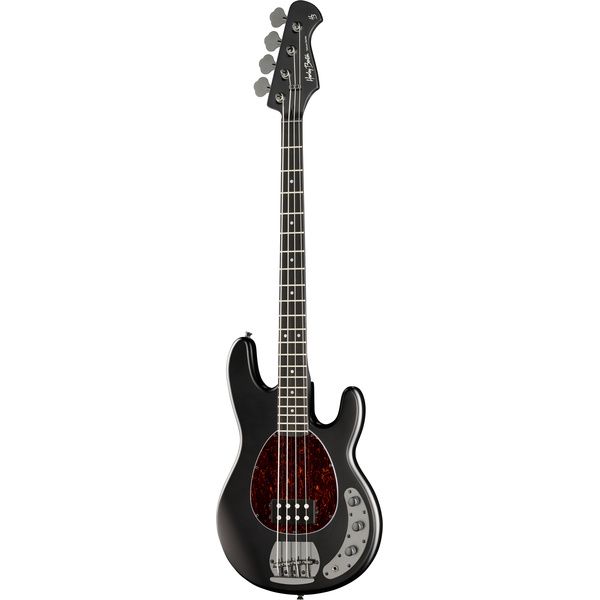
The MB-4 borrows its silhouette from the Music Man StingRay, and it’s not subtle about it. Poplar body, bolt-on maple neck, satin matte black finish. Nothing exotic here, but nothing offensive either.
The fretboard is what Harley Benton calls „Roseacer” – basically a roasted maple treated to look and feel like rosewood. It’s a cost-saving move but honestly it feels great under the fingers, smooth without being slippery.
Hardware
Diecast bridge, vintage-style black tuners, a double-action truss rod so you can actually dial in relief properly. This is where Harley Benton usually cheaps out on cheaper models, but the MB-4 hardware feels a notch above what you’d expect at this tier.
- 21 frets, 864mm (long) scale
- 42mm nut width, 350mm fretboard radius
- D-profile neck – fairly chunky but manageable
If you’ve played a Warwick RockBass Streamer 4, the build quality vibe is similar territory – budget brand punching above its actual price bracket.
Playability and Feel
This is a chunky neck. If you’re coming from a Jazz bass with a thin, fast profile, the D-shape here will feel like a jump. Give it a week.
Once you adjust, it’s genuinely comfortable. The frets are dressed well out of the box – no sharp edges digging into your palm during bends, which is a common failure point on budget instruments.
Balance on a strap is solid too, no neck dive, which matters more than people admit when you’re standing for a two-hour rehearsal.
Tone and Sound
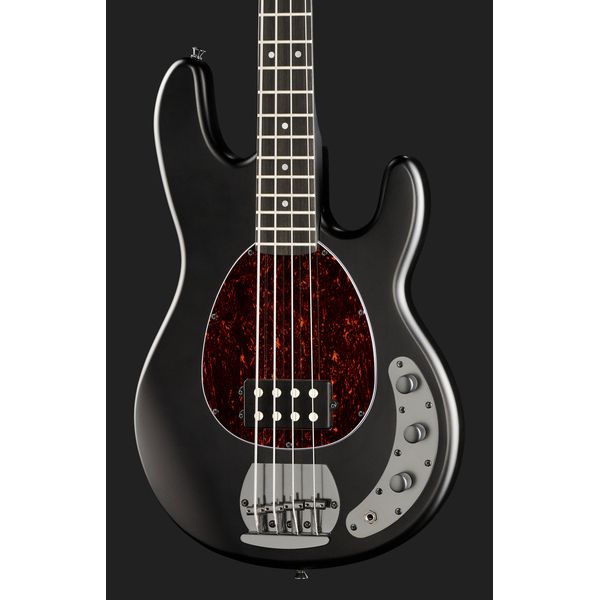
The humbucker with coil-split is the star of the show here. In humbucker mode you get a thick, aggressive growl that’s shockingly close to an actual StingRay – that punchy, honky midrange that cuts through a mix without any EQ help.
Split the coil and it thins out into something closer to a single-coil P-Bass tone – still usable, though obviously less dramatic than the humbucker mode. It’s a nice option to have rather than a killer feature on its own.
Passive electronics keep things simple: 2x volume, 1x tone. No active preamp means no battery to die on you mid-gig, which IMO is underrated for a beginner or backup instrument.
If you want a reference point for what „budget StingRay tone” should sound like, this is basically the benchmark – people compare newer releases against it constantly, the way they’d compare a P-Bass clone to an Epiphone EB-3.
Who Is This For
Beginners, obviously – it’s cheap enough that if bass isn’t for you, you haven’t lost much. But it’s also a legit option for gigging bassists who want a beater bass they’re not afraid to throw in a van.
If you’re chasing a specific vintage tone or need active electronics with a mid-boost, look elsewhere. This is a one-trick pony, but it’s a good trick.
Honest Niggles
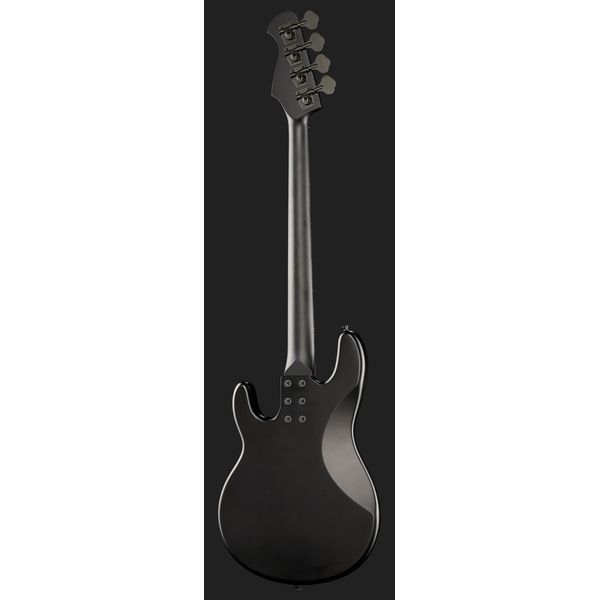
String-to-string volume balance is a known issue – some units ship with the B or E string sitting louder than the rest. It’s an easy fix with pole-piece adjustment, but you shouldn’t have to do that out of the box on any bass.
The stock strings are also nothing special – budget roundwounds that lose their zing fast. Budget a set of quality strings into your first upgrade if you keep it long term.
And yeah, the satin finish shows fingerprints and smudges more than a gloss finish would. Minor, but worth knowing before it arrives.
Specs at a Glance
- Body: Poplar
- Neck: Bolt-on maple, D-profile
- Fretboard: Roseacer, 350mm radius
- Scale: 864mm (long scale)
- Frets: 21
- Nut width: 42mm
- Pickup: Humbucker with coil-split
- Electronics: Passive, 2x Volume, 1x Tone
- Bridge: Diecast
- Hardware: Black, vintage-style tuners
- Strings (stock): .045″-.105″
- Finish: Satin black
How It Compares
People love to pit this against other sub-premium basses, so let’s actually do that instead of dancing around it.
Versus a real Music Man StingRay: obviously no contest on refinement, active electronics, or resale value. But tonally, in a mix, through an amp, most listeners won’t pick out the difference nearly as easily as you’d think. That’s the whole appeal.
Versus something like a Schecter Stiletto Stealth-4, the MB-4 is simpler and more old-school in its approach – no active EQ, no extended range, just one humbucker doing its job well. If you want more tonal flexibility for metal or extended-range playing, that’s the direction to look instead.
And compared to other Harley Benton basses in the same price bracket, the MB-4 tends to edge out the P-Bass and J-Bass style models for raw output and punch, mostly because of that humbucker doing the heavy lifting.
Setup Out of the Box
Thomann’s 55-point QC check actually matters here. Mine arrived with reasonable action and playable intonation, not perfect, but close enough that a beginner wouldn’t need to pay a tech before gigging it.
If you’re not confident doing your own setup work, budget for one basic pro setup after purchase regardless of which budget bass you land on. It transforms how any instrument in this price range feels.
Long-Term Ownership
A few years in, owners report the hardware holding up fine, no fret sprout, no neck warping issues that plague some ultra-budget guitars. Harley Benton’s QC has clearly improved compared to their early reputation.
The main upgrade path people take: a proper setup, maybe swap the stock strings, and leave everything else alone. That in itself tells you the core instrument is sound – you’re not fighting the design, just refining it.
Final Verdict
The Harley Benton MB-4 does something a lot of budget basses fail at: it doesn’t feel like a compromise while you’re playing it. The tone is punchy and usable for rock, funk, and pop. The build quality holds up to regular gigging, not just bedroom noodling.
Is it going to replace your StingRay if you already own one? No. But as a first bass, a backup, or a beater for the van, it’s hard to beat what you’re getting for the money.
If you’re comparing budget options across brands, it’s also worth checking how it stacks up against something like the Squier Sonic Bronco Bass or a Sire Marcus Miller P5 if your budget stretches a little further – but for pure value, the MB-4 remains a forum favorite for good reason.