Watch It First
Five-string basses used to mean spending serious money. Yamaha’s TRBX line has quietly been chipping away at that assumption for over a decade.
The TRBX 505 sits near the top of that budget-friendly range, with proper active electronics and a genuinely sleek profile.
Can a bass at this price actually deliver a usable low B string and real tonal range? Let’s dig in.
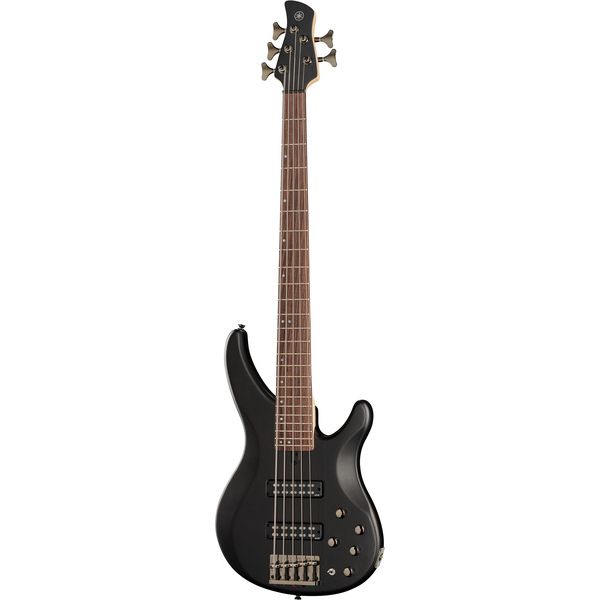
Build and Materials
Weight is well managed too — five strings can easily mean a heavier instrument, but Yamaha kept this one comfortable enough for a full night on a strap.
Mahogany body, a 5-piece maple/mahogany bolt-on neck, and a rosewood fretboard. That laminated neck construction adds stability, which matters even more on a 5-string carrying extra string tension.
24 frets give you real range, and the 43mm nut width keeps spacing manageable even with the extra low B string in the mix.
The translucent finish shows off the wood grain nicely too — a small detail, but it makes this bass look considerably more expensive than it is.
The mahogany body and 5-piece maple/mahogany neck combo gives it a fuller, warmer resonance than you’d expect from a bass at this price.
Hardware
Die-cast tuners keep the low B in tune reliably, which matters more on a 5-string than people expect — a wobbly low string ruins the whole point of having it.
Black chrome Yamaha hardware throughout. Reviewers do mention the fret edges could be a touch smoother, but nothing that affects playability in practice.
Playability
The B-string tension feels tighter and more defined than on a lot of budget 5-strings, so you’re not fighting a floppy, undefined low end when you dig in.
The slim neck profile makes the jump from 4 to 5 strings less intimidating than you’d think — your fretting hand adjusts faster than your picking hand does.
Despite the extra string, this doesn’t feel like an unwieldy plank. The neck profile stays comfortable and the overall weight is well managed.
Owners consistently highlight how easy this is to adapt to if you’re moving from a 4-string for the first time.
String spacing is tight enough for comfortable fretting but not so tight that slap technique becomes a fight.
Tone
Two Yamaha Alnico humbuckers feed a 3-band active preamp with volume, balance, bass, mids, and treble controls.
An active/passive switch means you’re never stuck if a battery dies mid-set — flip it over and keep playing.
One reviewer specifically praised how the preamp boosts signal without adding noise, which matters if you’re running pedals or a budget audio interface. That’s a genuinely useful, less commonly mentioned detail.
Why the Fifth String Actually Matters
Modern metal and djent players get real practical use out of that low B for matching down-tuned guitars without switching basses.
Worship and gospel bassists lean on it constantly too — a lot of that genre’s low-end vocabulary assumes a five-string is on hand.
If you mostly play standard-tuned rock or pop, you may rarely touch that low B, in which case a 4-string covers the exact same ground for less complexity.
It also holds its own in a home studio setup — the humbucker’s output is hot enough to drive an interface cleanly without needing extra gain stages.
Who Should Buy This
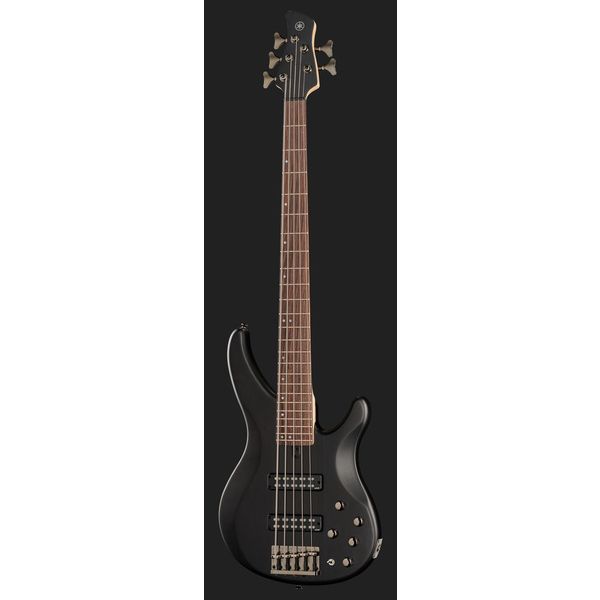
It’s also a sensible pick for a working bassist who needs one instrument to cover both standard gigs and the occasional low-tuned set without owning two basses.
Anyone making the jump from 4-string to 5-string for the first time will find this an easy, non-intimidating entry point.
It also works well across genres — metal, rock, jazz, and everything in between, according to owner reviews.
If a wider neck and an extra string sound like more hassle than benefit to you, there’s no shame in staying on 4 strings — plenty of great bassists never touch a 5.
Players who’ve hit a ceiling on 4-string range and keep wishing for a couple more low notes are the obvious audience here.
If you specifically want passive-only simplicity, there are cheaper options out there. This bass is built around its active electronics being a selling point.
Alternatives to Consider
Against Ibanez’s budget 5-string offerings, the Yamaha tends to win on overall fit and finish, while Ibanez sometimes edges it on electronics flexibility — it comes down to what you prioritize.
Stepping up to Yamaha’s own higher TRBX tiers gets you upgraded pickups and hardware if this one leaves you wanting more once you’ve outgrown it.
If four strings are still on the table, the Yamaha BB734A gives you a different pickup layout from the same brand.
For a different flavor of active tone, the Warwick RockBass Streamer 4 and Schecter Stiletto Stealth-4 are both worth cross-shopping.
Honest Niggles
Fret edges could be finished a bit more smoothly according to a handful of reviews — check for any rough spots when your unit arrives.
This model has been around since 2013 without a major redesign, so don’t expect cutting-edge features — just a proven, reliable formula.
The wider neck needed for 5 strings takes real adjustment time if you’re coming straight from a 4-string — budget a few weeks of practice before a gig, not a few days.
Stock availability can occasionally run a few days out, so check lead times before you count on having it for a specific gig.
As always with an instrument shipped from overseas, a setup check and fresh string action adjustment from a local tech is worth doing before it sees a stage.
Specs at a Glance
- Body: Mahogany
- Neck: 5-piece maple/mahogany, bolt-on
- Fretboard: Rosewood
- Scale: 34″ (long scale)
- Frets: 24
- Pickups: 2x Yamaha Alnico humbuckers
- Electronics: Active 3-band EQ, active/passive switch
- Hardware: Black chrome
Final Verdict
The Yamaha TRBX 505 makes the jump to 5-string genuinely approachable, both in price and in playability.
Solid electronics, a comfortable neck, and enough tonal range to cover multiple genres make it an easy recommendation for players expanding their range.
It’s not flashy or groundbreaking, but it’s a genuinely dependable workhorse that’s stayed relevant for over a decade for good reason.
For anyone ready to make that jump, this is a genuinely low-risk, well-built way to do it.