Watch It First
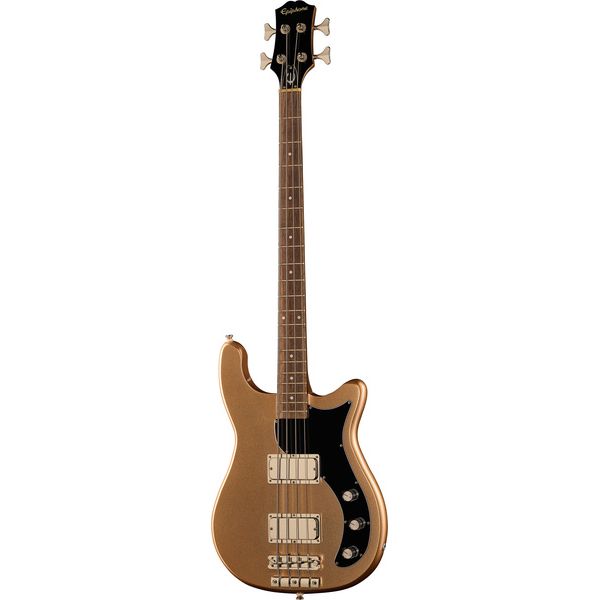
That „batwing” body shape looks like nothing else on the bass wall. It’s not a gimmick either – the Epiphone Embassy Bass has real 60s pedigree behind that asymmetric double cutaway.
Epiphone relaunched it a few years back after decades out of production, and it quietly became one of the more interesting budget basses nobody talks enough about.
I’ve been playing the Smoked Almond finish. Here’s the full rundown.
That Batwing Shape – Function, Not Just Looks
The asymmetric double cutaway isn’t just there to turn heads. It genuinely improves upper fret access and balances nicely on a strap thanks to where the horn sits.
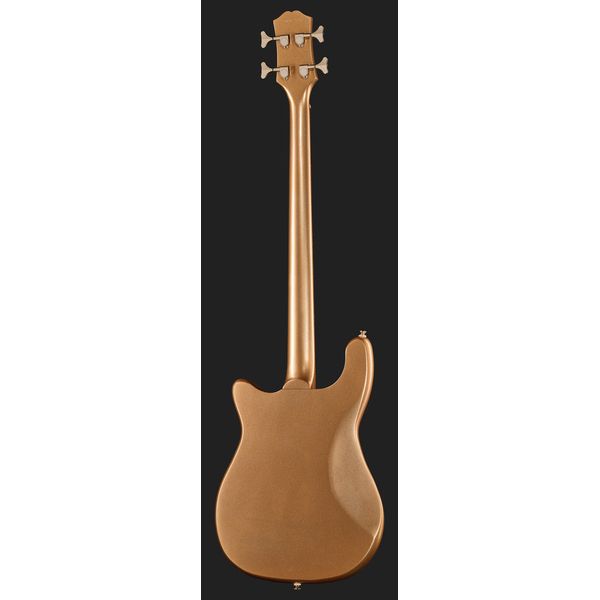
Solid mahogany body, mahogany neck – a fairly heavy tonewood combo that gives this bass real weight in the low end before you even touch the EQ.
A Bit of History
The original Embassy dates back to the 1960s Epiphone catalogue, and it disappeared for a long stretch before Epiphone brought it back in 2021 in a handful of finishes.
That vintage connection matters here – this isn’t a modern design wearing a retro paint job, it’s an actual old shape done properly.
Finish Options and Which One to Pick
The Embassy comes in a handful of finishes, from Graphite Black to Sparkling Burgundy and Wanderlust Green Metallic alongside this Smoked Almond Metallic.
They’re all cosmetic differences only – same body, same electronics, same hardware. Pick whichever one matches your stage look, there’s no tonal trade-off between colours.
Smoked Almond is the one I’d lean toward if you want something that photographs well under stage lighting without looking like every other sparkle finish on the market.
Pickups and Controls
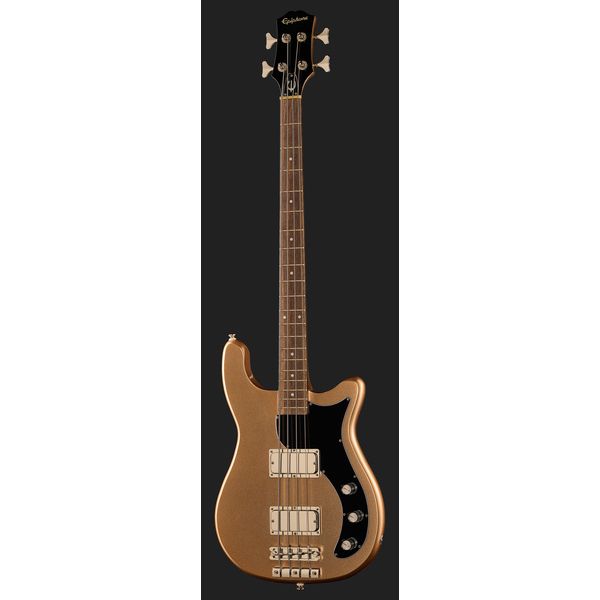
Two Epiphone ProBucker Bass 760 humbuckers, with volume, blend, and a single tone control. Simple, passive, no battery to forget.
The blend knob is the fun part – it lets you dial between neck and bridge pickup rather than just flipping a switch, so you get every shade in between too.
How It Sounds
Fat is the word Thomann’s own reviewers keep reaching for, and it’s accurate. There’s a real Thunderbird-adjacent growl here, similar territory to the Epiphone EB-3 but with more low-mid punch thanks to the bigger body.
Owners on Thomann mention it covering everything from clean vintage tones to fuzzed-out distorted lines convincingly – more versatile than the „one trick vintage pony” reputation these shapes sometimes get.
It’s not an active bass, and that’s clearly part of the appeal for a lot of owners – no preamp hiss, no dead battery mid-set, just honest passive tone.
Amp Pairing
This bass rewards a warmer amp setting – think a touch of low-mid boost rather than a scooped modern EQ curve. It already has plenty of low end on tap.
Through a fuzz pedal it genuinely comes alive – several owners specifically mention this, and it tracks with the mahogany body giving a thick foundation for dirt to sit on top of.
Flatwound strings push it further into that 60s territory if that’s the sound you’re chasing, while roundwounds keep it a bit more modern and defined.
Playability
Medium C neck profile, 34″ scale, Indian laurel board with 20 medium jumbo frets. Nothing unusual here – it plays like a comfortable, well-set-up standard bass.
Reviewers consistently mention the factory setup being spot-on out of the box – straight neck, good action, accurate intonation. Not something every budget import can claim.
Who Should Buy This
Players who want a distinctive look and a genuinely different vintage tone from the usual Precision/Jazz shapes, without spending Fender Custom Shop money.
If you want modern slap tone as your main priority, this isn’t the pick – check our best bass guitars for slap roundup instead for something more suited to that.
Already own something like a Schecter Stiletto Stealth-4 for modern gigs? The Embassy makes a great second bass for anything needing vintage character.
The Honest Niggles
One owner review flagged build quality as „could be better” – nothing specific broke, just a sense that fit-and-finish isn’t quite Gibson-adjacent despite the styling.
Mahogany body plus mahogany neck means this isn’t the lightest bass on the rack. If you’re playing 3-hour sets standing up, factor that in.
No case included – budget for a gig bag if you don’t have a spare lying around already.
How It Stacks Up
Against the Warwick RockBass Streamer 4, both chase a vintage vibe, but the Embassy’s mahogany body pushes further into fat, dark territory while the Streamer stays brighter and punchier.
Against our recent Warwick RockBass Star Bass review, it’s a similar „distinctive vintage shape” pitch, but the Embassy is solid body rather than semi-hollow – tighter, more focused low end, less air.
If you’re deciding between this and the Ibanez BTB605, you’re really choosing between two totally different eras of bass design philosophy.
Specs at a Glance
- Body: Solid mahogany, asymmetric double-cutaway „batwing” shape
- Neck: Mahogany, Medium C profile
- Fingerboard: Indian laurel, 20 medium jumbo frets
- Scale: 34″ (864mm)
- Nut width: 41.3mm
- Pickups: 2x Epiphone ProBucker Bass 760
- Controls: Volume, Blend, Tone
- Hardware: Historic Bass Tuneomatic bridge, Historic Claw tailpiece
Owner ratings on Thomann sit around 4.6 out of 5 across multiple reviews, which is a solid track record for a bass this distinctive – it’s clearly winning over more than just the curious.
Final Verdict
The Embassy Bass earns its keep on tone and looks alone – a genuinely distinctive shape with a fat, dark, passive tone that most budget basses simply don’t offer.
It’s not going to be your metal or slap bass, and it’s not the lightest thing to gig with. But as a characterful, vintage-flavoured workhorse, it’s genuinely one of the more interesting basses at this price. Resale on these tends to hold up too – the shape gets noticed, and instruments that stand out on a used-gear listing tend to move quicker than yet another Jazz Bass clone.
If you’ve been chasing that fat Thunderbird-adjacent growl without the Thunderbird price or weight, the Embassy deserves a proper look.