Watch It First
Headless basses used to be a punchline – the stuff of 1980s prog and slightly awkward looking gear. But quietly, they’ve become one of the smartest ergonomic choices you can make, and the Cort Space 4 is the bass making that argument better than almost anything at its price.
No headstock means no neck dive, less weight, and an instrument short enough to fit in the boot of a small car. One owner literally bought it because it fits diagonally in his hatchback. That’s the kind of practical win nobody puts on a spec sheet.
But is a headless Cort a serious instrument or a gimmick? I dug through the specs, the demos and every owner review I could find. Here’s the honest rundown.
Why Headless Actually Makes Sense
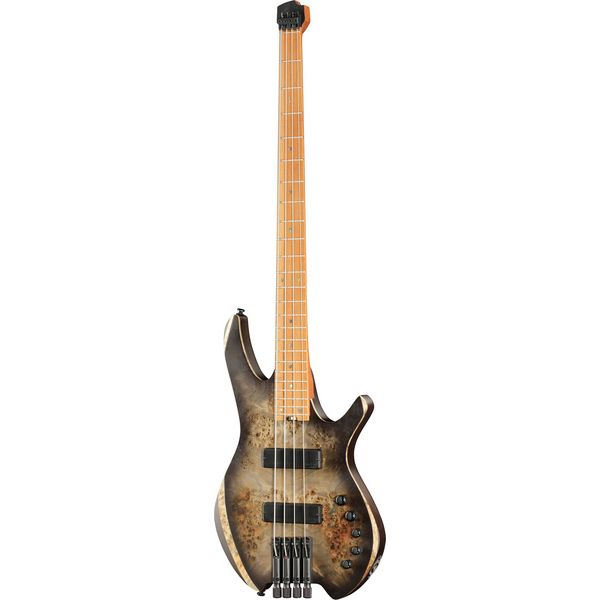
The whole point of a headless design is balance. Move the tuners from the headstock to the bridge and the instrument stops trying to nosedive off your strap. The Space 4 hangs dead level, sits tight to your body, and weighs noticeably less than a conventional bass. If you’ve ever finished a long set with an aching fretting shoulder, this is the fix nobody told you about.
It’s also just easier to live with. Shorter overall length means it fits in overhead lockers, small cars and cramped stages. For a working bassist who’s constantly hauling gear, the Space 4 removes a dozen tiny daily annoyances. That practicality is exactly why headless designs are quietly taking over, and why a starter like the ones in my best first bass guitars guide can feel clunky by comparison once you’ve gone headless.
The Spec Sheet Is Ridiculous for the Money
Here’s where it gets silly. The Space 4 has a 7-piece roasted maple, walnut and purple heart neck-through, a poplar burl top, a roasted maple fingerboard with abalone inlays, and – the headline – two genuine Bartolini MK-1 humbuckers with a 3-band EQ. That’s boutique-tier hardware on a bass that costs less than many people spend on a single pickup upgrade.
Roasted maple is a lovely touch too. Torrefying the wood makes it more stable and less reactive to humidity, so the neck stays put through seasons and gigs. Combine that with the neck-through build and you get sustain for days and a tight, even response across the fretboard.

How It Sounds and Plays
With dual Bartolinis and a blend control, the Space 4 covers a huge range. Favour the neck pickup for a fat, round thump; roll to the bridge for growl and slap articulation. The active 3-band EQ lets you shape everything at the bass, and the volume knob’s push/pull adds another layer of flexibility. Slap players in particular will find plenty to love here – it holds its own against the dedicated machines in my best bass guitars for slap roundup.
The C-profile roasted maple neck with a flattish 15.75-inch radius is a fast, modern feel that suits technical players. Owners consistently rate the playability at the top of the class, and the 24 medium-jumbo frets give you room to roam. It’s the kind of bass that flatters your technique rather than exposing it.
The Honest Niggles
Headless does come with one practical catch: you’re tied to double-ball-end strings (or need an adapter for standard sets), so restringing options are a bit narrower and you can’t just grab any pack off the shelf. A few owners also see the stock components as a starting point rather than an endpoint – one noted it’s an ideal base for upgrades. And of course, some players simply don’t like how a headless bass looks. That’s fair; it’s a matter of taste, not quality.
The Specs That Matter
- Design: Headless, neck-through-body
- Body/Top: Maple with poplar burl top
- Neck: 7-piece roasted maple/walnut/purple heart
- Fretboard: Roasted maple, 24 medium-jumbo frets, abalone inlays
- Scale: 34″ long scale, 40 mm nut
- Pickups: 2x Bartolini MK-1 humbuckers, active 3-band EQ
- Controls: Volume (push/pull) + blend
- Extras: Black hardware, gig bag included
Who Should Buy It?
This is aimed squarely at the practical, gigging bassist who’s tired of lugging and aching – and at the tone chaser who wants boutique parts without the boutique price. The obvious rival is the Marcus Miller M6 Headless, part of the value family I broke down in are Sire Marcus Miller basses good. The Cort counters with that neck-through build and genuine Bartolinis, which is a serious punch at the price.
It also makes a superb second bass – the one you graduate to after a starter like a Squier Sonic Precision Bass or a Harley Benton Beatbass, once you know exactly what you want from an instrument and comfort has climbed up your priority list.
The Travel Bass You Didn’t Know You Wanted
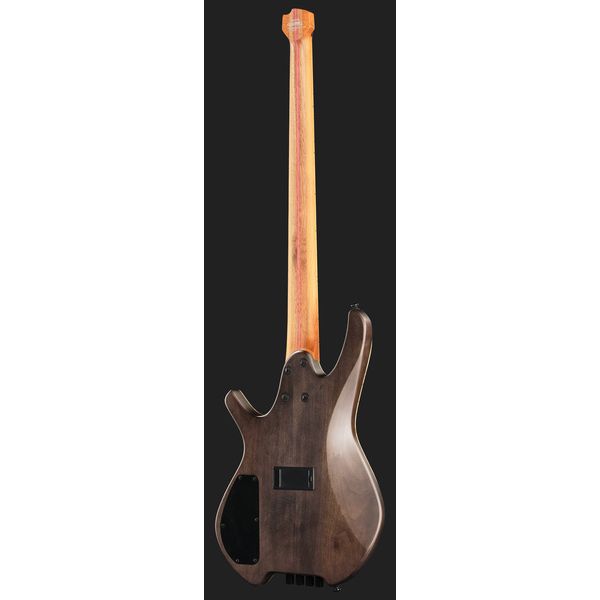
One underrated angle: the Space 4 is a brilliant travel and small-space instrument. Because it loses the headstock, the whole bass is shorter than a standard four-string, so it slips into overhead lockers, tight studio corners and the boot of a small car without a fight. Flatmates, tour vans and cramped bedrooms all become a lot more manageable. Cort even includes a gig bag, so you’re ready to grab and go straight out of the box. For a player who gigs midweek, records at weekends and doesn’t have a dedicated music room, that compactness quietly earns its keep every single day – and it’s the sort of practical benefit that never shows up in a demo video but matters enormously once you actually live with the instrument.
Verdict
The Cort Space 4 is the ergonomic bass nobody talks about, and that’s a shame. Neck-through construction, real Bartolini pickups, roasted maple and a genuinely comfortable headless design add up to an instrument that has no business being this affordable.
Yes, the double-ball-end strings are a small faff, and no, the headless look isn’t for everyone. But if you can get past the styling, you’re getting a seriously capable, seriously comfortable bass that punches miles above its money. Cort has quietly built one of the best value instruments on the market again – go try one before everyone else catches on.