Watch It First
Let’s be honest – most of us don’t expect a bass loaded with Bartolini pickups and a Hipshot bridge to wear a Cort badge on the headstock. That’s usually flagship money. The Cort A4 Plus FMMH clearly didn’t get the memo.
It’s a neck-through, active/passive, flamed-maple-topped bass that reads like a spec sheet borrowed from something twice the price. And yet here it sits, parked comfortably in the mid-range where most of us actually shop.
So is it too good to be true, or is Cort quietly out-repping the big names again? I dug through the specs, the demos and a stack of owner reviews. Here’s the honest rundown.
A Spec Sheet That Shouldn’t Add Up
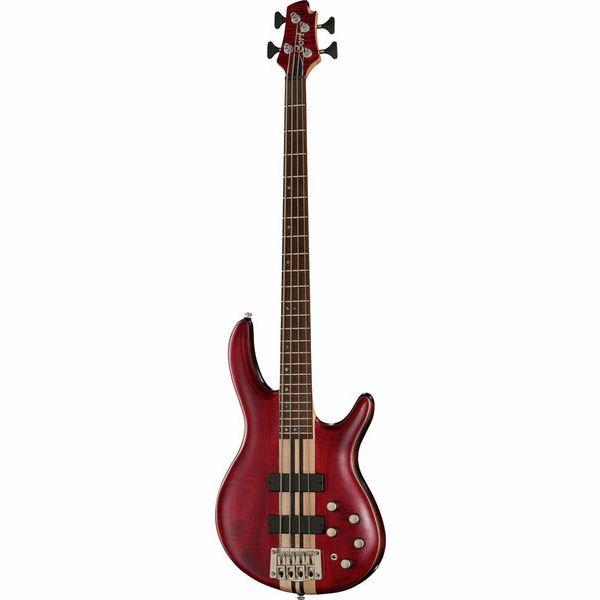
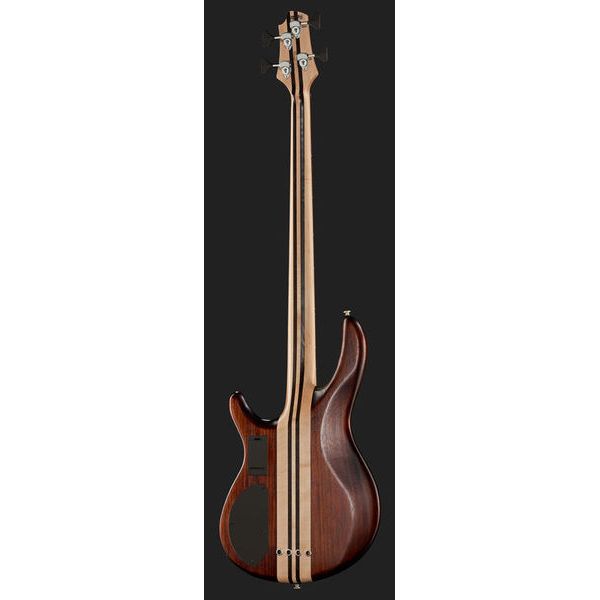
Start at the neck. The A4 Plus uses a 5-piece maple and wenge neck-through-body design, which is a big deal on a bass at this price. Neck-through means the wood runs the full length of the instrument, so string energy isn’t fighting a bolt-on joint. The result is sustain that just hangs there, and an upper-fret reach that feels genuinely unobstructed.
On top you get a flamed maple top over a mahogany body, with a Panga Panga fretboard riding 24 frets. Panga Panga is a wenge cousin – dense, snappy, and it gives the top end a bit of grid-like clarity. If you’ve only ever played bolt-on P and J basses, the whole thing feels like a step up in build class the second you pick it up. For context on where the budget end sits, my best first bass guitars roundup is a useful yardstick.
Those Bartolini Pickups Are the Headline
The heart of it is a pair of Bartolini MK-1 humbuckers feeding an active MK-1 preamp with 3-band EQ. Bartolini is a name you normally see on high-end boutique instruments, so having them factory-fitted here is a proper flex. Dual humbuckers plus a blend knob means you can dial anything from a fat, throaty bridge-and-neck growl to a scooped, hi-fi modern slap tone.
And it slaps well – that flamed maple and wenge combination loves aggressive right-hand work. If slap is your thing, it’s worth reading how it stacks up against dedicated slap machines in my best bass guitars for slap guide. The 3-band EQ also means you can shape your sound at the bass rather than begging your amp to fix it, which is a quiet luxury live.
How It Actually Plays
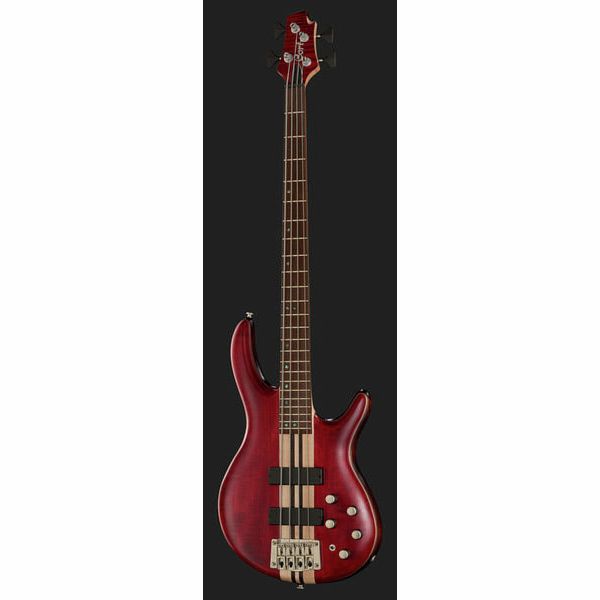
Hardware-wise Cort didn’t cheap out. You get Hipshot Ultralight tuners and a Hipshot Trans Tone Dual Access bridge, both of which are the sort of parts bassists usually upgrade to, not away from. The Ultralight tuners in particular help balance the instrument so it doesn’t dive at the headstock.
The thin open-pore lacquer is a nice touch too – it lets the back of the neck breathe so your thumb isn’t skating on a glossy, sticky finish. Owners consistently call the playability out as the standout, and that tracks with the neck-through design. It’s the kind of bass that flatters your technique rather than exposing it, a bit like the friendly, forgiving vibe I noted on the Harley Benton Beatbass – only several rungs up the ladder.
The One Catch Worth Knowing
Here’s the honest niggle, and it’s a real one. Several owners point out that the passive mode still needs the 9V battery to work. That mini toggle switches the EQ out of circuit, but it isn’t a true passive bypass – if your battery dies mid-set, flicking to passive won’t save you. So keep a spare 9V in the gig bag and you’ll never think about it again. Forewarned is forearmed, FYI.
The Specs That Matter
- Body: Mahogany with a flamed maple top
- Neck: 5-piece maple/wenge, neck-through-body
- Fretboard: Panga Panga, 24 frets, dot inlays
- Scale: 34″ long scale, 38 mm nut
- Pickups: 2x Bartolini MK-1 humbuckers
- Electronics: Active MK-1 preamp, 3-band EQ, active/passive mini switch
- Hardware: Hipshot Ultralight tuners, Hipshot Trans Tone bridge, platinum finish
- Finish: Thin open-pore lacquer
Who Is It Actually For?
If you’re a gigging or recording bassist who wants boutique parts without the boutique invoice, this is squarely aimed at you. It’s also a superb second bass – the one you graduate to after a starter instrument like a Squier Sonic Precision Bass when you know what you want and you’re tired of compromising.
The obvious rival is the Sire Marcus Miller camp, which plays a very similar value game – I broke that family down in are Sire Marcus Miller basses good. Where the Cort pulls ahead for a lot of players is that neck-through build and the genuine Bartolinis. If you’re still weighing up whether to spend here or stay cheap, my budget beginner picks lay out the trade-offs.
Tone Range and Long-Term Value
What surprised me most reading through owner reviews is how many players use this as their only bass. That’s telling. Between the two Bartolinis, the blend knob and the 3-band EQ, you can cover funk, rock, metal and jazz without touching your amp settings. Roll off the treble and favour the neck pickup and it does a convincing old-school thump; open it all up and it turns into a bright, aggressive modern machine. Few basses at this price are this genuinely versatile.
There’s a resale angle too. Cort quietly builds instruments for a lot of the big brands, so the underlying quality is well known to people in the know – which means a used A4 Plus holds its value better than the badge might suggest. The open-pore finish also ages gracefully rather than showing every swirl mark, and the Black Cherry and cherry-red flame tops genuinely look a class above the price bracket. It’s the rare mid-priced bass you buy once and simply stop thinking about.
Verdict
The Cort A4 Plus FMMH is one of those instruments that makes you slightly suspicious of the price tag – in a good way. Neck-through construction, real Bartolini pickups, a 3-band active preamp and Hipshot hardware is a combination that has no business being this affordable.
Yes, the not-really-passive mode is a quirk, and no, the flamed maple isn’t going to fool anyone into thinking it cost five grand. But as a do-everything bass that punches miles above its money, it’s a seriously easy recommendation. Cort has been the industry’s best-kept secret for years, and the A4 Plus is exactly why.