Watch It First
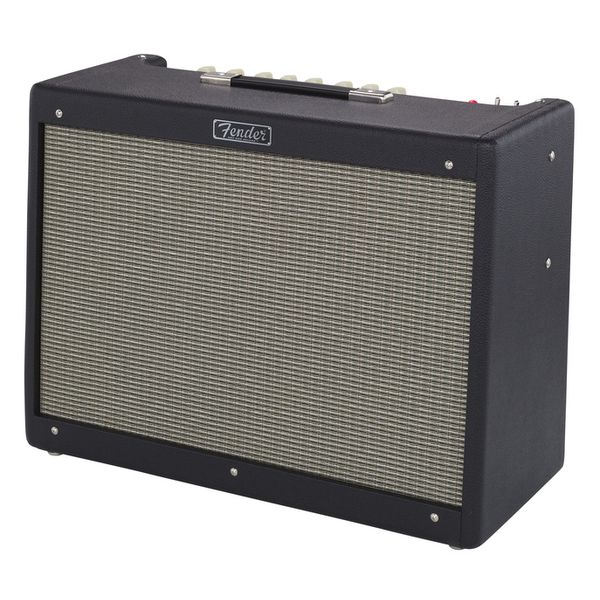
The Hot Rod Deluxe has been the „default gigging amp” answer for so long it’s basically furniture at this point. Every backline, every rehearsal space, every forum thread eventually lands here.
The Mark IV version cleaned up some long-standing complaints, so I spent real time with one to see if it’s still the obvious answer in 2026.
Short version: mostly yes, with a couple of caveats worth knowing before you drop this kind of money.
What’s New in the Mark IV?
Fender didn’t reinvent anything here – this is still a 40W, 1×12 combo built around three 12AX7 preamp tubes and a pair of 6L6 power tubes. What changed are the details that annoyed people for two decades.
The bias circuit is easier to service, the reverb tank is better isolated from cabinet rattle, and the drive channel’s gain structure is a bit more usable at lower volumes than earlier Hot Rods. Small stuff, but it adds up over a few years of ownership.
Tone – Where This Amp Actually Lives
Clean Channel
The Normal channel is classic Fender – scooped, sparkly, plenty of headroom before it breaks up. Roll the volume up past 6 or 7 and you get a nice edge-of-breakup thing that takes pedals really well.
Drive and More Drive
This is where opinions split. The Drive channel is genuinely good rock crunch – not boutique-amp refined, but honest and useable. More Drive pushes further into hard rock territory without turning to mush, though it never quite gets into proper high-gain metal tones.
If that’s what you need, you’re pairing this with a pedal – something like a Fender Pugilist Distortion in front does the job nicely – or looking at a different amp entirely.
The built-in reverb and tremolo (via the included footswitch) are both usable in a way a lot of combo amps at this price point aren’t – not studio-perfect, but good enough that you won’t reach for a pedal to replace them.
Build and Practicality
At 18.6kg it’s not light, but it’s manageable for one person to load into a venue. The cabinet is solid pine rather than particleboard, which matters over years of gigging – Fender combos in this line have a reputation for surviving genuinely rough handling.
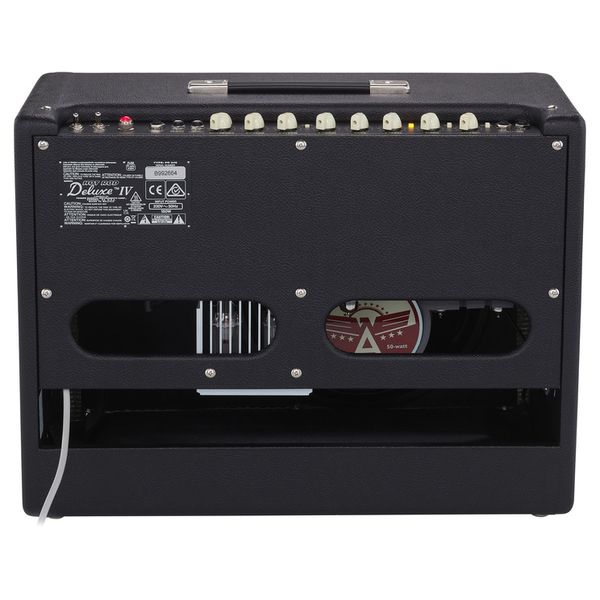
Two speaker jacks (internal and external) plus a proper effects loop, via Preamp Out and Power Amp In, mean you can run this into a bigger cab, or drop a time-based pedal after the preamp stage where it belongs, rather than in front where delay and reverb get chewed up by the drive channel.
It ships with a 2-button footswitch and a cover, which some competitors still charge extra for.
Who’s This Actually For?
Bar-band and function guitarists who need genuine stage volume, real headroom, and an amp that survives being thrown in a trailer every weekend. If your gigs are actually loud – drummer who doesn’t know the meaning of „8,” bassist running a full stack – 40 watts of tube headroom earns its keep here in a way bedroom amps like the Orange Micro Terror or a Roland Cube-10GX just can’t.
If you’re mostly playing at home or in small rooms, this is probably overkill – even at low volumes it doesn’t fully open up the way it does at gig volume, and you’ll get more character per watt from something like the Blackstar TV-10 A or a Fender Blues Junior IV.

The Niggles
The stock speaker is fine, not exceptional – a lot of owners swap it for a Celestion Vintage 30 or similar within the first year. The drive channels, while usable, still sound distinctly „solid-state-adjacent” at high gain compared to something boutique like the Harley Benton Tube 5 Celestion. And 40 watts of clean headroom means you will be cranking this uncomfortably loud in small rooms to get natural tube breakup.
None of this is surprising for the price point. It’s a working amp built to be reliable and loud, not a studio darling.
Specs at a Glance
- 40W tube combo amp, 1×12″ Celestion Type A speaker
- 3 channels: Normal, Drive, More Drive
- Tubes: 3x 12AX7 preamp, 2x 6L6 power
- Controls: Presence, Reverb, Master Volume, Middle, Bass, Treble, Drive, Drive Volume, Bright Switch
- 2 speaker jacks (internal/external), Preamp Out / Power Amp In effects loop
- Solid pine cabinet construction
- Dimensions 47.6 x 59.7 x 26.7cm, weight 18.6kg
- Includes 2-button footswitch and padded cover
How It Compares
Within Fender’s own line-up, the Hot Rod Deluxe IV sits above the Blues Junior IV in wattage and channel count, but below the Hot Rod Deville in speaker size and raw stage volume. It’s the sweet spot for most working guitarists – loud enough for a real gig, still small enough to carry solo.
Against non-Fender rivals in the same price bracket, it holds up mostly on reputation and parts availability – tubes, speakers, and footswitches for this amp are everywhere, which matters a lot the day something finally blows. That’s less exciting than tone chat, but it’s a real reason so many bands keep buying the same amp decade after decade.
Final Verdict
The Hot Rod Deluxe IV remains the safe, sensible choice for gigging guitarists who need loud, reliable tube tone without boutique pricing. It’s not the most exciting amp on the market, but it does exactly what it says on the tin, every single time.
It’s also worth noting this is squarely a workhorse rather than a bedroom amp – if you only ever play at low volumes, you’re leaving most of what makes it good on the table. Load it into a proper stage or a loud rehearsal room and it makes a lot more sense.
If you need more headroom and stage volume, this earns its reputation. If you’re playing smaller rooms, have a look at our reviews of the Fender Blues Junior IV or the Harley Benton Tube 5 Celestion first – you might not need all 40 watts.