Watch It First
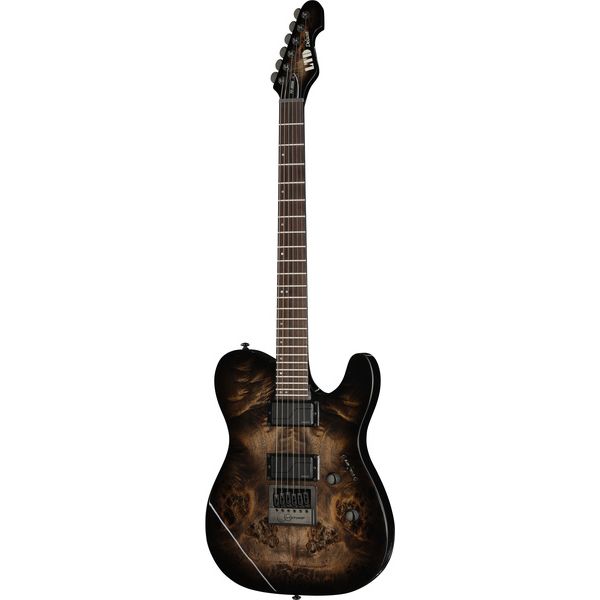
A Telecaster shape with 24 stainless frets, Fishman Fluence pickups and an Evertune bridge is not really a Telecaster any more. It is a Telecaster-shaped weapon.
ESP have been doing this for years and the TE-1000ET is the most fully loaded version of the idea they currently sell.
So the question is not whether it is good. It obviously is. The question is whether all that hardware actually earns its keep.
The Bits That Matter
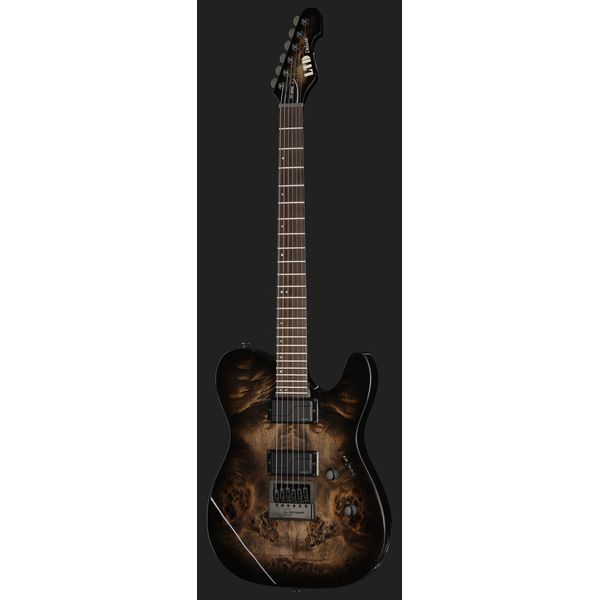
Mahogany body with a burl poplar top, three-piece maple set neck, ebony fingerboard. That is a properly grown-up spec for a guitar in this bracket.
Scale is 648 mm, the neck profile is Thin U, and the fingerboard radius is a very flat 350 mm. Translation: it wants you to play fast and it does not want you fighting the fretboard while you do it.
24 extra-jumbo stainless steel frets. Stainless is one of those upgrades that sounds like marketing until you own a guitar with it and then never want to go back.
The Evertune bit
Model F Evertune bridge. If you have never used one, the short version is that it keeps each string at a fixed tension so the guitar simply does not go out of tune.
Not „stays in tune well”. Does not go out of tune. Bend a note, dig in hard, change the weather – the pitch holds.
It is a bit of a mind-bender at first because you can lean on a chord and nothing shifts. Recording with one is borderline cheating.
The trade-off is that it is fiddly to set up and you lose the ability to do subtle behind-the-bridge stuff. Fine for metal. Annoying if you are a country player.
How It Plays
The Thin U neck is thinner than the name suggests. It is not a baseball bat with the corners knocked off – it is genuinely slim.
Combined with the flat radius and the stainless frets, it is one of those necks where your hand just goes wherever you point it.
Upper fret access is good but not perfect. It is still a single-cut-ish T shape, so the heel is there. Not a problem, just not an LTD M-1000HT level of reach.
Weight is moderate. Mahogany plus a set neck means it is not featherlight, but it balances well on a strap and does not dig into your shoulder over a long set.
How It Sounds
Fishman Fluence Modern set – Alnico in the neck, Ceramic at the bridge. Push-pull on the tone knob gets you the second voicing.
The bridge in voice one is tight, aggressive and almost brutally clear. Palm mutes come out defined rather than mushy, which is the whole point.
Voice two softens things and adds a bit of vintage-ish grain. It is genuinely useful, not a gimmick setting.
The neck pickup is where I was most surprised. Fluences have a reputation for being sterile and this one absolutely is not – clean tones are round, and lead tones sing without going honky.
Is it versatile? Within its lane, yes. But it is a metal guitar. Do not buy this expecting the twang of a Vintera III 50s Telecaster.
The Honest Niggles
First, the Evertune is not for everyone. If you never touch the tuners anyway and you like feeling the string give under your fingers, you may find it weirdly clinical.
Second, the burl poplar top is a lottery. Some are stunning, some are muddy and forgettable. Buy from photos of the actual guitar if you can.
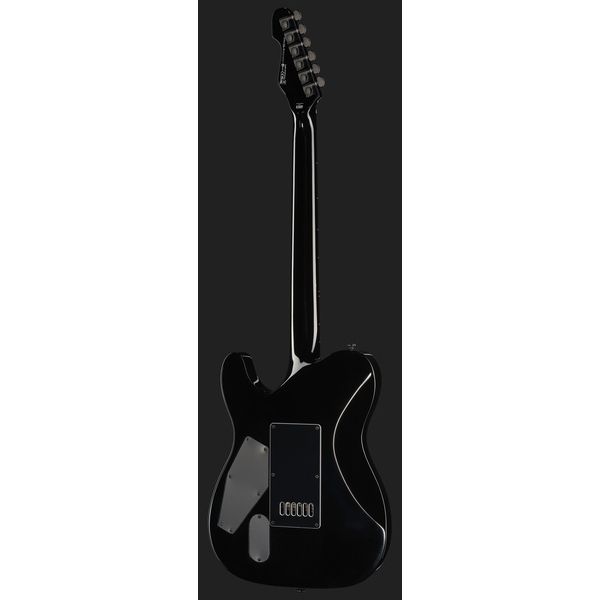
Third, the neck pickup route means the Fluence battery lives inside. Yes, it lasts ages. Yes, it will still die on the one night you forgot to check.
And fourth, this is not cheap. It sits well above the LTD EC-256 and comfortably above the LTD TE-200. You are paying for the hardware.
Who Is It Actually For?
Studio players. Anyone tracking a lot of rhythm guitar who is sick of retuning between takes.
Down-tuners. Evertune plus stainless frets plus a 648 mm scale handles drop tunings without the strings turning to spaghetti.
And gigging metal players who want one guitar that never lets them down. This is basically that.
If Evertune specifically is the appeal but the budget is not, the Schecter Banshee Mach 6 Evertune is the obvious alternative to compare against.
Specs at a Glance
- Body: mahogany with burl poplar top
- Neck: 3-piece maple, set-in, Thin U profile
- Fingerboard: ebony, 350 mm radius
- Frets: 24 XJ stainless steel
- Scale: 648 mm
- Nut width: 42 mm
- Pickups: Fishman Fluence Modern – Alnico (neck), Ceramic (bridge)
- Controls: volume, tone with push/pull voicing, 3-way switch
- Bridge: Evertune Model F
- Tuners: Grover
- Hardware: black
- Colour: Charcoal Burst
Final Verdict
The TE-1000ET is a specialist tool pretending to be a Telecaster, and it is very good at the thing it specialises in.
Stainless frets, a genuinely great neck, Fluences that are warmer than their reputation, and a bridge that removes an entire category of problem from your life.
It is not the guitar to buy if you want one instrument that does everything. It is the guitar to buy if you know exactly what you play and you want to stop thinking about tuning forever.
For that player? Easy recommendation. It punches hard for what it costs, and there is not much else at this level with the same combination of hardware.
If you want the same idea in a single-cut, the LTD EC-1000 is the sibling worth looking at.
A Week Of Actually Using It
Specs are one thing. Here is what a few days with it actually felt like.
Day one was mostly spent poking the Evertune and going „huh”. You bend up, let go, and the note lands back exactly where it started. Every time.
By day three I had stopped noticing it, which is the real compliment. Good hardware disappears.
What I did keep noticing was the fretwork. Stainless frets with properly rolled edges make cheap guitars feel like toys by comparison.
Recording with it
This is where it makes the strongest case for itself. Four rhythm takes, double tracked, no tuning check between any of them, and the stack lined up perfectly.
Anyone who has spent an afternoon fighting drifting pitch on layered guitars will understand why that matters more than any pickup spec.
The Fluences also behave themselves at high gain in a way passive pickups often do not. No microphonic squeal, no weird noise floor, nothing to fix in the mix.
Things I Would Check Before Buying
The Evertune arrives set up in a particular zone from the factory. If you plan to change string gauge or tuning, learn how the adjustment works first – it is not hard, but it is not intuitive either.
Check the top. As I said, burl poplar varies wildly and photos on a shop page may not be the actual instrument.
And play one before committing to the Thin U neck if you have big hands. It is slim. Some people love it, some people want more meat.
Where It Sits In The Range
Below it, the LTD TE-200 does the same shape for far less money, with passive pickups and a normal bridge. Great guitar. Different job.
Above it, you are into ESP Original territory and a serious price jump for fairly small gains.
The TE-1000ET sits in the sweet spot where the hardware is genuinely high end and the price still makes sense for a working player.
For a shape-and-attitude comparison at the budget end, the Harley Benton Fusion-IV HH is worth a look too.