Watch It First
Dreadnoughts get a bad rap for being boring. Big, brown, and basically all the same — until you actually play a good one.
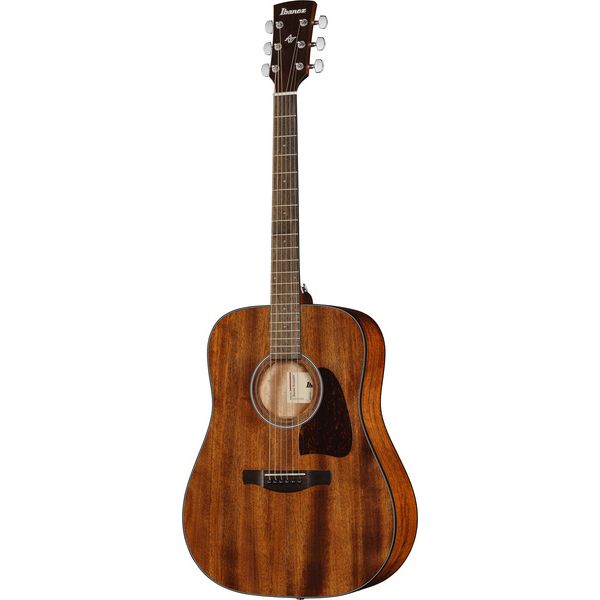
The Ibanez AW54 is proof a budget dreadnought can still have real character, mostly thanks to that open-pore okoume top and back giving it a look (and a bit of a voice) most guitars this cheap don’t bother with.
I dug through the specs, the sound, and a pile of owner reviews to see if it’s still one of the smarter buys in the budget dreadnought pile.
What’s an Okoume Dreadnought, Anyway?
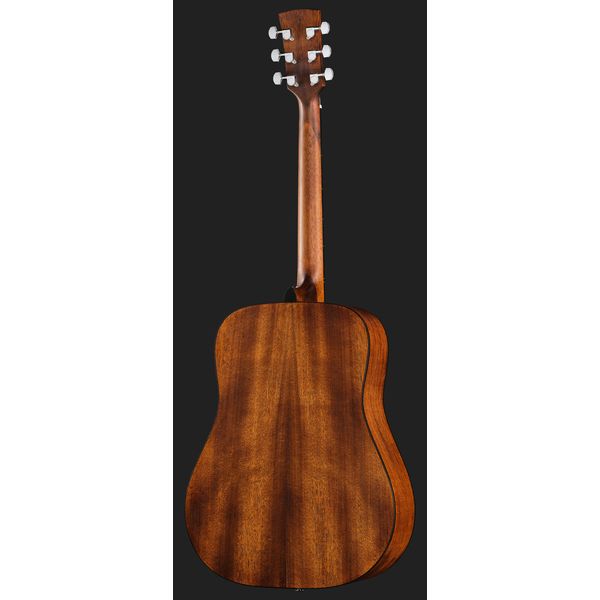
Okoume is a West African wood that gets compared to mahogany a lot — similar density, similar warmth, noticeably cheaper. Ibanez uses it for both the top and the back/sides here, which is a fairly unusual (and budget-smart) choice.
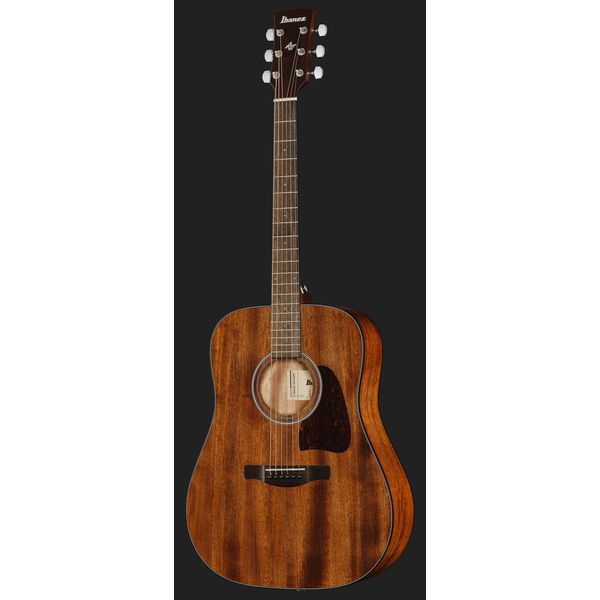
The open-pore finish is the other headline feature. Instead of a thick, glossy lacquer, the wood grain is left raw-ish and matte, which a lot of owners reckon lets the top vibrate more freely. It also just looks great — moody and a bit more „boutique” than the price suggests.
Build and Finish
Under the hood: a nyatoh neck, ovangkol fretboard and bridge, chrome die-cast tuners, 20 frets, a 651mm scale, and a 43mm nut. It’s a sensible, no-nonsense spec sheet, and more than one owner review mentions the guitar arriving „almost in tune out of the box” with an Ibanez Germany inspection tag attached.
If you’re shopping in this bracket and want to see how it stacks up against pricier options, our guide to acoustic guitars for intermediate players is a good next stop.
Sound and Feel
This is a proper dreadnought, which means proper dreadnought volume. Owners consistently describe it as loud, warm, and bassy, with enough clarity that it doesn’t turn to mud when you dig in. One reviewer said it filled the room easily enough to be heard clearly out on the street.
If you’ve played something brighter and more scooped like the Yamaha FG800, the AW54 will feel noticeably warmer and darker in comparison — spruce vs. okoume is a real, audible difference, not just marketing copy.
Worth flagging honestly: a couple of long-time owners who’d had earlier mahogany-topped versions of this model note the current okoume batch sounds slightly drier than the version it replaced. It’s still a good-sounding guitar for the money — just don’t go in expecting the exact tone of an older review you might’ve read.
Who It’s For
Strummers, singer-songwriters who want volume without an amp, and anyone who wants that classic big-dreadnought presence without dreadnought money. It’s also a fine first „real” upgrade from a starter-pack laminate guitar.
It’s less ideal if you’re small-framed or mostly play sitting down — more on that in a second — or if you specifically want an intimate, fingerstyle-friendly voice rather than a big strummer.
The Honest Niggles
The body depth (12.7cm) is genuinely deep for a budget dreadnought, and more than one owner mentions their forearm getting sore or marked up from resting on the edge during long seated sessions. If you’re on the smaller side, try one in person first if you can.
Factory action is also on the higher side for some units — nothing a basic setup won’t fix, but budget for one. And like most guitars at this price, there’s no case or gigbag included, so add that to your cart too. If you want something smaller and easier to live with, our Harley Benton CLP-15ME review covers a genuinely tiny alternative, and our cheap beginner acoustics roundup has more options to compare.
AW54 vs. AW54CE — Do You Need the Electric Version?
Ibanez also sells this same guitar as the AW54CE, which adds a cutaway and an onboard pickup/preamp for plugging into an amp or a PA. The plain AW54 reviewed here is acoustic-only — no electronics, no cutaway, just wood and strings.
If you know you’ll be playing open mics or jamming through an amp regularly, the CE version saves you from having to retrofit a soundhole pickup later (a few AW54 owners have done exactly that with a Fishman unit, and reported good results). For home practice and unplugged playing, though, the standard AW54 is the smarter buy — you’re not paying for electronics you won’t use.
Setup, Strings, and Accessories
Budget a basic setup regardless of which version you get — a proper nut and saddle check, and a look at the action, will make a bigger difference to playability than anything else you could spend money on. It’s a five-minute job for a tech and it’s worth every zloty.
Beyond that, you’ll want a gigbag (none is included), a clip-on tuner, and a set of light-gauge phosphor bronze strings when the stock set eventually wears out — they suit this kind of warm-bodied dreadnought nicely without making it boomy. A padded strap is worth adding too if you plan on playing standing up for any length of time, since a full-depth dreadnought hangs differently than a slimmer body.
Specs at a Glance
- Body: dreadnought
- Top: solid okoume
- Back & sides: okoume
- Neck: nyatoh
- Fretboard & bridge: ovangkol
- Scale length: 651mm
- Nut width: 43.0mm
- Frets: 20
- Tuners: chrome die-cast
- Finish: open pore, natural
Final Verdict
The Ibanez AW54 is one of those guitars that punches well above its money — big dreadnought sound, a genuinely good-looking open-pore finish, and specs that don’t cut the obvious corners.
It’s not perfect: the deep body won’t suit everyone, and the factory setup could use a once-over. But if you want a warm, loud, honest strummer and don’t want to spend big, this is a smart pick. If your budget stretches further, the Epiphone Hummingbird and the Takamine P5DC are both worth cross-shopping. IMO, though, few guitars at this price look or sound quite this interesting.